Exclusive: Trump’s funding cut puts millions at greater danger by delaying water projects
The decision by the Trump administration to significantly reduce U.S. foreign aid has resulted in numerous water and sanitation projects being left incomplete worldwide, posing new risks for the very individuals they were intended to assist, according to findings by Reuters.
Reuters has pinpointed 21 incomplete projects across 16 nations following discussions with 17 sources knowledgeable about the infrastructure initiatives. Many of these projects have not been reported on before.
Since January, hundreds of millions of dollars in funding have been cancelled, leading workers to abandon their shovels, leaving holes half dug and building supplies unguarded, as reported by interviews with U.S. and local officials and internal documents reviewed by Reuters.
Consequently, countless individuals who were assured access to clean drinking water and dependable sanitation facilities by the United States have been abandoned to manage on their own.
According to two U.S. officials who requested to remain anonymous, water towers meant to support schools and health clinics in Mali have been left unused. In Nepal, the construction of over 100 drinking water systems has been stopped, resulting in plumbing supplies and 6,500 bags of cement remaining in local communities. The water minister of the Himalayan nation, Pradeep Yadav, stated that the country will utilize its own funds to complete the task.
A project in Lebanon aimed at supplying affordable solar power to water utilities has been abandoned, resulting in the loss of approximately 70 jobs and putting a stop to plans for enhancing regional services. According to Suzy Hoayek, an adviser to Lebanon’s energy ministry, the utilities are currently depending on diesel and various other sources to provide power for their services.
Residents of Taita Taveta County in Kenya express heightened concerns about flooding, citing the risk posed by incomplete irrigation canals that may fail and carry away their crops. Community leaders indicate that reducing the risk will require an investment of $2,000, which is double the average annual income in the region.
“I lack any safeguards against the flooding that the canal will now bring; the floods are certain to intensify,” stated farmer Mary Kibachia, 74.
BIPARTISAN SUPPORT
The dismantling of the U.S. Agency for International Development by Trump has resulted in life-saving food and medical aid decaying in warehouses, causing chaos in humanitarian efforts globally. Research published in The Lancet medical journal indicates that the cuts could lead to an extra 14 million deaths by 2030.
The Trump administration and its supporters contend that the United States ought to allocate its resources to benefit Americans domestically instead of directing funds overseas. They assert that USAID has deviated from its foundational purpose by financing initiatives such as LGBT rights in Serbia.
The U.S. water projects, with an annual budget of $450 million, represented a minor portion of the $61 billion in foreign aid allocated by the United States in the previous year.
Prior to Trump’s reelection in November, the water projects had not sparked controversy in Washington. A law enacted in 2014 that increased funding was approved unanimously by both chambers of Congress.
Supporters argue that the United States has, over the years, enhanced the lives of tens of millions by constructing pumps, irrigation canals, toilets, and various water and sanitation initiatives. According to John Oldfield, a consultant and lobbyist for water infrastructure projects, this indicates that children face a reduced risk of dying from water-borne diseases such as diarrhea, girls have a greater chance of remaining in school, and young men are less susceptible to recruitment by extremist groups.
“Should we have girls transporting water on their heads for their families?” “Or do you want them to be carrying school books?” he asked.
The U.S. State Department, now responsible for foreign aid previously managed by USAID, did not provide a comment regarding the effects of stopping the water projects.
The agency has reinstated certain funding for crucial projects, yet Secretary of State Marco Rubio has indicated that American support will be more constrained in the future.
One water project has been resumed. The funding for a $6 billion desalination plant in Jordan has been reinstated following a diplomatic effort by King Abdullah.
However, sources familiar with those programs, who requested to remain anonymous, indicate that funding has not yet resumed for projects in other countries, including Ethiopia, Tanzania, and the Democratic Republic of the Congo.
According to Tjada D’Oyen McKenna, CEO of Mercy Corps, a nonprofit that collaborated with USAID on water projects in Congo, Nigeria, and Afghanistan aimed at benefiting 1.7 million people, this situation will force women in those regions to walk for hours to gather unsafe water, increase the disease risk for children, and lead to the closure of health facilities.
“This is not merely a loss of aid — it signifies the disintegration of progress, stability, and human dignity,” she stated.
THE DANGERS OF COLLECTION WATER
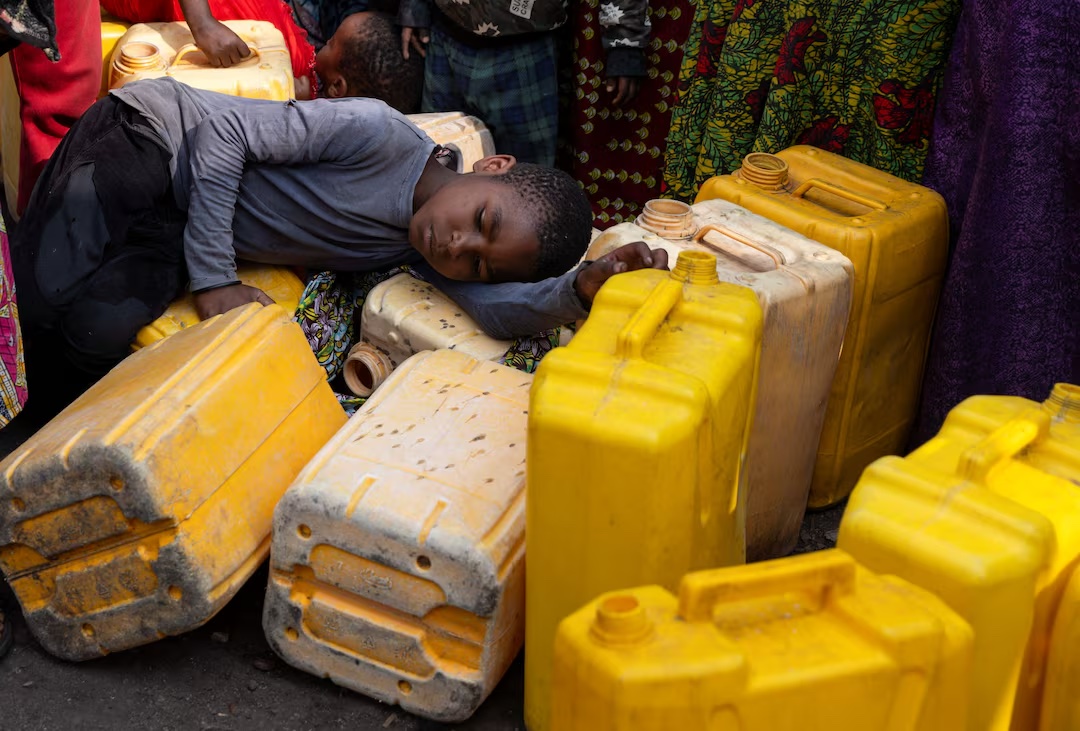
In eastern Congo, where clashes between Congolese forces and M23 rebels have resulted in the loss of thousands of lives, abandoned USAID water kiosks now function as playgrounds for children.
Evelyne Mbaswa, 38, shared with Reuters that her 16-year-old son went out to fetch water in June and has not returned – a heartbreaking situation that many families in the violence-stricken area face.
“When we send young girls, they are raped, young boys are kidnapped…. All this is due to the lack of water,” the mother of nine expressed.
The Congolese government spokesperson did not provide a response to requests for comment.
In Kenya, USAID was engaged in a five-year, $100 million initiative designed to supply drinking water and irrigation systems for 150,000 individuals when, in January, contractors and staff were instructed to halt their activities, as indicated by internal documents reviewed by Reuters. At that point, only 15% of the work had been completed, as noted in a memo from DAI Global LLC, the contractor on the project, dated May 15.
The situation has resulted in open trenches and deep holes that present significant dangers for children and livestock, while also exposing $100,000 worth of pipes, fencing, and other materials at construction sites, which are at risk of degradation or theft, as noted in additional correspondence reviewed by Reuters. According to several memos, the USAID signage at those sites clearly indicates who is accountable for the incomplete work.
A draft memo from the U.S. embassy in Nairobi to the State Department, as reported by Reuters, indicates that this could damage the United States’ reputation and possibly provide an advantage to extremist groups looking for new recruits in the region.
The al Shabaab group, which is linked to al Qaeda and based in Somalia, has carried out a series of notable attacks in Kenya, including a 2015 assault on a university that resulted in the deaths of at least 147 individuals.
The memo stated, “Failing to complete these projects could lead to a reputational risk that may evolve into a security risk.”
DESTRUCTIVE FLOODS
In Kenya’s Taita Taveta, a predominantly rural county that has faced recurring drought and flooding, workers had completed the construction of brick walls along 220 metres of the 3.1-kilometre (1.9 mile) irrigation canal when they received orders to halt, according to community leaders. The walls remain unplastered, exposing them to the risk of erosion.
“If the walls are not plastered, they will fall in heavy rain, and the water flow will result in the destruction of farms,” stated Juma Kubo, a community leader.
The community has requested assistance from the Kenyan government and international donors to complete the project, with an estimated cost of 68 million shillings ($526,000).
Kubo mentioned that they intend to sell the cement and steel cables remaining on site to generate funds for plastering and backfilling the canal.
According to Stephen Kiteto Mwagoti, an irrigation officer for the county, the county government must secure “funds to at least finish the project to the degree we can with the materials we have, if not complete it fully.”
The Kenyan government has not provided a response to the request for comment.
For Kibachia, who has endured flooding for years, assistance cannot arrive soon enough.
Three months after work ceased on the project, her mud hut was inundated with water reaching her thighs.
“This time, it was quite disappointing.” “I needed to use soil to even out the floor of my house and to fill in the holes in the wall due to the damage from the floods,” she explained.
“Where should I head?” This is home.