Rebels from the Congo and M23 will sign a statement of principles to put an end to hostilities, according to source
The Congo and the M23 rebel group have reached a declaration of principles aimed at ending the conflict in eastern Congo, indicating progress following months of negotiations facilitated by Qatar. However, several crucial details remain to be discussed, according to four sources on Friday.
The declaration, anticipated to be signed on Saturday in Doha, arrives under significant U.S. pressure to finalize agreements aimed at achieving peace in eastern Congo. This has the potential to draw billions of dollars in Western investment to a region abundant in tantalum, gold, cobalt, copper, lithium, and various other minerals.
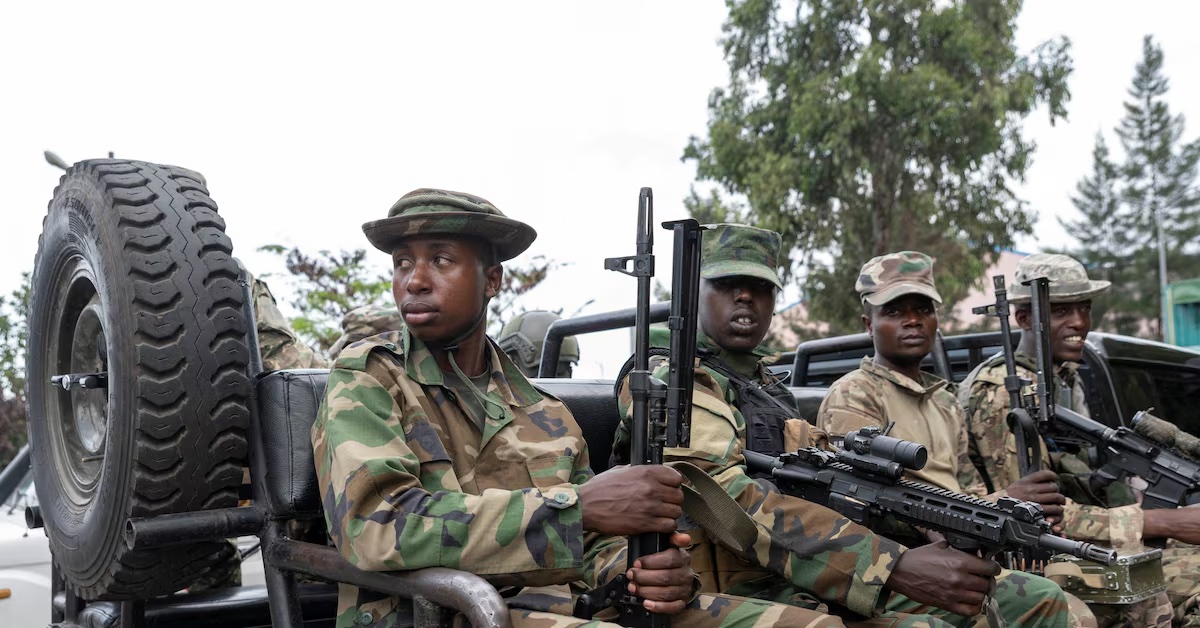
M23, following a series of uprisings backed by Rwanda, captured Goma, the largest city in eastern Congo, in January and subsequently achieved advances throughout North Kivu and South Kivu provinces.
This year’s fighting has resulted in thousands of deaths and has displaced hundreds of thousands, heightening the risk of a full-scale regional war. Several neighboring countries of Congo have already stationed troops in the unstable region.
In March, Qatar facilitated an unexpected meeting between Congolese President Felix Tshisekedi and Rwandan President Paul Kagame, during which they advocated for a “immediate and unconditional” ceasefire.
This resulted in direct discussions, also held in Doha, between Congo and M23. Congo had earlier dismissed the notion of engaging in discussions with M23, labeling it a terrorist organization.
In April, both parties committed to striving for a ceasefire. Sources within both delegations have conveyed their frustration regarding the slow pace of negotiations and the insufficient advancement on confidence-building measures, such as the release of M23 members detained by Congo and the reopening of banks in areas controlled by rebels.
On Friday, it remained uncertain how many of those issues had been addressed. There are also larger inquiries regarding the potential withdrawals of Rwandan forces and M23 from eastern Congo.
An official acquainted with the discussions indicated that the declaration of principles, achieved through in-person meetings and shuttle diplomacy by the Qataris, would encompass an immediate ceasefire and delineate “a commitment to initiate formal negotiations on a comprehensive peace agreement in the near future.”
An official stated that there was agreement on a mechanism for establishing a permanent ceasefire and a plan for reinstating state authority in eastern Congo following the signing of a peace agreement.
A source from M23 indicated that the document makes no reference to any form of troop withdrawal.
“The American pressure is quite significant,” a Congolese source remarked on Friday, highlighting the presence in Doha of Massad Boulos, Trump’s senior adviser for Africa.
However, numerous issues remain unaddressed. This represents merely a single step in the ongoing discussions.
DISCOURSES IN WASHINGTON
Washington has facilitated discussions between Congo and Rwanda. On June 27, the foreign ministers of the two countries signed a peace deal and convened with U.S. President Donald Trump at the White House. Trump cautioned that there would be “very severe penalties, financial and otherwise” if the agreement is breached.
Trump extended an invitation to Tshisekedi and Kagame to come to Washington for the signing of a series of agreements referred to by Boulos as the “Washington Accord”.
During a conversation with reporters on July 2, Boulos expressed that the Trump administration would “love” to schedule that meeting for the end of July. However, he also mentioned that U.S. officials are optimistic about finalizing a deal in Doha by that time.
Congo, along with the United Nations and Western powers, asserts that Rwanda is backing M23 through the provision of troops and arms. This month, a report from a group of United Nations experts, acquired by Reuters, indicated that Kigali maintained command and control over the rebels during their advance.
Rwanda has consistently refuted allegations of supporting M23, asserting that its military actions are purely defensive in response to the Congolese army and ethnic Hutu militias associated with the 1994 Rwandan genocide, such as the Democratic Forces for the Liberation of Rwanda (FDLR).