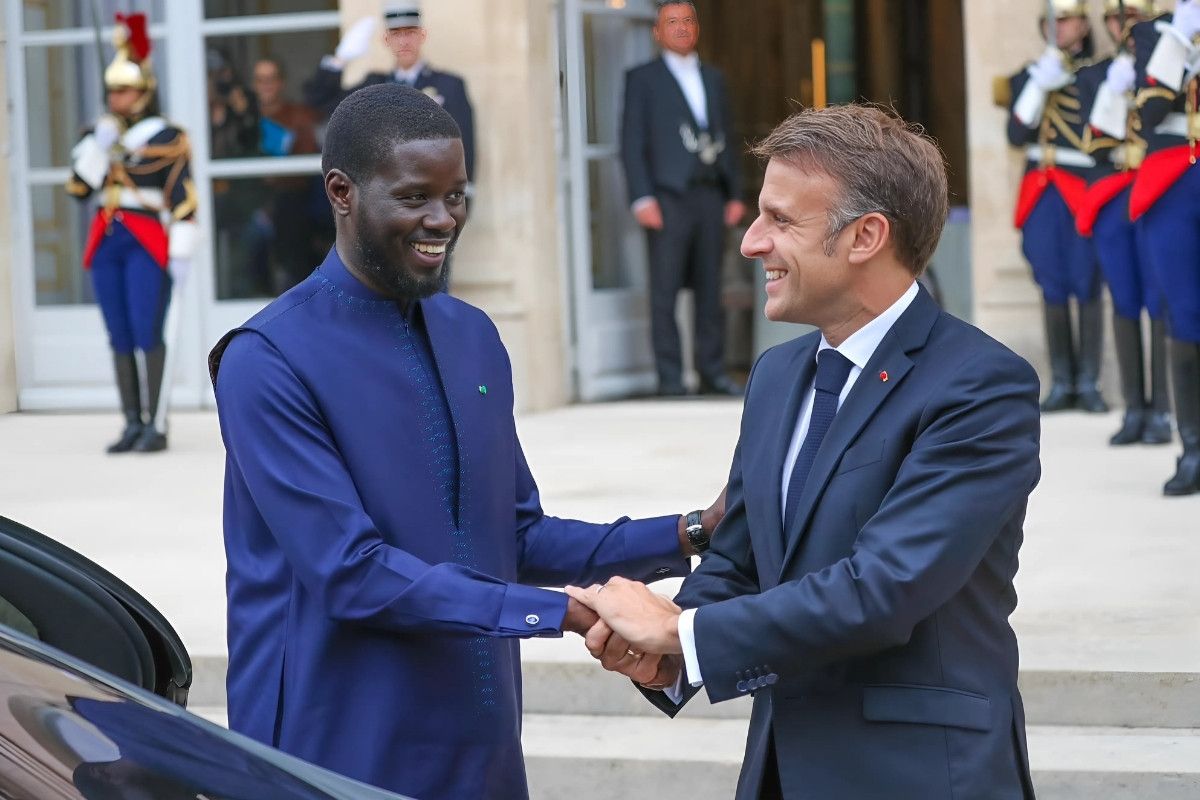
France has shifted toward sovereignty and reestablished bilateral collaboration by withdrawing its forces from Senegal.
France ended its long-standing military presence in Senegal on Thursday when it formally turned over management of its final significant military station in the West African country. In response to Senegal’s recent demand for more autonomy, the action marks a dramatic change in France’s overall military posture in the area.
The key to Camp Geille was given to the Senegalese military by French commander in Africa, General Pascal Ianni, during a symbolic event in Dakar. The national anthem of Senegal, which was played by military musicians, was played as the flag was raised.
Ianni stated, “The transfer of Camp Geille today represents a new phase in the development of our two armed forces’ partnership.” “The Senegalese authorities wanted to remove permanent foreign forces from their territory, and this is their response.”
Bassirou Diomaye Faye, the president of Senegal, announced this year that the French military bases’ prolonged existence was incompatible with national sovereignty, and this decision is in line with a larger policy change. French forces would be taken out by the end of 2024, as agreed upon by both nations. France gave up control of two further Dakar sites in March, marking the start of the procedure.
France’s withdrawal from Senegal has been peaceful and cooperative, in contrast to the tense and sudden withdrawals saw in Mali, Burkina Faso, and Niger, where military juntas have driven out French personnel and looked to Russia for military assistance. Last year, France withdrew its troops when Chad, another important regional ally, canceled its defense agreement with France.
Despite France’s two-century-long military involvement in Senegal, General Ianni stated that a new strategy was necessary due to the changing geopolitical environment. France’s future regional operations will be concentrated on military training, intelligence sharing, and providing assistance only when called upon.
The new collaboration arrangement would preserve avenues for training and intelligence sharing, according to Senegal’s Chief of Staff, General Mbaye Cisse, who praised the changeover.
“We hope that all of our fellow soldiers and their families return to France safely,” Cisse stated. “Our countries’ strong historical ties will continue to provide a strong basis for cooperation,” the statement reads.
On top of that, the withdrawal resurrects old grievances. After Senegal gained independence in 1960, France, the previous colonial power, came under fire for continuing to keep military installations there for decades. Paris has been repeatedly urged by Senegal to acknowledge and thoroughly look into the 1944 slaughter of African soldiers who had served in France during World War II.
France’s military presence in Senegal has officially ended, marking a new chapter in the two countries’ relationship that emphasizes equality, respect for one another, and sovereignty.