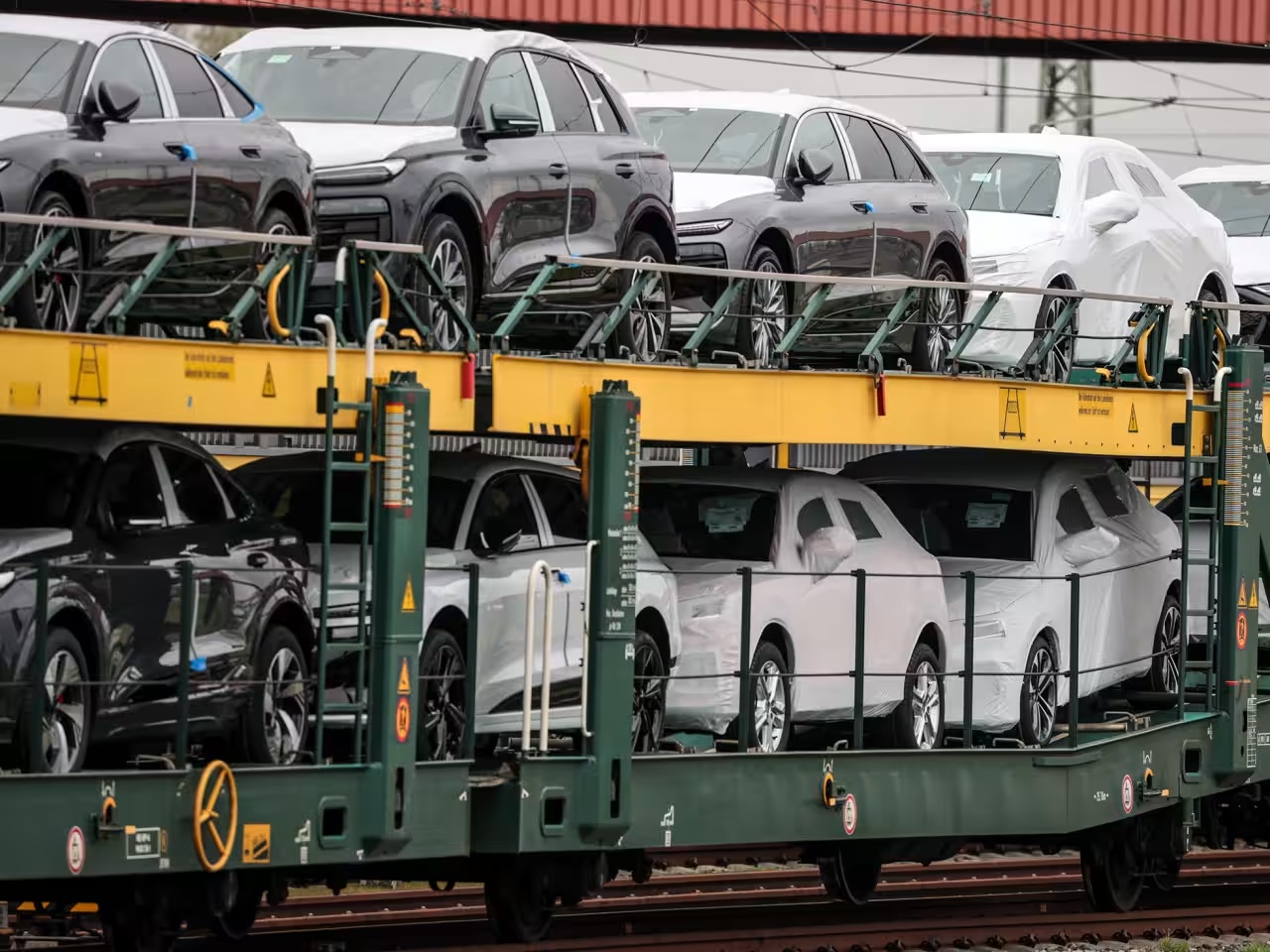
After U.S. President Donald Trump implemented import tariffs that hurt manufacturers’ sales, South African vehicle exports to the United States fell precipitously in the first quarter of 2025 and fell more than 80% in April and May, according to industry organization Naamsa.
The United States is South Africa’s second-largest trading partner and a major market for domestically produced automobiles, which have long benefited from duty-free access granted by the African Growth and Opportunity Act (AGOA) of the United States.
According to Namsa, auto shipments to the United States fell 73% in the first quarter compared to the same period last year. This was followed by drops of 80% in April and 85% in May.
It would be challenging to recoup from the steep drop in the near future, according to the trade association.
“This is a socio-economic crisis in the making, not just a trade issue,” stated Mikel Mabasa, CEO of Namibia.
With the announcement of duties on over a dozen nations, including South Africa, which would be subject to a 30% rate starting on August 1, Trump has intensified the global trade battle he started in April.
This is distinct from the April 25% duty on automobiles, which has been extended to automotive parts since May.
A duty-free quota of 40,000 automobiles annually to be exported from South Africa and duty-free access for locally produced automotive components for U.S. manufacturing were part of the trade package that South Africa had proposed before to Trump’s tariff announcement in July.
64% of all AGOA commerce with the United States in 2024 came from South Africa’s automobile industry, which brought in 28.6 billion rand ($1.60 billion) in export earnings, according to Namsa.
According to Mabasa, the tariffs might lead to the loss of thousands of jobs and economic ruin in areas that depend on the industry, including East London, a seaside city where the automobile industry plays a major role in the local economy.
According to Mabasa, “if we cannot retain export markets like the U.S., we risk turning vibrant industrial hubs into ghost towns,” with implications for components makers and logistics suppliers as well as the entire automotive supply chain.
Global rivals are already rerouting their goods into countries that South Africa has historically served, so export diversification is important but cannot be achieved overnight, Mabasa warned.
Mercedes-Benz (MBGn.DE) and other South African automakers that export to the United States would be forced by this increasing pressure to absorb growing costs, reduce production, and reevaluate future investments, according to Mabasa.