Trump requests further leniency while the EU delays US tariff responses
As U.S. President Donald Trump’s administration continued to demand further concessions from trading partners, the European Union announced on Sunday that it will prolong its suspension of retaliation to U.S. tariffs until early August and keep up its pressure for a negotiated settlement.
With fewer than three weeks to negotiate framework agreements that could reduce the feared tariff rate, Trump announced on Saturday that he will apply a 30% duty on the majority of imports from the EU and Mexico starting on August 1. He also issued similar warnings to other nations.
White House Economic Adviser Kevin Hassett stated on Sunday that “the tariffs are real” without any changes and that Trump has not been satisfied with the trade deal offers made by other nations thus far.
“The president believes that deals should be improved,” Hassett stated on ABC’s This Week show. “And to basically put a line in the sand, he sent these letters out to folks, and we’ll see how it works out.”
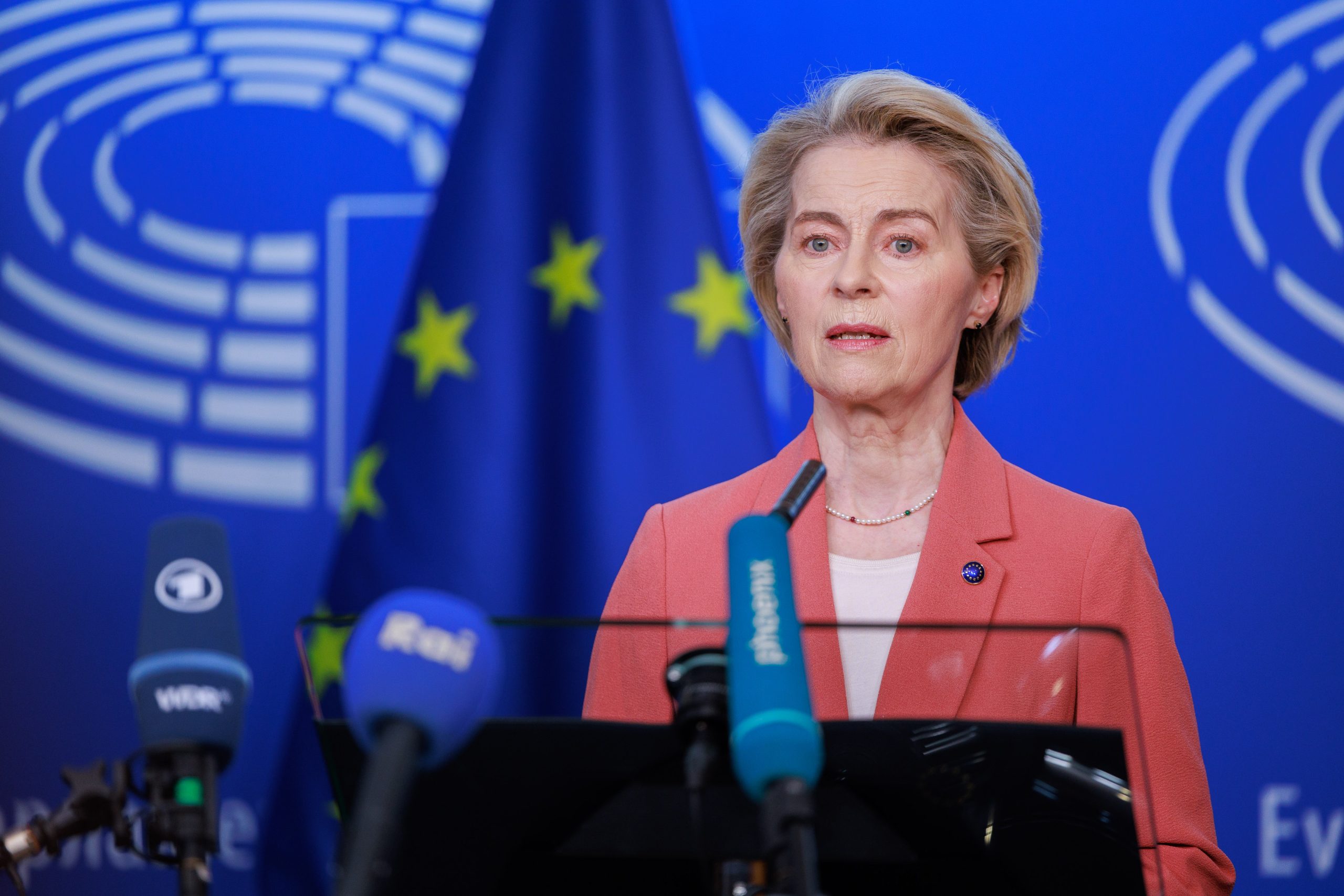
The EU will continue to take a two-pronged approach: continue to negotiate and plan retaliatory actions, said Ursula von der Leyen, head of the executive commission that oversees trade policy for the 27 member states.
“We have consistently stated that a negotiated solution is what we want. We will make advantage of the time we have today, and this is still the case,” von der Leyen said at a press conference, adding that the bloc would prolong its freeze on countermeasures until August.
Von der Leyen’s choice to forego immediate retaliation indicates that the European Commission wants to prevent the trade war from spiraling out of control while there is still hope for a better solution through negotiation.
During the course of the next two and a half weeks, German Chancellor Friedrich Merz will work closely with von der Leyen and French President Emmanuel Macron to establish a trade deal with the United States. Merz told German public channel ARD that he is “really committed” to this goal.
When asked how a 30% U.S. tariff would affect Germany, Merz responded, “If that were to happen, we would have to postpone large parts of our economic policy efforts because it would interfere with everything and hit the German export industry to the core.”
UNIFORMITY TEST
The solidarity of member nations may be put to the test by Trump’s most recent salvo and the issue of how to react, with France seeming to adopt a more robust stance than Germany, the bloc’s industrial powerhouse whose economy is largely dependent on exports.
Macron stated that retribution might need to involve so-called anti-coercion tools and that the Commission needed to “assert the Union’s determination to defend European interests resolutely” more than before.
In the event that negotiations failed, German Finance Minister Lars Klingbeil stated on Sunday that the EU should be prepared to move decisively.
“We must take decisive countermeasures to protect jobs and companies in Europe if a fair negotiated solution does not succeed,” said Finance Minister Lars Klingbeil, who is also the vice chancellor of the ruling coalition, in an interview with Sueddeutsche Zeitung.
The EU has prepared two packages that could target 93 billion euros in of U.S. goods, but it has refrained from retaliating against the U.S. in the months after Trump imposed duties on the group.
A first package was put on hold for ninety days in April to give time for negotiations in response to U.S. taxes of fifty percent on imported steel and aluminum, which would have affected 21 billion euros in U.S. goods. Prior to the extension being announced, the suspension was scheduled to end on Monday.
In response to Trump’s “reciprocal” tariffs, a second package has been in the works since May and was supposed to target 72 billion euros worth of U.S. goods. The final list needs member state approval, and these measures have not been made public.
A TOOL FOR ANTI-COERCION
The employment of the EU’s Anti-Coercion Instrument is not currently on the table, von der Leyen stated on Sunday.
With this tool, the group can strike back at third parties that urge EU members to alter their policies through economic pressure.
“The (anti-coercion) instrument is created for extraordinary situations, we are not there yet,” she explained.
Retaliatory actions can include limiting access to EU markets for products and services as well as other economic actions pertaining to export controls, financial markets, and foreign direct investment.
“A political agreement has been reached to advance an EU-Indonesia trade deal,” von der Leyen said, indicating the EU’s intention to continue negotiating with other trading partners at a time when transatlantic relations are becoming increasingly unclear.
French cheese makers cautioned that a 30% tax would have detrimental effects on the country’s dairy industry, which exports about half of its produce, including to the US.
“It’s a new environment we will have to get used to – I don’t think this is temporary,” Francois Xavier Huard, the CEO of the dairy association FNIL, told Reuters.