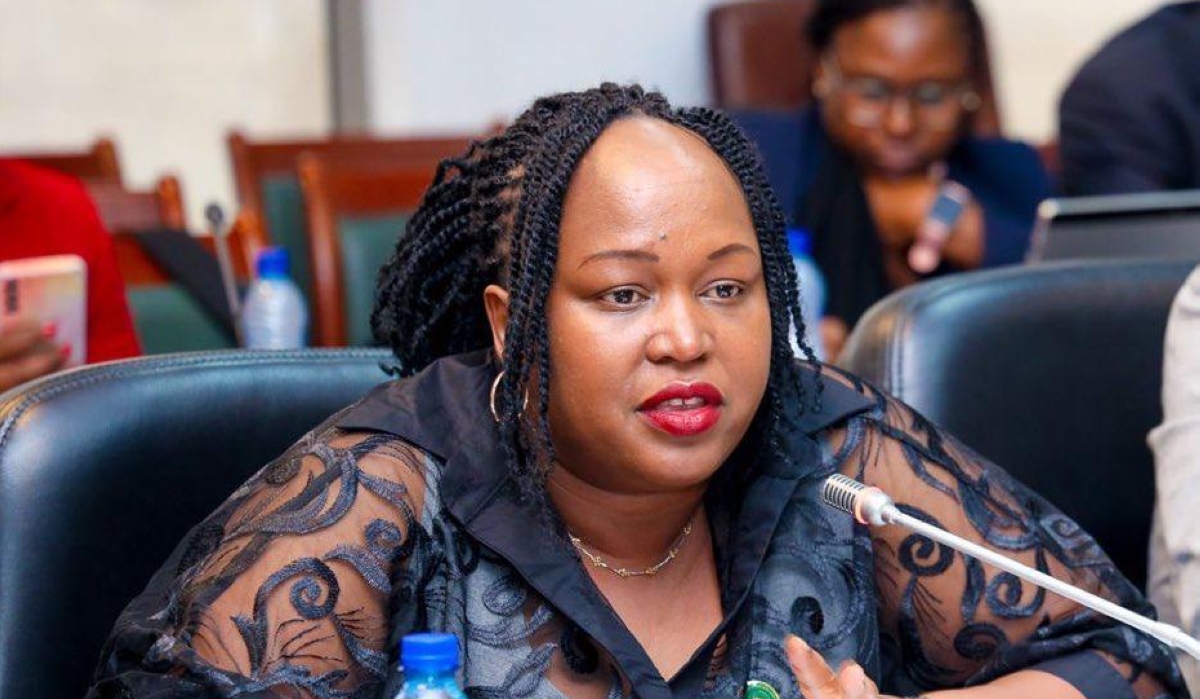
The East African Community (EAC) Secretary General, Veronica Nduva, has called for a single, continent-wide resource mobilization strategy to replace disjointed and redundant efforts and to fortify Africa’s resource coalition, as the continent continues to struggle with scarce resources to fund its development agenda and aspirations.
While the region has convened multiple conferences to discuss ways to pool resources for the continent, the Secretary General noted that a streamlined and harmonized approach is required to produce a single strategy. She underlined the necessity of concerted efforts to secure substantial funding that can further the objectives of the African Union’s Agenda 2063.
Speaking at the 7th Mid-Year Coordination Meeting of the African Union, Regional Economic Communities (RECs), and Regional Mechanisms, Nduva was part of a high-level roundtable organized by the AU development agency NEPAD in Malabo, Equatorial Guinea.
Mahmoud Ali Youssouf, the chairperson of the African Union Commission, heads of AU institutions, representatives from AU Member States, development partners, and other important stakeholders convened the meeting to discuss ways to accelerate Agenda 2063’s realization through more efficient and African-led resource mobilization.
Leveraging public, private, and charitable capital, the Secretary General promoted blended finance. She called on the commercial sector and African philanthropists to be more involved in defining and expanding their contributions.
“We must also take into account the implementation of austerity measures to guarantee that funds allotted for projects produce the desired results,” she said.
Nduva also emphasized how crucial it is to include technology into all initiatives in order to improve execution, collaboration, and planning.
The chairperson of the AU Commission, Youssouf, echoed this appeal for change and emphasized the need to quickly abandon donor dependency in favor of a model based on African ownership and in line with the interests of the continent.
“It is crucial that the key instruments essential to the operationalization of the TFTA are adopted by the next Meeting of the Tripartite Council of Ministers as we prepare for the official launch of the Tripartite Free Trade Area (TFTA) Agreement during the 4th Tripartite Summit,” he stated.
During the same summit, the Southern African Development Community (SADC) relinquished the chairmanship of the COMESA-EAC-SADC Tripartite Task Force (TTF) to the EAC for a one-year term.
On July 25, 2024, the TFTA Agreement became formally operative after receiving the necessary 14 ratifications from Member and Partner States. Its official launch at the upcoming 4th Tripartite Summit is now being planned.
The TFTA, a crucial component of the African Continental Free Trade Area (AfCFTA), aims to promote industrial growth throughout the area, remove trade obstacles, ease the flow of people, products, and services, and integrate the economies of the three regional blocs.
According to Nduva, the EAC will prioritize completing and adopting the rules of origin, ratifying the Tripartite Agreement on the Movement of Business Persons, ratifying the TFTA Agreement by the remaining Member/Partner States, and finalizing and exchanging tariff bids.
“The operationalization of the agreements reached and the revitalization of the Industrial Development Pillar are our top priorities,” she said.
Nduva also emphasized the significance of fortifying the TFTA’s institutional architecture, which includes the requirement for a special Tripartite Secretariat to facilitate coordination and execution.
“We see the Tripartite Free Trade Agreement as a strategic lever to advance inclusive industrialization, unlock intra-African trade, improve competitiveness, and deepen integration,” she continued.
Options for resource mobilization to assist the TFTA’s operations and activities were also discussed at the meeting.
The heads of state and government from the three blocs initiated the COMESA-EAC-SADC TFTA in Egypt in June 2015. Market integration, infrastructure development, and industrial development serve as its three main pillars.