PKK Starts Disarmament After 40 Years of War with the Turkish Government
The historic disarmament process in Iraqi Kurdistan began when about 30 Kurdish PKK combatants symbolically put down their weapons.
After forty years of fighting, the banned Kurdistan Workers’ Party (PKK) has started to disarm, marking a historic turning point that may mark the end of one of the Middle East’s most enduring armed conflicts.
In a solemn ceremony, roughly 30 PKK members, both men and women, deposited their guns in a cauldron and burnt them on fire near Jasana cave, a famous location in Iraqi Kurdistan 50km northwest of Suleymaniyah. Four senior commanders were among them. Journalists and officials, including members of Turkey’s pro-Kurdish DEM party, observed the event, which was dubbed the “first step” of a disarmament process that would go all summer.
In a statement, the gang claimed, “We voluntarily destroy our weapons, before your presence, as a step of goodwill and determination.” “This is a democratic, historic step.”
Recep Tayyip Erdoğa, the president of Turkey, described the ceremony as “an important step towards our goal of a terror-free Turkey,” highlighting the government’s confidence that the Kurdish conflict may be coming to an end.
Since the PKK took up arms in 1984 to fight for the independence and later autonomy of Kurds, who comprise around 20% of Turkey’s population, more than 40,000 people have lost their lives. The U.S., the UK, the EU, and Turkey all classify the group as a terrorist organization.
PKK founder Abdullah Ocalan, who has been detained in solitary confinement on Turkey’s Imrali Island since 1999, is at the center of this significant change. Ocalan called for “a voluntary transition from the phase of armed conflict to the phase of democratic politics and law” in a statement earlier this week.
Ocalan called on PKK fighters to give up armed conflict in a rare video appearance two days prior to the symbolic disarming, the first in more than 20 years.
Ocalan declared, “I believe in the power of politics and social peace, not weapons.” “And I urge you to apply this principle in real life.” Ocalan’s appearance, which included wearing a beige Lacoste polo shirt, went viral on the internet, highlighting his continued symbolic significance for many Kurds.
Ocalan’s call was a follow-up to a message he made in February through two politicians from the DEM party who came to see him on Imrali. “All groups must lay their arms and the PKK must dissolve itself,” he wrote in the letter, referring to this as “an opportunity created by recent positive signals from the Turkish state.”
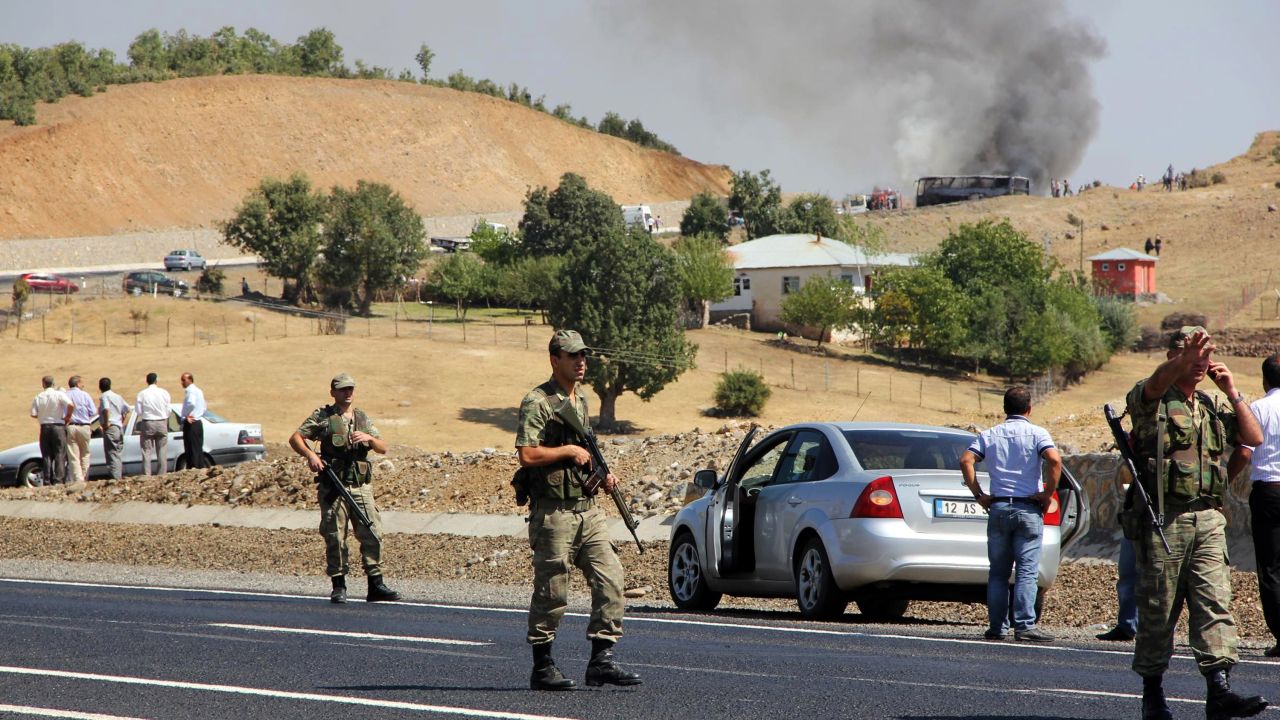
This is hardly the first peace effort. The Dolmabahce Agreement of 2015 sought to grant Kurdish language and political rights, and a truce was announced in 2013. However, the tenuous ceasefire broke down, allowing for airstrikes against PKK sites in northern Iraq and Kurdish-controlled regions in Syria, as well as a resurgence of violence, particularly in southeast Turkey.
The most recent effort gathered impetus in October 2024 when renowned nationalist and Erdoğan ally Devlet Bahçeli urged Ocalan to start the PKK disbandment process and called for “a terror-free Turkey”. Through DEM party channels, Ankara and Ocalan restarted their talks.
For the first time in years, President Erdoğa met with pro-Kurdish MPs in April. He described the situation as “an opportunity to tear down the wall of terror,” indicating that he is committed to seeing the process through to completion.
Disarmament of the PKK has far-reaching effects outside of Turkey. There are networks of the group in Iran, Syria, and Iraq. Deeper cross-border political involvement with Kurdish parties could be made possible by its disarmament, which could also assist transform regional security.
The future remains unclear, though. A panel will be established by the Turkish parliament to determine the next course of action, although significant decisions are not anticipated until the fall because of the approaching summer break. The fate of Ocalan is still a major mystery; although government representatives have suggested that his prison terms might be changed, any discussion of his release is still off the table.
Ocalan continues to be a highly significant figure for many Kurds. According to Joost Jongerden, a conflict expert from Wageningen University in the Netherlands, “he is a main symbol for many Kurds, not all.” “He still possesses this power.”
Although there is still doubt, many analysts think this is the best opportunity for a lasting peace to date.
The PKK claims to have accomplished its historic purpose. According to a Turkish official with knowledge of the negotiations, “that opens a door, but everything depends on whether the political process now replaces the military one.”