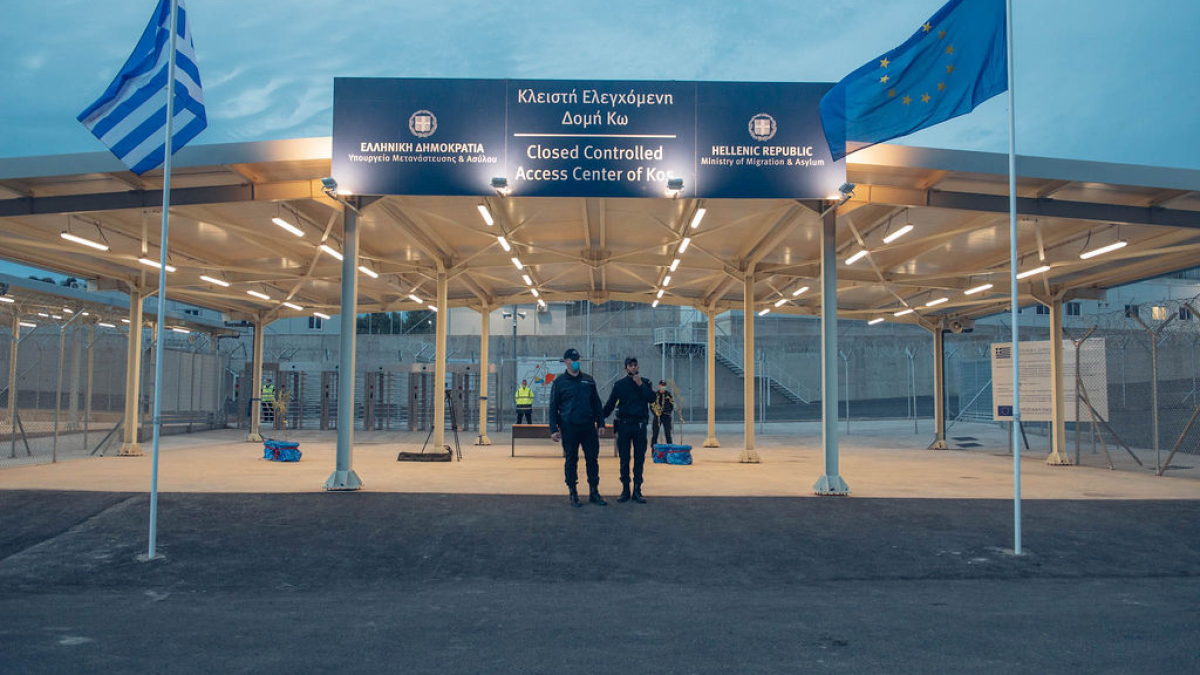
Greek lawmakers agreed Friday to temporarily halt the processing of asylum petitions from migrants traveling by sea from North Africa in an effort to curb arrivals at the southernmost edge of Europe. Opposition parties and rights groups have criticized the decision as unlawful.
The prohibition follows negotiations this week with Libya’s Benghazi-based administration to stop the influx of migrants, which coincided with a spike in the number of migrants arriving on the island of Crete.
Since taking office in 2019, the center-right administration of Prime Minister Kyriakos Mitsotakis has increased sea patrols and erected a fence along Greece’s northern land borders, further solidifying the country’s stance against migrants.
Human rights organizations claim that Greece forcibly rebuffs asylum seekers on its land and sea borders. Greece may have violated human rights in 12 incidents, according to the European Union border agency this year.
Errors are denied by the government.
The measure, which was passed with 177 votes in favor and 74 against, permits authorities to swiftly deport migrants without requiring any prior identification procedures and stops the asylum process for at least three months.
In an interview with the German newspaper Bild on Friday, Mitsotakis said, “We have taken the difficult but absolutely necessary decision to temporarily suspend the examination of asylum applications due to the sharp increase in irregular arrivals by sea from North Africa, particularly from Libya to Crete.”
“Greece is not a gateway to Europe open to everyone.”
In 2015–16, hundreds of thousands of migrants from the Middle East, Asia, and Africa traveled through Greece’s islands and mainland, placing the country at the forefront of a migration crisis.
Ever thereafter, flows have drastically decreased. According to U.N. figures, maritime arrivals to Greece during the first half of this year fell by 5.5% to 17,000, despite an increase in the outlying islands of Crete and Gavdos, where the number has doubled to over 7,000 so far this year.
The parliament-approved prohibition is a violation of human rights, according to opposition parties and rights groups.
“People have a human right to seek refuge; it is both unlawful and cruel to stop them from doing so,” stated Martha Roussou, a senior advocacy consultant with the humanitarian organization IRC.
The government of Athens said that the Greek coast guard had recently rescued thousands of undocumented migrants off the coast of Crete. In the midst of heatwaves in Agyia, close to Chania in western Crete, hundreds of them—including children—were temporarily accommodated at an exhibition center.
Reuters film on Friday showed a fainting migrant being carried on a stretcher out of the shelter.
There is no well-organized welcoming area in Crete. Although the government announced plans to establish a migrant camp there, the island’s tourism industry is concerned that the idea could damage the island’s reputation.
“The burden is too heavy, the weight is too heavy, and solutions now need to be found… at a central level,” Crete deputy governor George Tsapakos stated.