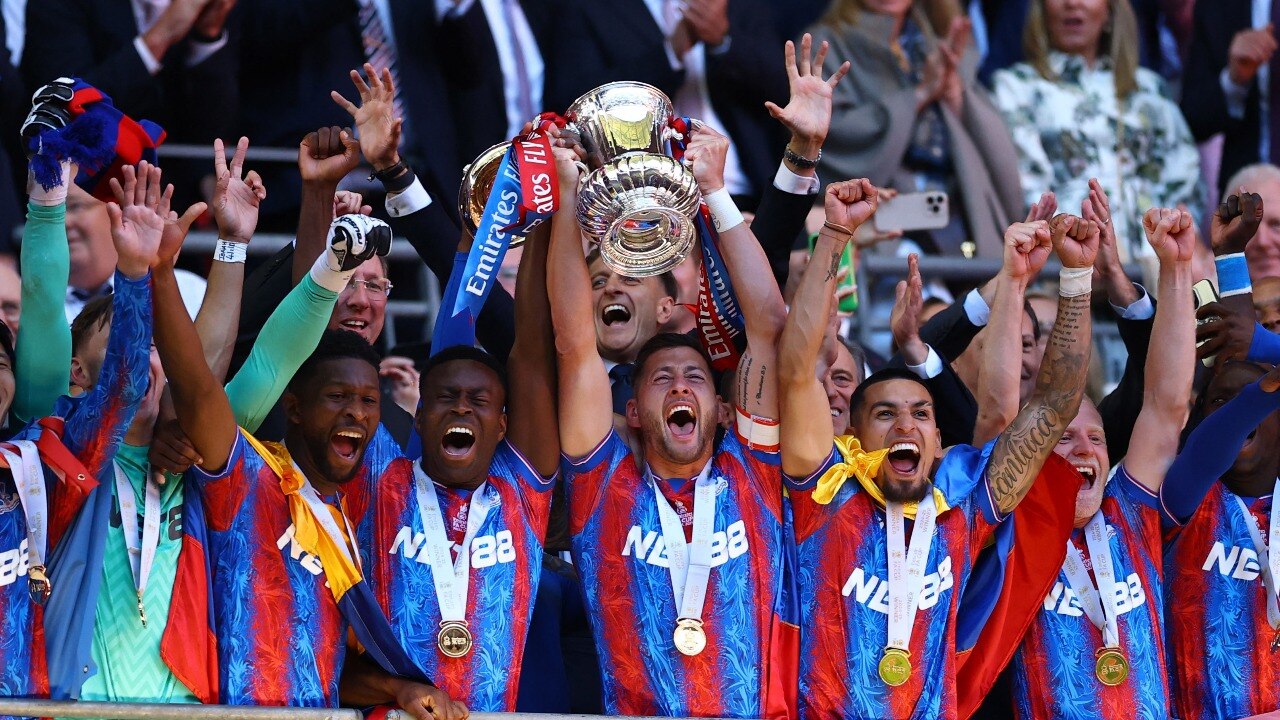
UEFA has confirmed that, despite ownership disputes, Lyon will remain in the Europa League while Crystal Palace will be demoted to the Conference League.
UEFA said on Friday that Crystal Palace had been demoted from the Europa League to the third-tier UEFA Conference League for violating the criteria governing multi-club ownership. The French team Olympique Lyonnais, on the other hand, will continue to play in the Europa League.
The Eagle Football Group owns the majority of Lyon, while John Textor, the group’s chairman, also owns a sizeable portion of Crystal Palace. After winning the FA Cup the previous season, Palace secured a spot in the Europa League, and Lyon qualified by placing sixth in Ligue 1.
A decision on the ownership dispute had been postponed by UEFA’s Club Financial Control Body (CFCB) until French authorities overturned a previous decision to demote Lyon to Ligue 2 due to financial concerns. On Wednesday, that change was reversed.
According to a statement from UEFA, “the CFCB First Chamber investigated the evaluation of the documentation provided by Olympique Lyonnais and Crystal Palace and determined that the clubs violated, as of 1 March 2025, the multi club ownership criteria.”
UEFA let Lyon to keep its spot in the Europa League because of their better domestic league result, even though both teams had qualified for the same European competition. In the Premier League, Palace finished 12th, while Lyon finished sixth in Ligue 1.
The Court of Arbitration for Sport is now Crystal Palace’s avenue for appealing UEFA’s ruling.
Robert “Woody” Johnson, a co-owner of the New York Jets, signed a legally binding contract last month to buy Eagle Football Holding’s share of the team, subject to Premier League clearance, Palace disclosed. However, the team did not adhere to the ownership criteria set forth by UEFA by the March deadline.
UEFA regulations prohibit any club that competes in its competitions from owning stock in another club. Furthermore, no one may have control or decisive influence over more than one participating club or be involved in their management, administration, or athletic choices.