Germany pledges €20 million to strengthen Northeast Nigeria’s recovery and resilience
Germany contributes €20 million to support UNICEF-WFP recovery operations in Northeast Nigeria, providing food, education, water, and protection to 200,000 people.
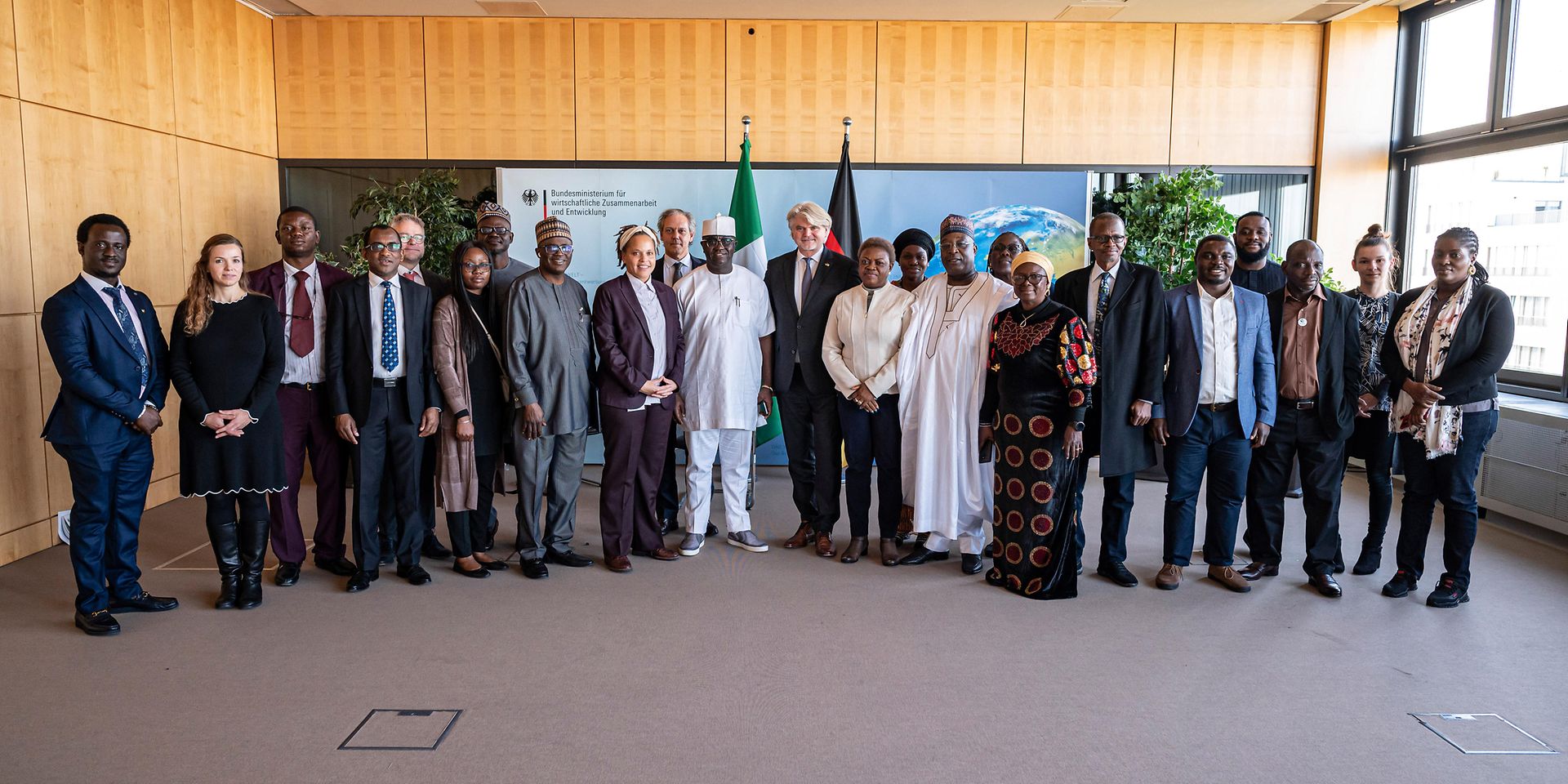
Through a 20 million euro grant to the World Food Programme’s (WFP) Resilience Programme and its supported United Nations Children’s Fund (UNICEF), Germany has reaffirmed its commitment to Northeast Nigeria’s recovery efforts.
A successful first phase of the program, which is the second phase funded by the German Federal Ministry for Economic Cooperation and Development (BMZ) through KfW Development Bank, supported over 150,000 beneficiaries, including children under five, pregnant and lactating women and girls, out-of-school children, and households experiencing food insecurity in Northeast Nigeria.
It has been declared that the second phase of the region’s resilience and peacebuilding project has begun.
UNICEF and WFP said in a statement on Thursday that they are working with the governments of Borno and Yobe states to implement the joint project, which focuses on resilience and peacebuilding.
The statement claims that the second phase will impact over 200,000 individuals and build on the successes of the first intervention by expanding access to food security, critical services, and peacebuilding programs. Four more local government areas will be included in the initiative to increase its reach: Potiskum and Jakusko in Yobe State, and Bama and Konduga in Borno State.
In Northeast Nigeria, years of armed violence have had a catastrophic impact on livelihood prospects, societal cohesion, and the welfare of women and children, according to the statement. The region’s economic backbone, agriculture, has been decimated, people have been uprooted, food insecurity among vulnerable households has increased, and children are suffering from severe malnutrition as a result of instability and the worsening consequences of climate change.
“The prolonged conflict has also deepened mistrust within communities, making resettlement and peacebuilding efforts difficult,” the statement continued. The process of reestablishing trust and economic prospects is still gradual, even with the efforts of security personnel and political institutions to bring stability back.
Child protection, food security, safe water supply, nutrition, enhanced access to education and vocational skills for children who are not in school, promotion of locally produced nutritious foods, strengthened food systems, conditional cash transfers, livelihood opportunities, environmental regreening initiatives, and the creation of peace clubs in schools are just a few of the essential services and resilience-building interventions that the project is guaranteed to deliver under this agreement.
According to David Stevenson, the WFP’s Country Director in Nigeria, “food insecurity in Northeast Nigeria continues to be one of the most serious issues, made worse by the climate and economic hardship.” The German government has helped to revitalize climate-adaptive food systems, which has improved the nutritional and economic consequences for the most disadvantaged. Phase II will guarantee that these benefits are shared with more communities in the states of Borno and Yobe.
According to UNICEF Nigeria Representative Cristian Munduate, “Nigeria’s Northeast region continues to be one of the most difficult places to be a woman or a child.” Because of this, UNICEF is thrilled to see how the first phase of the collaborative project is enhancing resilience and well-being at the family level, one woman and child each. In Borno and Yobe states, UNICEF is grateful to the German government for its ongoing investment in protecting children and the most vulnerable groups.
According to Dr. Karin Jansen, head of development cooperation at the German Embassy, “The German government is proud to support long-term, community-led recovery in Northeast Nigeria.” In particular, we are assisting women and children in becoming more resilient to the effects of climate change and conflict by collaborating with reliable partners like WFP and UNICEF.
Since the project’s start, the statement said, more than 60 solar-powered boreholes and 18 hand pump boreholes have been built or restored, giving almost 300,000 people access to clean water. Through official and informal learning centers, about 40,000 children who were previously out of school have regained access to education.
It has also given drought-resistant seeds and solar-powered irrigation pumps, and it has helped more than 6,000 smallholder farmers produce food all year round. greater crop yields, better household consumption of nutrient-dense food, and greater household earnings are all results of the project.
It claimed that persistent cooperation and investment have the power to change the course from one of crisis to recovery and from survival to independence, guaranteeing a strong and respectable future for communities in Northeast Nigeria.