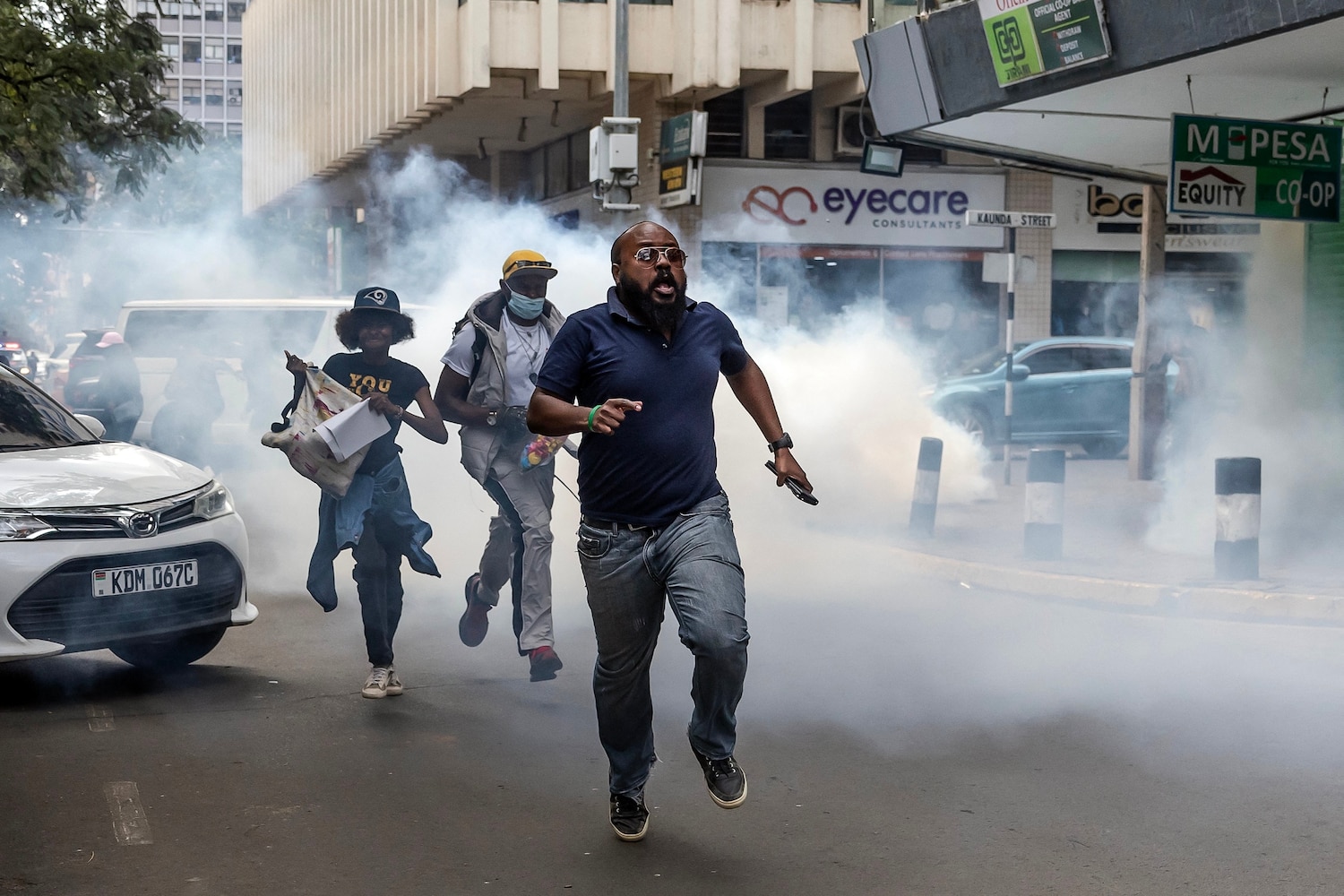
Kenyan protests on the anniversary of “Saba Saba” turn deadly as protesters from Generation Z clash with police
As Gen Z-led marches in Kenya commemorate the “Saba Saba” anniversary with disturbance, at least two demonstrators were shot dead.
Police opened fire during widespread protests in Kenya on Monday, the 35th anniversary of the historic Saba Saba movement, resulting in at least two verified deaths from gunshot wounds.
Two people with gunshot wounds had been brought in, according to Dr. Aron Sikuku, a physician at Eagle Nursing Home in Kangemi, outside of Nairobi, who spoke to the BBC. He claimed that irate demonstrators had gathered outside the institution and demanded that the remains be removed, adding that “they died from their injuries.”
The deaths have not yet been formally confirmed by the authorities.
The demonstrations broke out in Kenyan cities and towns all around the nation, spearheaded mostly by young people known as the “Gen Z” group. In keeping with a wave of anti-government rallies that started last year, demonstrators are calling for justice for victims of police violence, increased accountability, and decent administration.
The protests on Monday took place on the anniversary of the Saba Saba (seven-seven) rebellion on July 7, 1990, which served as the impetus for Kenya’s shift to multiparty democracy. However, this year’s remembrance was violent, just like its predecessor.
Security personnel used barricades and razor wire to restrict entrance to State House and Parliament as well as other main routes leading to central Nairobi.
Even ten kilometers from the city center, long-distance travelers were left stalled at police checks. Some educational institutions recommended that pupils stay at home.
Demonstrators set fires and tried to cross police lines as clashes broke out in multiple locations. Officers used water cannons and tear gas in response. While demonstrators set fire to Kamukunji, the symbolic ground zero of the initial Saba Saba riots, tear gas was shot on Thika Road and in Kitengela.
Protests have extended to 17 of Kenya’s 47 counties, according to the country’s daily, the Nation. A shopping center in Makutano, Meru County, was burned down.
Obstacles forced the cancellation of former Prime Minister and opposition leader Raila Odinga’s scheduled presence. Nevertheless, Odinga called for a national conversation on policing reform and denounced what he described as “a rogue police force that shoots people with impunity, a force inherited from the colonialists.”
Even though he backed the present government last year, Odinga was detained after the 1990 Saba Saba protests.
By midmorning, public transportation was still in a state of paralysis. Long-distance buses were in idle position in Kabete, some 13km from downtown Nairobi.
Driver Humphrey Gumbishi stated, “We started traveling at 8:30 p.m. last night. We want the government to engage in dialogue with Gen Zs so all this can come to an end.”
Police stated in a statement on Sunday that they were carrying out their constitutional obligation to uphold law and order and safeguard people’s lives and property. However, despite police denials, civil society organizations continue to charge authorities with being overbearing and conspiring with armed gangs.
An armed group stormed the Nairobi office of the Kenya Human Rights Commission (KHRC) on Sunday. Prior to the demonstrations, the NGO had been holding a press conference with female activists at the helm. At least twenty-five guys on motorcycles attacked the premises, shouting, “There will be no protest today,” according to KHRC spokesman Ernest Cornel.
Both clubs and stones were in their possession. They seized various valuables from journalists who were present, as well as laptops and phones,” he stated.
Only two weeks have passed since 19 people were killed on June 25 during anti-tax protests. Since then, protests have been more intense as claims of gang infiltration and looting have grown.
The events of Monday highlight the ongoing significance of the Saba Saba struggle for a large number of Kenyans. Even if multi-party democracy was brought about by the uprisings of 1990, the present wave of discontent indicates that the struggle for civic freedom and accountability is far from ended.