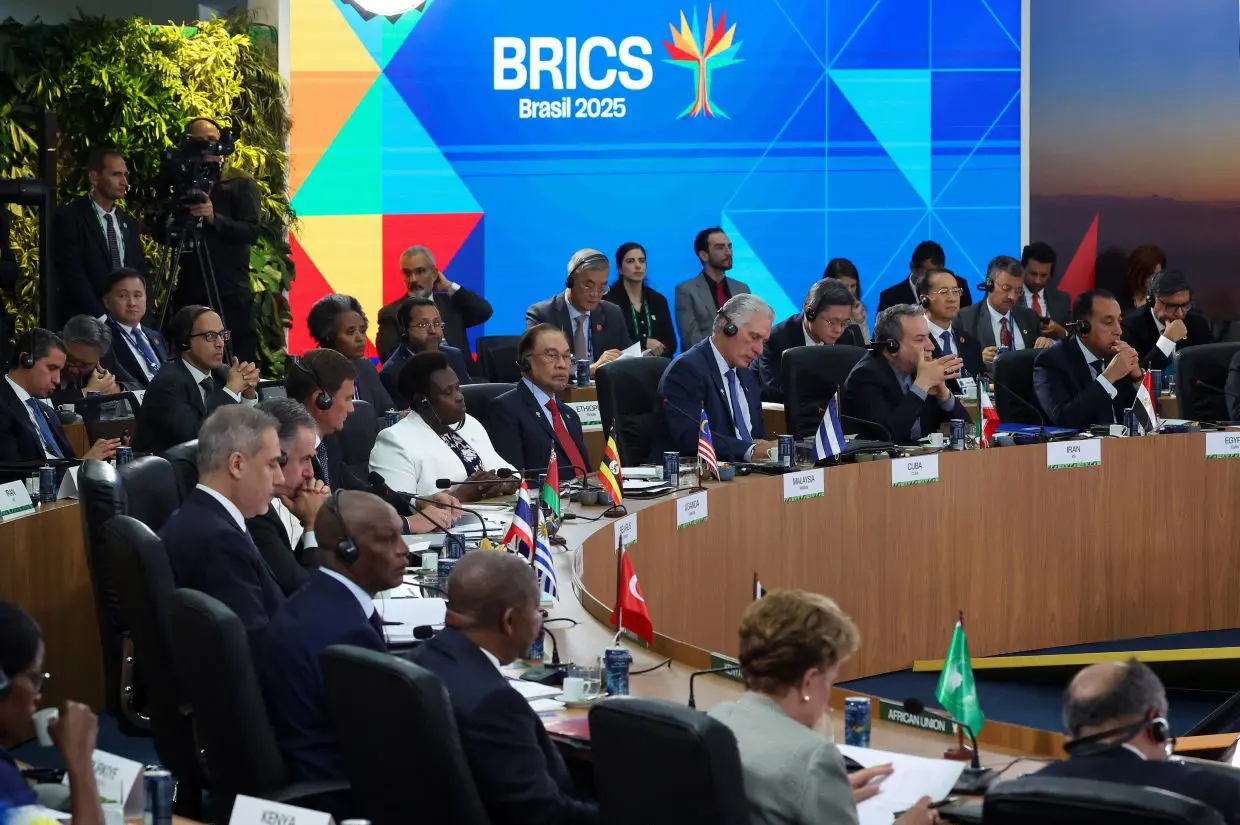
President Trump’s threat of fresh tariffs on members has prompted the BRICS nations to fight back against being labeled anti-American.
US President Donald Trump accused the BRICS of being “anti-American” after threatening to impose new 10% tariffs on its members, but developing nations attending the conference on Monday rejected his accusation.
Trump’s warning, which was released late Sunday, came as Washington was getting ready to finalize a number of trade agreements before the imposition of wide “retaliatory tariffs” was due on July 9.
Mao Ning, the spokesperson for the Chinese foreign ministry, stated during a press conference in Beijing that “tariffs should not be used as a tool for coercion and pressure.” The BRICS organization “does not target any country” and encourages “win-win cooperation,” she continued.
During trade negotiations, South Africa, which had previously been subject to 30% tariffs, also rejected the label. Kaamil Alli, a commerce ministry official, stated, “We are not anti-American.” He stated that talks with the US were still “constructive and fruitful.”
Russia’s stance was supported by the Kremlin, whose spokesperson said that the BRICS partnership “will never be directed against third countries” and was founded on a “common world view.”
Brazil, which is hosting the BRICS meeting this year, and India did not immediately address Trump’s comments. The president of Brazil, Luiz Inácio Lula da Silva, told reporters he would talk when the meeting was over but declined to remark immediately. He concentrated on the summit’s official agenda, which gave environmental and public health concerns first priority, in his opening remarks.
According to a senior Brazilian official who spoke on condition of anonymity, Trump’s threats underscored the significance of BRICS as a forum for poor nations to promote more equitable and efficient international trade regulations.
Numerous BRICS countries—as well as a few partner states—continue to be heavily dependent on commerce with the United States.
As a representative of one of the group’s newest members, Indonesia’s senior economic minister, Airlangga Hartarto, was scheduled to visit the United States on Monday to take part in tariff talks, authorities said.