Trump threatens pro-BRICS countries with a 10% tariff
President Donald Trump of the United States has threatened to impose an additional 10% tariff on nations who align themselves with the “Anti-American policies of BRICS.”
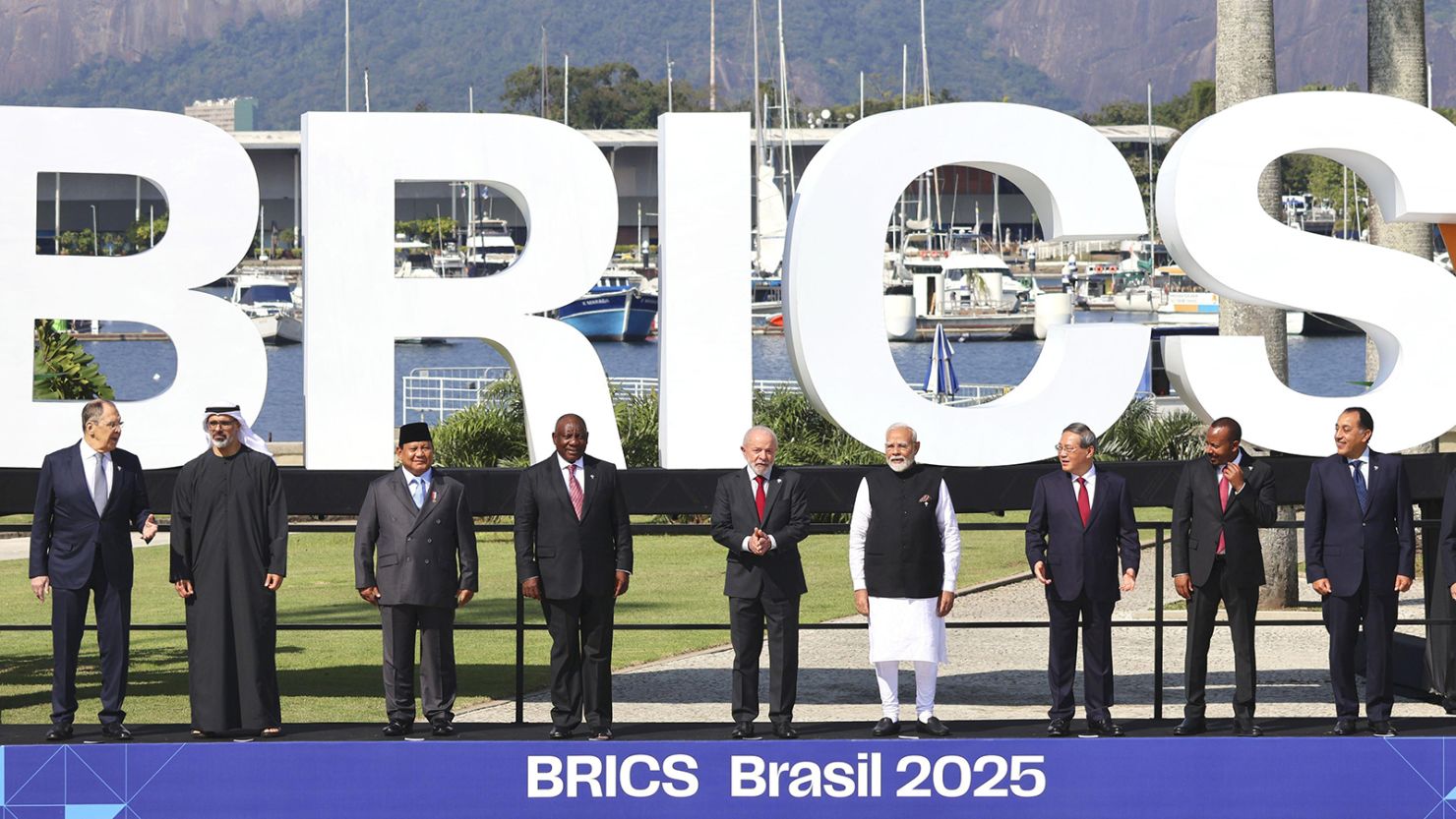
The BRICS gathering is now taking place in Rio de Janeiro when Trump made his announcement, which did not go into detail about any particular BRICS policy.
“Unjustified unilateral protectionist measures, including the indiscriminate increase of reciprocal tariffs,” the bloc’s leaders said in a joint statement on Sunday, seemingly targeting Trump’s expansive tariff policy.
The leaders warned that the “proliferation of trade-restrictive actions” threatens to disrupt the global economy and exacerbate already-existing economic disparities, without specifically mentioning the United States. They expressed “serious concerns about the rise of unilateral tariff and non-tariff measures which distort trade and are inconsistent with WTO rules.”
A 10% additional tariff will be applied to any nation that supports the BRICS’ anti-American actions. In a post on Truth Social on Sunday night, Trump stated that there would be no exceptions to this policy.
A former U.S. trade negotiator and current visiting senior scholar at the ISEAS-Yusof Ishak Institute, Stephen Olson, suggested that Trump might have been irritated by the BRICS presidents’ joint statement that made a vague jab at his tariff policy.
It’s possible that the president is referring to “anti-American” policies in reference to “the desire expressed by BRICS members to move beyond a U.S.-led world order in finance and global governance,” Olson said, adding that it’s “anyone’s guess” how that alignment will be evaluated.
CNBC’s request for comments from Brazil, the host nation of this year’s BRICS, was not answered.
In addition, the BRICS group of emerging countries condemned a series of military strikes on Iran without mentioning Israel or the United States, which carried out the operation, and gave symbolic support to its fellow member.
Brazil, Russia, India, China, South Africa, Saudi Arabia, Egypt, the United Arab Emirates, Ethiopia, Indonesia, and Iran are all members of the bloc. As a political and diplomatic coordination platform for nations from the Global South and for coordination in the most different fields, the group calls itself that.
According to the Carnegie Endowment for International Peace, the bloc aims to disrupt Western-dominated institutions of global economic governance and replace the U.S. dollar as the dominant currency in the world economy.
In his absence, Chinese President Xi Jinping sent Premier Li Qiang to this year’s BRICS summit, while Russian President Vladimir Putin, who is facing an International Criminal Court arrest order, participated virtually.
China opposes any action that uses tariffs as “a tool to coerce others,” a Chinese Foreign Ministry official said at a routine press briefing on Monday in reaction to Trump’s threat of a 10% additional duty.
The official added that “arbitrary tariff slapping does not serve the interests of any party” and that “China has been consistent in opposing any tariff war, trade war.” According to CNBC’s Mandarin translation, that is the case.
Trump separately stated that the United States will begin sending letters on Monday that include information on tariff rates particular to each nation and any agreements made with other trading partners. That supported remarks made over the weekend by Treasury Secretary Scott Bessent.
According to the Trump administration, tariffs imposed on nations that have not reached a deal with the United States will go into effect on August 1st rather than July 9th.
Bessent dismissed the notion that another fresh tariff deadline was coming up on August 1. During Sunday’s CNN “State of the Union,” Bessent stated, “We are saying this is when it’s happening, if you want to speed things up, have at it, if you want to go back to the old rate that’s your choice.”
Trump announced in April a 90-day halt to the high tariffs he had imposed on the majority of trading partners just days earlier. U.S. trading partners and investors are worried as that halt is set to end on Wednesday.