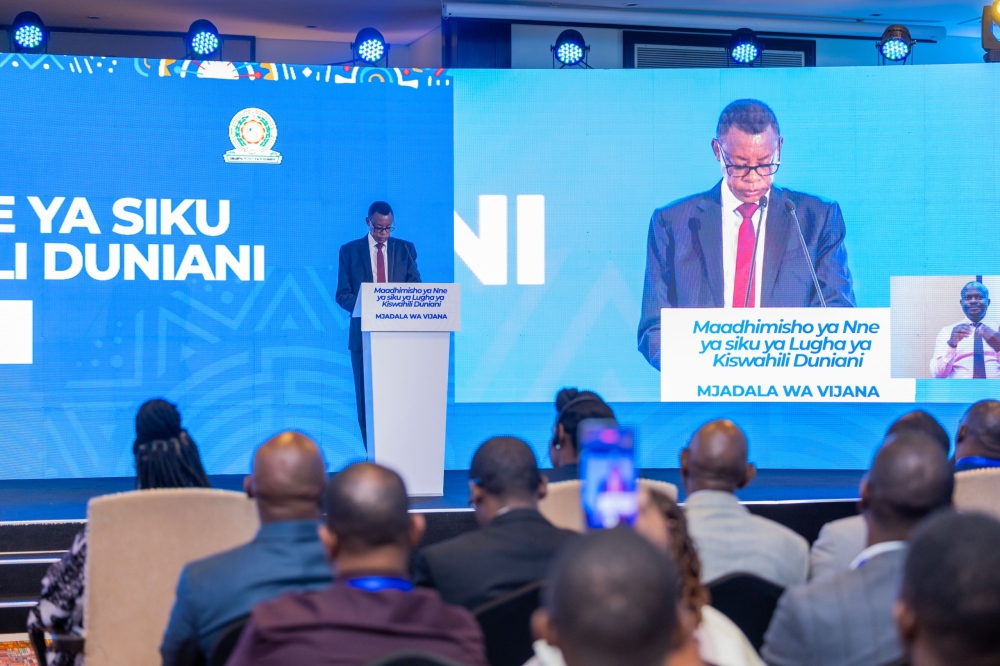
“Kiswahili is a powerful tool for regional integration, cultural unity, and sustainable development,” stated Gen. (Rtd) James Kabarebe, Minister of State for Regional Cooperation.
On Sunday, July 6, he made this statement when kicking off the 4th World Kiswahili Language Day festivities in Kigali.
“Encouraging the Kiswahili language in East Africa entails fostering collaboration in a range of projects and initiatives and enhancing cultural unity,” he stated.
Although Kiswahili originated in East Africa, he went on to say, it has since become a universal language.
Millions of people speak it now both inside and outside of the continent. Despite its East African roots, Kiswahili has become both an African and an international language, and it is the only African language that the African Union has formally acknowledged as a working language. It is also still being quickly adopted by regional groups, he continued.
Senior government officials, representatives from EAC Partner States, Kiswahili experts, academics, and university students are among the more than 300 attendees of the two-day event. Under the topic “Kiswahili, Inclusive Education, and Sustainable Development,” it is being held.
The event includes a regional symposium, youth engagement workshops, an exhibition, and a high-level opening ceremony. It is organized in collaboration with the East African Kiswahili Commission (EAKC).
EAC Deputy Secretary General Andrea Aguer Ariik spoke at the ceremony and emphasized Kiswahili’s wider significance than only communication, characterizing it as an instrument for advancing empowerment, equity, and access throughout the region.
According to Gen. James Kabarebe (Rtd), Kiswahili is an effective instrument for cultural cohesion, regional integration, and sustainable development.
“Kiswahili provides a useful and all-encompassing answer to some of our most pressing issues. It can bridge the divide between policy and people, between education and equity, and between tradition and innovation, he said, adding that it is the only African language recognized by the African Union and one of the most commonly spoken in the continent.
Two parallel discussion groups were formed from the participants during the breakout sessions.
One group, made up mostly of youth, investigated how Kiswahili, in conjunction with AI and inclusive education, may contribute to the development of a peaceful culture in the area.
In order to improve stakeholder participation, the second group exchanged creative ideas and methods while analyzing legislation and useful tactics pertaining to inclusive education and sustainable development.
World Kiswahili Language Day honors the language’s increasing significance as a tool for education, peacebuilding, and economic integration in Africa and beyond, in addition to its use as a language for communication.