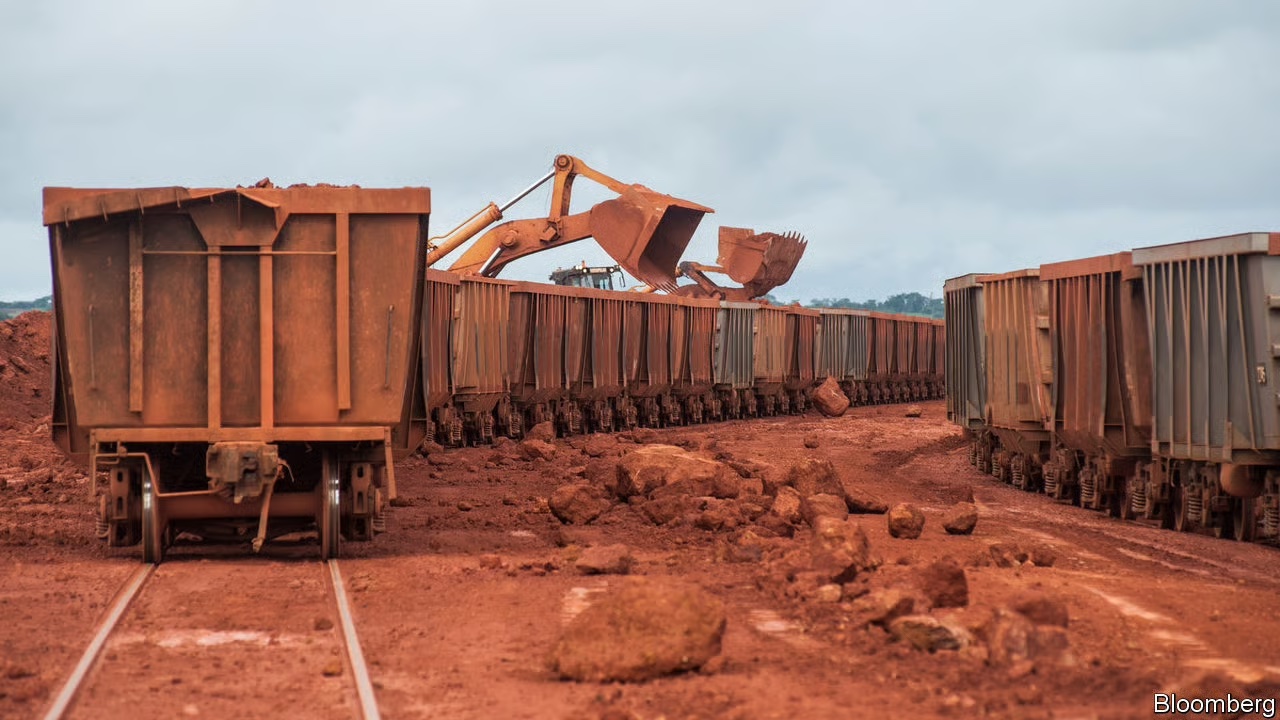
Guinea’s bauxite exports, a key feedstock for aluminium, surged 36% to a record 99.8 million metric tons in the first half of 2025, propelled by strong Chinese demand that countered declines due to a regulatory crackdown, official data revealed on Friday.
Bauxite exports surged from 73.4 million tons during the corresponding period last year, with firms under Chinese control accounting for more than 60% of shipments from the expanding port network of the West African nation.
In the first five months of 2025, China’s aluminum production rose by 4.0% to reach 18.59 million tons, driven by heightened infrastructure spending and a resurgence in manufacturing that increased demand for this essential raw material, according to data from the National Bureau of Statistics.
China represents approximately 60% of the world’s aluminium production, which is utilized in transportation, packaging, and construction.
Guinea’s increasing bauxite shipments to China align with the upcoming launch of the significant Simandou iron ore project, which is predominantly owned by Chinese companies. This development further entrenches the country’s reliance on resource exports to Beijing, especially as Western governments have struggled to gain a foothold in the region.
China’s CHALCO exported 8.9 million tons of bauxite from Guinea, while CDM-CHINE shipped 4.1 million tons and SPIC contributed 1.8 million tons.
The leading player in the SMB sector, supported by Chinese investors, achieved dominance with 31.2 million tons, accounting for nearly one-third of total exports.
The increase occurred even though Guinea’s military government had put in place more stringent mining regulations, which compelled several companies to completely cease their operations. During the period, GAC, KIMBO, and SBG reported no exports, and Kambia Bauxite Mining was inactive.
The effects of the crackdown were clearly reflected in the data fluctuations. Although established Chinese firms continued to deliver consistently, smaller operators faced challenges.
The diversification of ports has also bolstered export growth, with nine operational facilities managing exports. Dapilon/Katougouma accounted for 30% of shipments, with Kokaya following closely at 25%, alleviating bottlenecks at the traditional Kamsar hub.
Guinea, the world’s second-largest bauxite producer, is poised for annual exports that could surpass 199 million tons, reinforcing its position as the largest bauxite supplier globally, even amid ongoing regulatory restructuring.
“Guinea’s first-half shipments account for 24% of the global supply for 2024 – a truly impressive figure,” stated Theo Acheampong at Critical Minerals Africa Group. Although China’s supremacy in Guinean bauxite is well recognized, it would be intriguing to see Guinea develop its own processing capabilities to keep more value within the country.
Guinea has exerted pressure on bauxite producers to refine locally after decades of exporting the raw material. This has resulted in disputes with certain companies that have had their licenses revoked for failing to meet the refinery construction timelines established by the government.