Drones are used by mine operators in West Africa to identify wildcat miners as gold prices rise
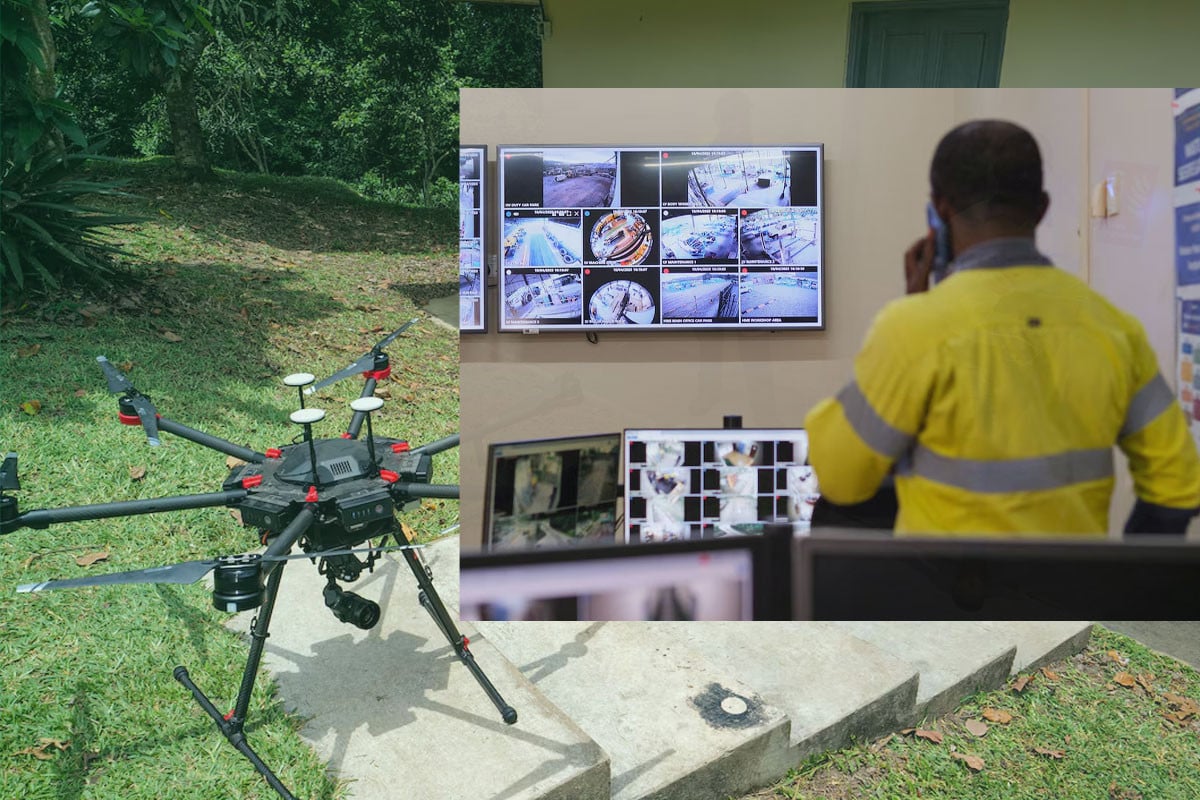
A drone is launched into the clear sky by three men as the afternoon sun beats down on Gold Fields’ expansive Tarkwa gold mine in southwest Ghana. The drone’s cameras are looking for intruders on the verdant 210-square-kilometer area.
A 15-person squad, including armed cops, arrived on the location within 20 minutes after the drone detected anything strange. Amid pools of water tainted with cyanide and mercury, they found crude equipment, recently excavated trenches, and abandoned garments. So-called wildcat miners, who work outside of many of the continent’s formal mining operations, abandoned the equipment, endangering the environment, their own health, and the earnings of the official mine operator.
The team seized a “chanfan” processing equipment that was used to extract gold from riverbeds, as well as seven diesel-powered water pumps.
According to dozens of mining executives and industry experts interviewed by Reuters, the high-tech cat-and-mouse game is becoming more frequent as record gold prices, currently above $3,300 per ounce, attract more unofficial activity. This is escalating sometimes fatal confrontations between corporate concessions and artisanal miners in West Africa.
“If you don’t have eyes in the air, you won’t know something destructive is happening because of the vegetation cover,” says Edwin Asare, head of protective services at Gold Fields Tarkwa Mine. “Being able to put your boots on the ground is like having eyes in the sky first.”
Since late 2024, conflicts at significant mining facilities in the area have resulted in the deaths of almost 20 illegal miners. These include Nordgold’s Bissa Mine in Burkina Faso, AngloGold Ashanti’s (AU.N) opens new tab locations in Ghana and Guinea, and Newmont’s (NEM.N) opens new tab.
No official mine employees have been reported wounded. Conflicts at corporate mines have occasionally resulted in production halts of up to a month, leading businesses to demand greater military protection from governments.
ON THE GROUND BOOTS
According to a May United Nations estimate, around 10 million people in Sub-Saharan Africa depend on the unauthorized mining industry for their vital income.
According to other industry figures, three to five million people in West Africa rely on unregulated mining, which accounts for about 30% of the region’s gold production. They act as economic lifelines in an area with limited legitimate employment prospects.
Many residents of Senegal’s gold-rich Kedougou region, including 52-year-old Famanson Keita, grew up digging gold in their communities. Until corporate miners arrived, uprooting them from their towns and promising them jobs and speedy growth, they supplemented their farming earnings with simple and traditional techniques.
“Those promises have not been fulfilled,” Keita stated. “A large number of our youth work in low-level, uncontracted positions that offer little stability and minimal compensation. Our families cannot be supported by small-scale farming alone.
Much of the illegal activity, especially in the area’s forests and large bodies of water, is now carried out with sophisticated digging and dredging equipment and funding from local cartels and foreigners, including from China, even though locals have long attempted to make a living on the fringes of corporate mines.
The economic pressures
Sahel-focused security and mining analyst Ulf Laessing cautioned that more violent clashes around mining activities might be anticipated in the upcoming months, as increased central bank gold purchases and wider geopolitical concerns could push gold to $5,000 an ounce.
According to Laessing, head of the Sahel program at Germany’s Konrad Adenauer Foundation, “the more the price of gold increases, the more conflicts we will see between industrial and informal miners.”
According to a source within the firm who wished to remain anonymous, nine wildcat miners were shot dead in January at AGA’s Obuasi mine in Ghana after they broke through the walled 110-square-kilometer concession to scavenge gold.
According to a source acquainted with the mine’s operations, hundreds of wildcat miners broke into the concession at AGA’s Siguiri Mine, northeast of Guinea, in February, forcing military intervention.
According to police, at least three wildcat miners were shot by guards at Newmont’s Ahafo gold mining location in northwest Ghana in January, and other miners were hurt.
An excavator operator at an illegal mining site in Kenieba, Mali’s gold-rich Kayes area, told Reuters that operations have grown quickly this year, with Chinese managers moving more equipment to new sites as gold prices rise. Reuters was unable to identify these Chinese operators or determine whether they were connected to any businesses or government agencies.
Authorities in Ghana have been raiding dozens of unofficial mining sites this year and detaining hundreds of locals and foreigners, mostly Chinese, who run unlicensed gold operations in the nation’s enormous woods, including protected regions and waterways.
Swissaid scholar Marc Ummel claims that “the majority of their produce is smuggled because of porous borders and weak regulations, depriving the countries of the full benefits.” Swissaid, which examined export statistics from 2019 to 2023, found that smuggling cost Ghana more than 229 metric tons of gold, mostly artisanal.
According to Adama Soro, head of the West African Federation of Chambers of Mines, artisanal miners decrease the life of mines by competing with large-scale miners for ore. “We’re seeing artisanal miners digging up to 100 meters and impacting the ore body of the big miners, so we’re losing money,” he stated.
MILITARY ARMED PROTECTION
According to the head of a mining business in Ghana that is highly impacted by wildcat miners, miners are turning to unorthodox tactics and increased spending at the price of investment and community programs.
According to the source, the mine still faces frequent attacks despite spending about half a million dollars a year on countermeasures like drone surveillance to stop wildcat mining.
Recently, there have been intrusions into Nordgold, Galiano Gold (GAU.TO), opens new tab, B2Gold (BTO.TO), and Barrick Gold (ABX.TO), opens new tab.
This year, the main corporate miners in Ghana have stepped up their efforts to have military security at mining sites. Three mining executives and an industry analyst who asked not to be named said similar requests have been made in Mali and Burkina Faso.
Ahmed Dasana Nantogmah, chief operating officer of Ghana’s Chamber of Mines, stated, “We understand the need to prioritize sites facing consistent attacks while implementing regular patrols at others.” “Ideally, we want military presence at all mining operations,” he continued.
According to Nantogmah, industry leaders met with government representatives in mid-April to make their case, and the talks produced “positive” outcomes.
Requests for comment from Ghana’s government were not answered.
According to two mining executives involved in the negotiations, Ghanaian authorities want miners to pay deployment fees, which are estimated to be 250,000 Ghana cedis ($18,116) every detachment of fewer than 50 persons per day.
The Minerals Commission, which oversees the mining industry in Ghana, is advancing technology by setting up an AI-powered control room to examine data from 28 drones sent to areas known for illicit mining. A control system that may remotely disable excavators operating outside of permitted borders is part of the system, as are trackers on the machines.
According to Sylvester Akpah, consultant for the drone surveillance and AI-powered project for Ghana’s mining sector regulator, “if we allow full deployment, we can win this fight with technology.”