Khalil, a pro-Palestinian activist, is free after a US judge orders his release
Hours after a court ordered his release, Columbia University graduate Mahmoud Khalil left a Louisiana immigration detention facility on Friday. This was a significant win for rights organizations that contested what they claimed was the Trump administration’s illegal targeting of a pro-Palestinian activist.
When he was released in the small town of Jena, he declared, “Justice won, but it’s long, long overdue.” And three months shouldn’t have been needed for this.”
On March 8, immigration officers detained Khalil, a well-known participant in pro-Palestinian demonstrations against Israel’s war in Gaza, in the Manhattan lobby of his university apartment. Republican President Donald Trump has referred to the demonstrations as antisemitic and threatened to deport participating international students. This policy’s initial goal was Khalil.
Protesters, including some Jewish organizations, claim the government incorrectly associates their support for Palestinian rights with endorsing radicalism and their condemnation of Israeli activities in Gaza with antisemitism.
U.S. District Judge Michael Farbiarz of Newark, New Jersey, heard oral arguments from Khalil’s and DHS’s attorneys and ordered DHS to free Khalil from custody at a remote Louisiana immigration jail by 6:30 p.m. (2330 GMT) Friday.
According to Farbiarz, the government had not attempted to refute Khalil’s attorneys’ proof that he posed no flight risk or public safety threat.
Referring to Khalil as he rendered a decision from the bench, Farbiarz stated, “There is at least something to the underlying claim that there is an effort to use the immigration charge here to punish the petitioner,” adding that it was illegal to punish someone for a civil immigration problem.
Khalil is the most recent in a series of international pro-Palestinian students detained in the United States since March but later freed by judges. Among them are Rumeysya Ozturk and Mohsen Mahdawi.
Khalil, a lawful permanent resident of the United States, claims that his punishment for his political expression violates the First Amendment of the Constitution. During talks with CNN and other news organizations last year, Khalil denounced racism and antisemitism.
“NO ONE IS ILLEGAL.”
The American Civil Liberties Union, which backed the activist, and its senior staff attorney, Noor Zafar, stated: “Today’s ruling underscores a vital First Amendment principle: The government cannot abuse immigration law to punish speech it disfavors.”
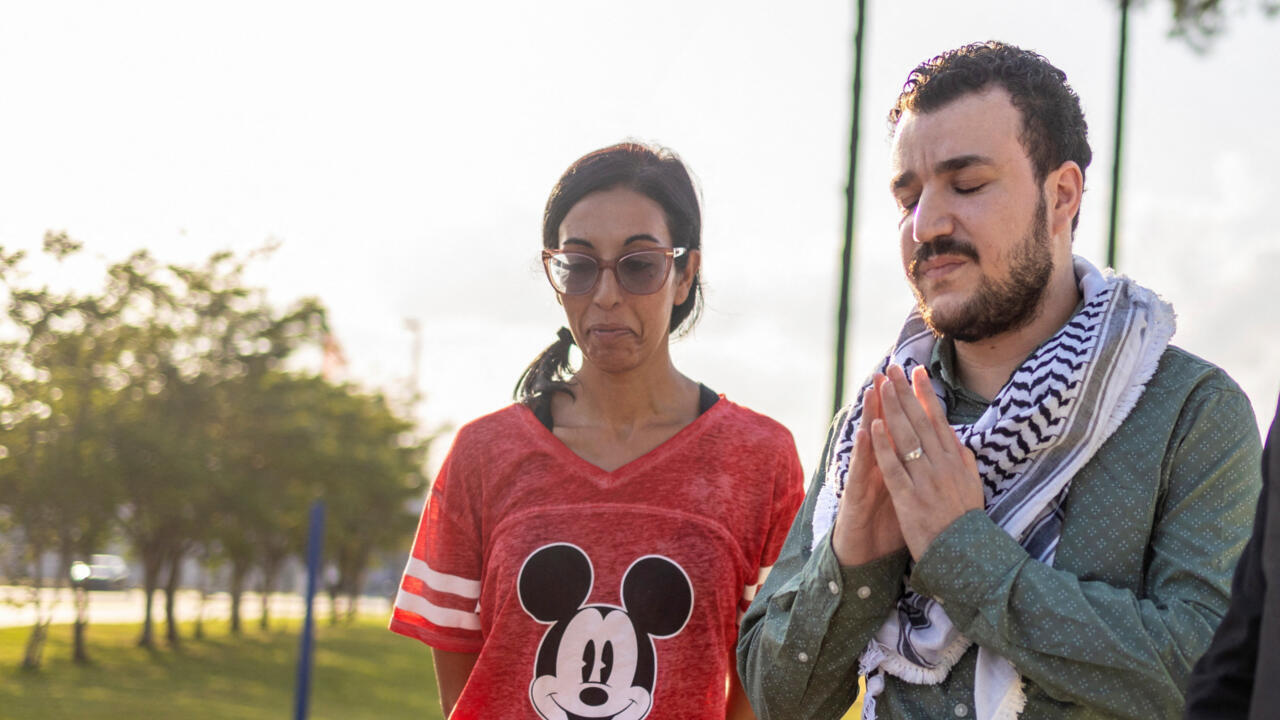
The activist, who was born in Syria, intends to go back to New York to be with his wife, Dr. Noor Abdalla, and their baby boy, who was born while Khalil was detained for 104 days.
“This ruling does not begin to address the injustices the Trump administration has brought upon our family, and so many others,” Abdalla stated in a press release. “Today we are celebrating Mahmoud coming back to New York to be reunited with our little family and the community that has supported us since the day he was unjustly taken for speaking out for Palestinian freedom.”
Khalil should be deported for “conduct detrimental to American foreign policy interests” and for obtaining a student visa fraudulently, according to the White House, which denounced the decision to release him.
White House spokeswoman Abigail Jackson stated in a statement that “a local federal judge in New Jersey — who lacks jurisdiction — has no basis to order Khalil’s release from a detention facility in Louisiana.” “We expect to be vindicated on appeal.”
Khalil’s immigration case is still pending.
As he addressed reporters outside the detention facility, Khalil, clad in a keffiyeh, raised his right fist in denunciation of what he saw as the racist immigration policies of the Trump administration. He said that he was abandoning hundreds of inmates who shouldn’t be in the correctional facility.
Outside the facility’s gates, he declared, “The Trump administration is doing their best to dehumanize everyone here.” “No one is illegal, no human is illegal.”
Khalil claimed that his incarceration had altered him.
“Once you enter there, you see a different reality,” he stated. “A different reality about this country that supposedly champions human rights and liberty and justice.”
A SEPARATE FEE
In his case, the Louisiana immigration court denied a bond hearing and rejected his asylum request on Friday, stating that he might be deported due to the government’s claims of immigration fraud. The bail request was deemed moot by Farbiarz’s ruling.
Khalil has options to appeal via the immigration system, just like anyone else who faces deportation. In addition, Farbiarz is taking into account Khalil’s constitutional objection to his deportation and has prevented officials from doing so while that appeal is pending.
Farbiarz ruled earlier this month that the government was infringing Khalil’s right to free expression by holding him in detention under a seldom used law that gives the U.S. secretary of state the authority to request the deportation of foreign nationals whose presence in the nation is thought to be detrimental to U.S. foreign policy objectives.
After Trump’s administration claimed that Khalil was being kept on a different charge that he had concealed material from his application for permanent residency, the judge refused to order Khalil’s release from a Jena detention facility on June 13.
Lawyers for Khalil refute the accusation, stating that such accusations are rarely used to jail anyone. They requested Farbiarz to allow their client’s separate request on June 16 to be sent to immigration detention in New Jersey or freed on bail so he could be near his family in New York.
It is “highly unusual” for the government to imprison an immigrant who is accused of making mistakes in his application for permanent residency, Farbiarz said during Friday’s hearing.
His wife and newborn son are U.S. citizens, and Khalil, 30, became a permanent resident of the United States last year.
In a filing on Tuesday, attorneys for the Trump administration stated that Khalil’s request for release should not be sent to Farbiarz, who is deciding whether Khalil’s arrest and subsequent detention on March 8 were constitutional, but rather to the judge presiding over his immigration case, which is an administrative process over whether he can be deported.