Insight: Trump’s cuts to assistance hurt Africa’s efforts to prevent HIV
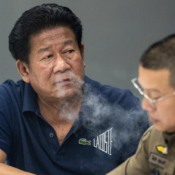
A 25-year-old gay man in Nigeria named Emmanuel Cherem tested positive for HIV two months after the administration of U.S. President Donald Trump made it harder for at-risk groups like gay men and people who take drugs to get medicine that keeps them from getting HIV.
Cherem says that he should have been more careful about having safe sex, but he was used to using the drug that came from the U.S. Pre-Exposure Prophylaxis, or PrEP, is the name of the drug that is usually taken every day as a tablet. It can cut the chance of getting HIV through sex by 99%.
“I’m to blame… In Awka, Nigeria, Cherem said at his gym, “Taking care of myself is my first duty as a person.” Awka is the capital of the southeastern state of Anambra.
“I equally blame the Trump administration because, you know, these things were available, and then, without prior notice, these things were cut off.”
After taking office in January, Trump put a 90-day hold on foreign aid and stopped funds from the U.S. Agency for International Development (USAID). The office was in charge of putting most of the help from the President’s Emergency Plan for AIDS Relief (PEPFAR), which is the biggest HIV/AIDS program in the world, into action.
Sub-Saharan Africa is still where most of the AIDS cases are happening. As aid groups and public health systems in Africa worked to stop the spread of the disease, Trump’s cuts have made it harder for millions of Africans to get the drugs they needed to stay healthy. These drugs were especially important for gay men, sex workers, and other vulnerable groups.
PrimE Watch, a global watcher, says that the number of initiations, or people who have taken at least one dose of the drug, rose from less than 700 in 2016 to more than 6 million by late 2024 in Africa. Last year, more than 90% of new programs were paid for by PEPFAR and used cheap generic forms of the drug.
The United Nations AIDS office, UNAIDS, says that 390,000 people died of AIDS in 2023, which is 62% of the world’s total. But things are getting better. The World Health Organization says that number of deaths is down 56% from 2010 to now.
Now, 10 patients, health officials, and campaigners say that some people who can’t get the preventative drug because of U.S. budget cuts are already testing positive.
A UNAIDS fact sheet from May says that more widely used HIV prevention tools like condoms and lubricants are becoming harder to get “because of the US funding cuts.” At the same time, restrictions on PrEP have been put in place. Together, they are making what nine activists and three medical experts called a big threat to prevention across the continent.
Linda-Gail Bekker, an HIV expert at the University of Cape Town, said, “I just think this is very short-sighted because we were on the right track.”
She said that many African countries did not have the money to pay for PrEP drugs on top of treating HIV infections, which could make the pandemic worse.
“It’s as predictable as if you take your eye off a smouldering bushfire and the wind is blowing: a bushfire will come back.”
The president has said that the United States pays too much for foreign help. He wants other countries to pay more as he tries to cut all government spending in the United States. According to government figures, the U.S. gave $65 billion in aid to other countries last year. Almost half of that amount came through USAID.
Thatcher Center for Freedom senior research fellow Max Primorac, who used to work for USAID and is now at The Heritage Foundation, said, “It’s a question of who has primary responsibility for the health needs of citizens of other countries, and it’s their own governments.”
“We all know, and this is a bipartisan issue, that aid dependency doesn’t help these people – that the best solution is for these countries to be able to take over the responsibility of these programs.”
A GROWTH IN CASE
UNAIDS says that if PEPFAR-funded prevention and treatment programs are shut down for good, it could mean that 2,300 more people get HIV every day around the world. In 2023, 3,500 new cases were found every day.
Reuters talked to 23 health workers, people who use PrEP, and activists. Almost all of them said that it was impossible to know how many more people have gotten HIV since the funding cuts because many groups that help vulnerable people have lost their funds.
Some PEPFAR activities could start up again after the State Department gave a waiver on February 1. The waiver only covered HIV prevention for mother-to-child transmission.
That means that gay and bisexual men, people who work in the sex industry, and people who take drugs, who are more likely to get the virus, can no longer get PrEP that is paid for by PEPFAR. In their PrEP efforts, many African governments went after these groups in particular.
The State Department is in charge of USAID and the PEPFAR program. A spokesperson for the Department told Reuters that it “continues to support lifesaving HIV testing, care and treatment, and prevention of mother-to-child transmission services approved by the Secretary of State.”
“All other PEPFAR-funded services are being reviewed for assessment of programmatic efficiencies and consistency with United States foreign policy,” a spokesperson said.
When asked exactly why the waiver had kept vulnerable groups from getting PrEP, the spokesperson did not answer.
More than half of all people living with HIV are in East and Southern Africa. In March, UNAIDS said that the U.S. had been paying nearly 45% of HIV prevention programs in that area.
It was said that HIV prevention efforts in some countries, like Malawi, Zimbabwe, and Mozambique, were very much reliant on PEPFAR. Some countries with more money than others, like South Africa and Kenya, spent less than 25% of their HIV prevention budget on PEPFAR.
Russell Vought, who is in charge of the U.S. Office of Management and Budget, told a congressional committee on June 4 that Africa needed to do more to fight AIDS because the U.S. had a lot of debt.
What Vought said about the restrictions on HIV prevention programs: “We believe that many of these nonprofits are not geared toward the viewpoints of the administration.”
Rachel Cauley, Vought’s communications director, said that Trump “ran on ending woke and weaponized government,” referring to programs that dealt with topics like transgender rights and climate change.
“I hope Trump changes his mind.”
Reuters talked to four men in Nigeria who used PrEP. All of them were gay or bisexual, and they had tested positive for HIV since January, when they stopped being able to get more pills. This happened after they had risky sex.
The Hearty Empowerment and Rights (HER) Initiative is a community-based organization in southeastern Nigeria. Its executive director, Festus Alex Chinaza, said that the organization worked with other HIV/AIDS service providers to confirm the men’s diagnosis and help them get treatment.
In Asaba, Nigeria’s Delta state capital, Echezona, a 30-year-old gay man who took PrEP pills every day for more than three years, is still having a hard time accepting that he has HIV. He got the news in early May. He feels bad about having sex without protection.
Echezona, who only wanted to be known by his first name for fear of being judged, said, “I just pray and wish that Trump changes his policy and everything goes back to normal so that the virus doesn’t spread as much.”
Like the other three guys, he said that staff at community-based clinics told him that PrEP was only for women who were pregnant or breastfeeding, which was in line with rules set by the Trump administration.
According to UNAIDS, 1.3% of adults in Nigeria have HIV, and the country has an estimated 2 million people living with HIV. This is the fourth-highest number of people living with HIV in the world.
But the numbers are much higher for so-called “key populations.” For example, a survey done in 2021 found that 25% of men who have sex with other men are LGBT.
When asked what they thought about the effects of the Trump administration’s cuts to HIV prevention services, the Nigerian health ministry did not reply.
UNAIDS says that 7.7 million people in South Africa are living with HIV, which is the biggest number in the world. The country pays for its own PrEP pills.
But some clinics that gave them to “key populations” depended on PEPFAR funds and have had to close in the past few months.
Public health centers also offer PrEP for free, but nine campaigners said that gay men and sex workers often avoid these places out of fear of being discriminated against and harassed.
Executive director of the Ezintsha medical research center at the University of the Witwatersrand in Johannesburg, Francois Venter, said that since Trump’s cuts, there had been almost no rise in the number of PrEP kits given out by public clinics in the city.
A spokesperson for South Africa’s health ministry, Foster Mohale, said that the ministry was “not aware” of claims that certain groups were not going to health facilities because of the stigma attached to them.
“We have sensitized health officials across the country to create (a) conducive environment for all healthcare seekers/clients to access the service without feeling judged or discriminated against,” he added.