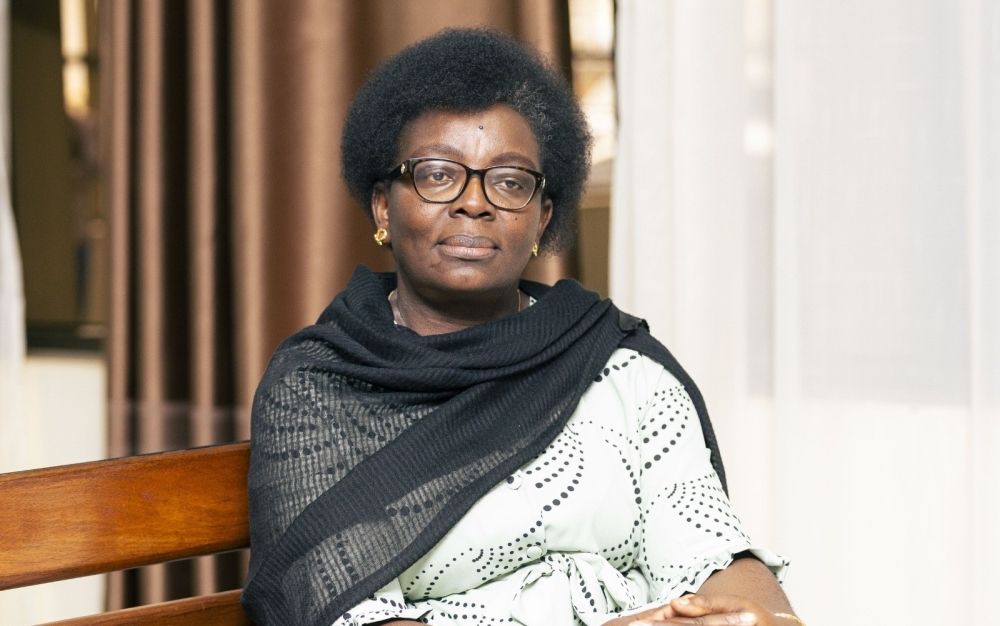
Ingabire, an ex-convict, denies any connection to the claimed attempt by the government to overthrow
The leader of the unregistered DALFA-Umurinzi party, Victoire Ingabire Umuhoza, went to court on June 19 and denied having any information or involvement in a plot to overthrow the government.
Ingabire was asked to give more information about the trial that is still going on with YouTuber Théoneste Nsengimana and eight other people, including Sylvain Sibomana. People in the group are being charged with planning nonviolent opposition while pretending to be English language classes.
The court used Article 106 of Rwanda’s criminal process law, which lets judges call people they think could have important information about a crime, even if they are not officially suspects.
During the meeting, the judge in charge asked Ingabire if she knew about or had anything to do with setting up the training sessions that were described in the indictment. Ingabire denied the claims, saying that her group never did any public things because it wasn’t recognized by the law.
“The DALFA party was never okay.” The Rwanda Investigation Bureau (RIB) told me I couldn’t start a political party after we turned in our registration papers. “Since then, we haven’t done anything in the name of the party,” she said.
When asked about the nickname “Inkora IVU,” which was said to connect her to the suspects, Ingabire said she had never used it. “I don’t think that name is mine unless someone used it without my knowledge.”
The judge also asked her about the alleged link between her and the supposedly “English training” meetings that the accused was said to have gone to. Ingabire made it clear that the time she helped her former assistant, who didn’t speak English well, find a language school had nothing to do with this case.
She said the assistant never actually joined the program because of safety worries. “That is not related to the trainings the accused are said to have gone to in 2021. “The goal and time of these were different,” she said.
Ingabire said that Sibomana had talked about going to a nonviolence training with Rwandans and people from other countries while he was staying at her house after getting out of jail. She made it clear, though, that she did not lead or follow up on the training—she said it was part of his personal life.
Concerning the person named “Assoumpta,” who was listed as one of the training organizers, Ingabire said she had been contacted by a woman with that name who lived in Belgium and wanted to help Sibomana pay for dental care after he talked about his health problems in public. She said, “But I can’t say for sure if the Assoumpta in this trial is the same person.”
Evidence presented by the prosecution also included videos on Nsengimana’s YouTube account, Umubavu TV, that were said to have messages meant to cause trouble around “Ingabire Day.” Ingabire made it clear that she went on the channel in 2019 to talk about her views. There were talks about holding future conversations, but she gave that job to someone else because she had to study.
“I put Nsengimana in touch with a man named Leon who lives abroad to help me look over the content and make sure it made sense in the country,” she said.
“The prosecution’s press release and video were made outside of the United States as promotional materials before the planned debate.”
Ingabire’s lawyer, Gatera Gashabana, backed up her stance.
“She had nothing to do with the alleged training or setting it up.” DALFA Umurinzi was never allowed to work, and no political actions were ever done in its name. “Any attempt to connect her to this plot is baseless,” he said.
The lawyer called the only witness, who was named “Boniface,” into question.
Ingabire, who was running for president before, was given 13 years in jail in 2013 for conspiracy and divisionism. As of 2018, she and more than 2,000 other prisoners were freed because of a presidential pardon.
This week’s trial is mostly about the claims that Sibomana and others set up secret training classes that were based on the book Blueprint for Revolution by Serbian activist Srdja Popović. Prosecutors say the training was meant to teach peaceful ways to fight and was paid for by money from outside the country. It was said that participants used nicknames and encrypted ways to talk to each other.
The judges are likely to start the meeting again Thursday afternoon, and more business is planned.