Tinubu Advocates for the Adoption of Policies That Encourage Eco-Friendly Travel in Africa at the 68th UN Regional Meeting
Tinubu has urged investment in sustainable tourism infrastructure and pragmatic collaborations to increase intra-African travel.
African nations have been urged by President Bola Tinubu to enact laws that support environmentally friendly travel and protect the continent’s cultural heritage.
He specifically looked for partnerships and workable solutions that would increase infrastructure investment in the tourism industry and strengthen its role in achieving the Sustainable Development Goals (SDGs) on the African continent.
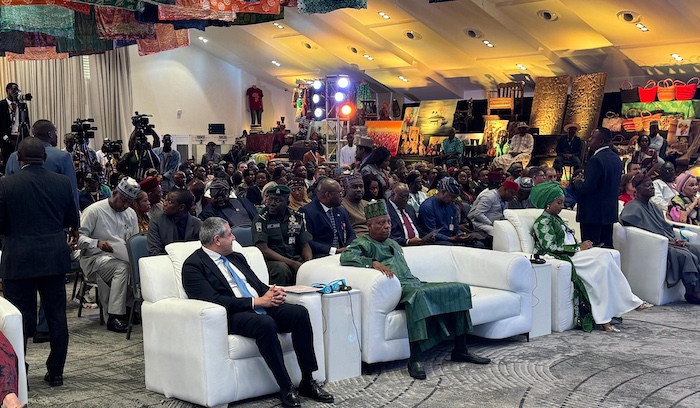
When he opened the 68th meeting of the UN Tourism Commission for Africa (CAF) in Abuja on Wednesday, the president revealed that the goal is to ensure that Africa becomes the focal point of international discussions about how to fully utilize tourism to strengthen the continent’s economy.
Vice President Kashim Shettima represented President Tinubu at the event, and he stated that Nigeria supports the adoption of sustainable tourism techniques throughout Africa, citing the continent’s particular issues as justification.
He stated, “Nigeria encourages other African countries to adopt policies promoting eco-friendly tourism and preserving cultural heritage by working with regional organizations like the African Union, ECOWAS, and UN Tourism.”
“This partnership entails exchanging best practices, providing training for travelers, creating cooperative marketing campaigns for eco-friendly travel, and enhancing infrastructure to facilitate travel within Africa.” Africa can promote a tourist movement across the continent that benefits both people and the environment by implementing these regional projects, which will propel the continent’s long-term prosperity.
While he insisted that the industry “is an engine of local economies, a catalyst for social understanding, and a bridge that unites cultures,” President Tinubu noted that tourism encompasses more than just “traveling or visiting historic sites, waterfalls, mountains, and parks.”
“The emergence of creativity and technology has revolutionized tourism and its prospects. Thus, it is fitting that this conference emphasize how AI, innovation, and the creative industries affect the travel and tourism industry,” he continued.
According to President Tinubu, Nigeria’s creative industries—which include music, film, fashion, literature, and digital arts—have “emerged as a powerful driver of economic growth, making significant contributions to the country’s GDP, job creation, and economic diversification.” He also highlighted the sector’s role in international tourism.
One of the biggest film businesses in the world, Nigeria’s Nollywood makes a lot of money from both local and foreign markets. In a similar vein, Nigeria’s fashion and music industries have created jobs and revenue while advancing the country’s cultural impact internationally.
One thing is evident as we steer Africa’s tourism industry in a new direction: the government cannot develop the industry on its own. It requires collaboration with the private sector. This strategic relationship is necessary due to the sector’s increasing complexity and prospects,” he added.
The Nigerian leader urged attendees to “concentrate on pragmatic solutions and cooperative strategies that will strengthen intra-African travel, boost investment in tourism infrastructure, empower local communities, and deepen tourism’s role in achieving the Sustainable Development Goals (SDGs) and making African tourism the heart of the global conversation” as he opened the regional meeting.
In her earlier speech, Hannatu Musa Musawa, Minister of Art, Culture, Tourism, and Creative Economy, urged African countries to use innovation, artificial intelligence (AI), and creative industries to harness the continent’s enormous potential in international tourism.
Musawa said, “I am passionate about Nigeria and the mission and commitment of President Tinubu,” expressing her strong belief in the president’s vision for the country. His vision for Nigeria, which I think would allow the nation to sit in the comity of countries as a developed nation, is the reason I believe in it. I offer the same prayers for all of Africa and exhort us to stand as one.
The Minister emphasized that “Africa stands at the forefront of change” and stated that President Tinubu’s “Renewed Hope Agenda” serves as the foundation for Nigeria’s sectoral development. We must create economies in the twenty-first century based on people-powered prosperity, not simply on the ground, through the arts, tourism, culture, and the creative economy.
According to Musawa, the title of the event, “Boosting Social Impact and Education in Tourism via Innovation, AI, and Creative Industries in Africa,” emphasizes that how boldly and widely Africa uses technology to empower people will determine how prosperous the continent becomes in the future.
Africa contributes less than 5% of world tourism revenue and less than 1% of global creative exports, she noted, despite the fact that the global business is valued at over $11 trillion. “There is neither a skill shortage nor a deficit. Nigeria extends an invitation to Africa today to bridge that divide,” she stated.
Ambassador Zurab Pololikashvi, the Secretary-General of UN tourist, praised the Tinubu administration for assisting in the reform of Nigeria’s tourist sector, which he said will have an effect on the rest of Africa.
He emphasized that tourism is Africa’s future and that, because of its enormous potential and boundless chances for invention and creativity, the region is, in fact, the new frontier in global tourism.
In an effort to facilitate travel for tourists throughout Africa and beyond, Pololikashvi called on the continent’s leaders to evaluate current visa policies and address connectivity-related concerns throughout the area.
Speaking at the National Assembly, Senator Ireti Kingibe, who represents the Federal Capital Territory, urged all African players to think creatively because Africa is not only taking part in the digital tourism of the future.
According to her, Africa is influencing the digital future of tourism, and Nigeria, with its vast creative and cultural wealth, is poised to take the lead. She also said that African culture and resiliency, when paired with cutting-edge technologies like artificial intelligence and immersive media, have the potential to completely transform how people view, understand, and value Africa.
“The event today offers a chance to spread the word about domestic inventions that draw travelers from the local level to the international arena. Kingibe said, “Let’s use this space to share best practices, create cross-border partnerships, and develop practical strategies that put communities—especially women and youths—at the center of our development agenda.”