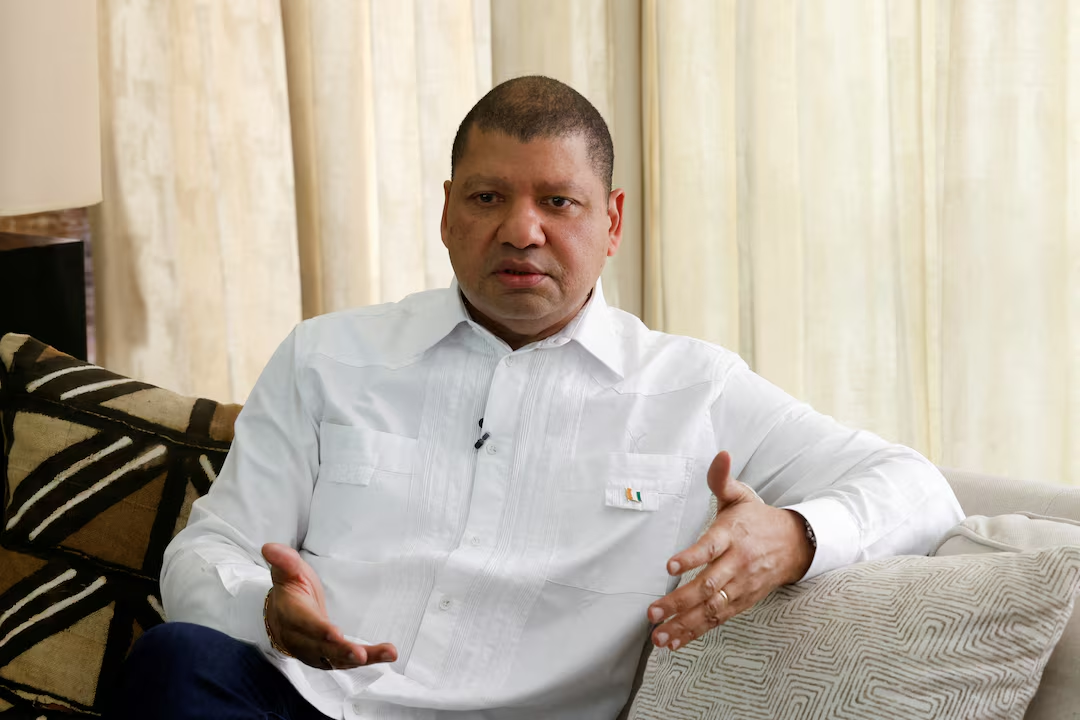
Jean-Louis Billon, the former trade minister of Ivory Coast, has announced his intention to represent the opposition PDCI party in the upcoming presidential election in October, following the exclusion of former Credit Suisse chief Tidjane Thiam from the final list of candidates last week.
The issue of who will assume leadership of the main opposition party threatens to exacerbate tensions in the world’s leading cocoa producer, a nation with a history of election-related violence, including a brief civil war following the 2010 presidential election that resulted in approximately 3,000 fatalities.
During an interview with Reuters in the commercial capital Abidjan, Billon, 60, attributed the management of legal challenges to Thiam’s candidacy to party officials and did not dismiss the idea of representing another party, although he noted that it was premature to consider such a decision.
“I am seeking the PDCI’s support,” he stated.
“It is unfortunate that President Thiam of the PDCI was eliminated; however, this outcome stemmed from the inadequate preparation of certain party officials that contributed to his removal.” That is why it is essential to possess multiple skills, particularly in the realm of politics.
Last week, the electoral commission released its final list of candidates, omitting Thiam, who criticized the decision as indicative of the “abandonment of democracy”.
The law in Ivory Coast stipulates that candidates must be citizens of the country and are prohibited from possessing any other nationality.
In February, Thiam renounced his French citizenship to fulfill the eligibility requirements for the election.
In April, a court in Ivory Coast determined that Thiam must be removed from the electoral roll due to his status as a French national at the time of registration. Thiam informed Reuters following that decision that he intended to continue his campaign and run regardless.
TENSE HISTORY
The concept of Ivorian identity played a central role in the historical violence in Ivory Coast, and there are concerns that ongoing uncertainties regarding Thiam’s nationality ahead of the election may reignite those tensions.
Alassane Ouattara, the incumbent President, faced barriers to his presidential ambitions due to claims from opponents regarding his foreign origins, before ultimately securing victory in the 2010 election.
At 83, Ouattara has not disclosed his intentions regarding a potential run this year.
Billon informed Reuters that, if elected, he would support legislation aimed at removing restrictions on dual nationality.
“There are thousands of Ivorians living abroad, who have established their lives in other countries, and many of them ultimately acquire dual nationality,” he stated.
Billon also stated his intention to reduce the size of the civil service, address corruption, encourage private sector investment, and relocate more government offices to Yamoussoukro, the political capital.
He stated that it was time for Ouattara and other politicians of his generation to step aside.
Ivory Coast is poised for transformation. “I believe our elders have had their time,” he remarked.