Trump has banned international students from Harvard, claiming the university has ties to foreign countries and citing national security concerns.
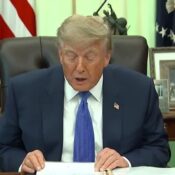
Citing national security threats and what he described as Harvard University’s “extensive entanglements” with foreign governments, US President Donald Trump on Wednesday halted for a first six months the admission of international students wishing to study or participate in exchange programs at the university.
Trump said in a White House presidential proclamation that it is “detrimental to US interests” to keep letting foreigners enroll in the Ivy League school. He also accused Harvard of “flouting the civil rights of its students and faculty” and of not collaborating with federal authorities.
Trump declared, “Given these facts, I have decided that it is necessary to restrict the entry of foreign nationals who seek to enter the United States solely or principally to continue their education at Harvard University.”
The directive, which has the potential to be extended beyond the first six-month timeframe, also instructs the Secretary of State to take into account canceling current visas for foreign students enrolled at Harvard. Additionally, it prevents access for participants in the university’s academic exchange programs.
In the ongoing legal battle between the Trump administration and Harvard, which started in April when the university refused to comply with a number of federal demands, the announcement represents a major uptick. Last but not least, a judge stopped the DHS from preventing international students from attending classes; this decision was anticipated to protect students from being taken away right away.
The announcement was described by Harvard as “yet another illegal retaliatory step taken by the administration in violation of Harvard’s First Amendment rights” in a scathing rebuke to Trump’s subsequent action, according to Reuters.
Authorities at the university emphasized their ongoing dedication to safeguarding overseas students. “We will pursue all legal options to guarantee that our students can continue their education without worrying about unfair political meddling,” a spokeswoman stated.
Criticizing Harvard for failing to give DHS “enough information about foreign students’ known illegal or dangerous activities” and underreporting threats from foreign nationals, the White House insists that the move is motivated by security concerns. “Deficient data on only three students” was submitted by the university, according to officials.
Trump’s announcement coincides with larger initiatives by his administration to crack down on universities due to alleged threats to national security and charges of antisemitism, especially in reaction to pro-Palestinian demonstrations on US campuses.
Similar accusations prompted the administration to threaten to remove Columbia University’s accreditation earlier on Wednesday. Alleging espionage and ideological infiltration, Trump has also threatened to “aggressively” cancel Chinese students’ visas.
The measure puts thousands of overseas Harvard students’ futures in immediate jeopardy. Approximately 27% of the university’s student body, or nearly 7,000 students, were foreign-born during the 2024–2025 academic year.
Just days after Trump’s promise to restrict Chinese student visas made headlines, a Chinese student spoke out against rising tensions and urged for unity during Harvard’s graduation ceremony last week.
Also, the announcement comes after a string of federal steps against Harvard, including the cancellation of DHS certification required to enroll international students and the freezing of billions of dollars in federal financing, both of which were stopped by a federal judge last month. Last Friday, the judge in question upheld her decision, providing pupils with short-term protection while the case is still pending.
However, for the time being, Trump’s most recent declaration has rekindled doubt among academia, students, and legal experts, with many expecting quick legal challenges.