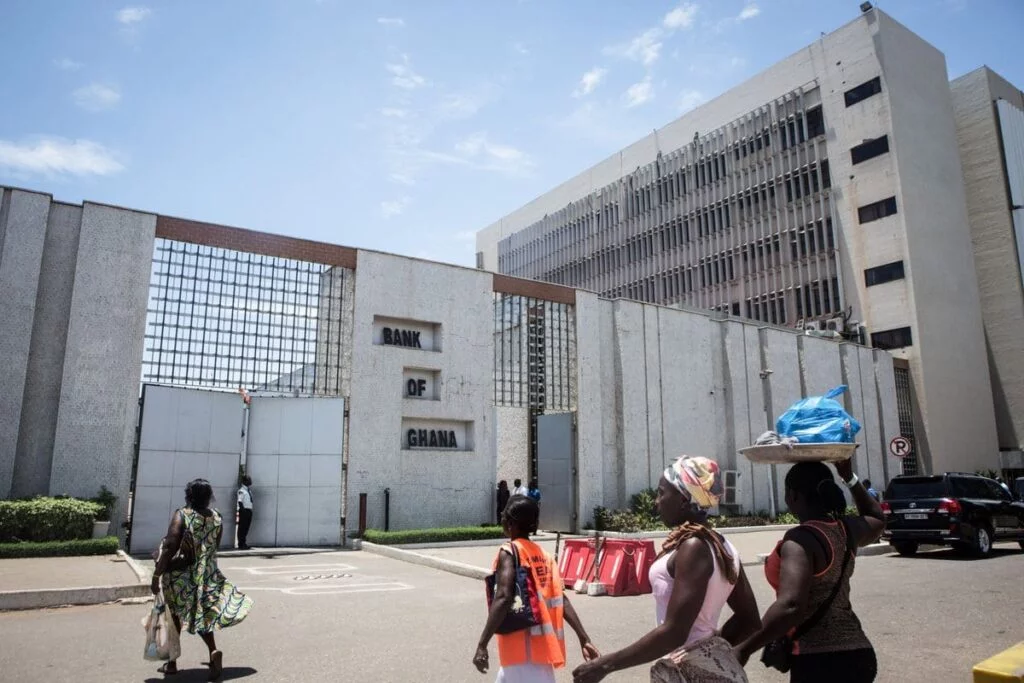
The Bank of Ghana maintained its strict monetary policy on Friday, keeping its main interest rate (GHCBIR=ECI) at 28.0% as inflationary pressures continued to subside as a result of fiscal reduction and exchange rate stability.
When the central bank surprised everyone by raising the rate by 100 basis points at its most recent monetary policy committee meeting in March, the majority of experts Reuters polled had predicted that the rate would remain unchanged.
In April, Ghana’s consumer price inflation decreased for the fourth consecutive month, from 22.4% in March to 21.2% year over year. At a margin of error of two percentage points, it is still significantly higher than the Bank of Ghana’s aim of 8%.
In the first quarter of next year, rather than the second quarter as previously planned, Governor Johnson Asiama stated that, barring unforeseen shocks, inflation was likely to decline more quickly towards the medium-term target.
“Despite these positive developments, the committee observed that the current level of inflation remains high relative to the medium-term target and will require maintaining the tight stance to reinforce the disinflation process,” stated Asiama.
A number of variables, he continued, including Ghana’s stringent monetary policy stance, continuous fiscal austerity, record reserve accumulation, and stringent enforcement of FX market regulations, have contributed to the cedi’s significant appreciation against the major trading currencies.
With difficulties in its vital cocoa and gold industries, the West African country that produces gold, oil, and cocoa is emerging from the worst economic crisis in decades.
In March, Finance Minister Cassiel Ato Forson stated in his budget speech that Ghana will be able to reduce inflation to 11.9% by the end of the year by making significant spending cuts.