Exclusive: Food for millions of people rotting in storage due to USAid cuts
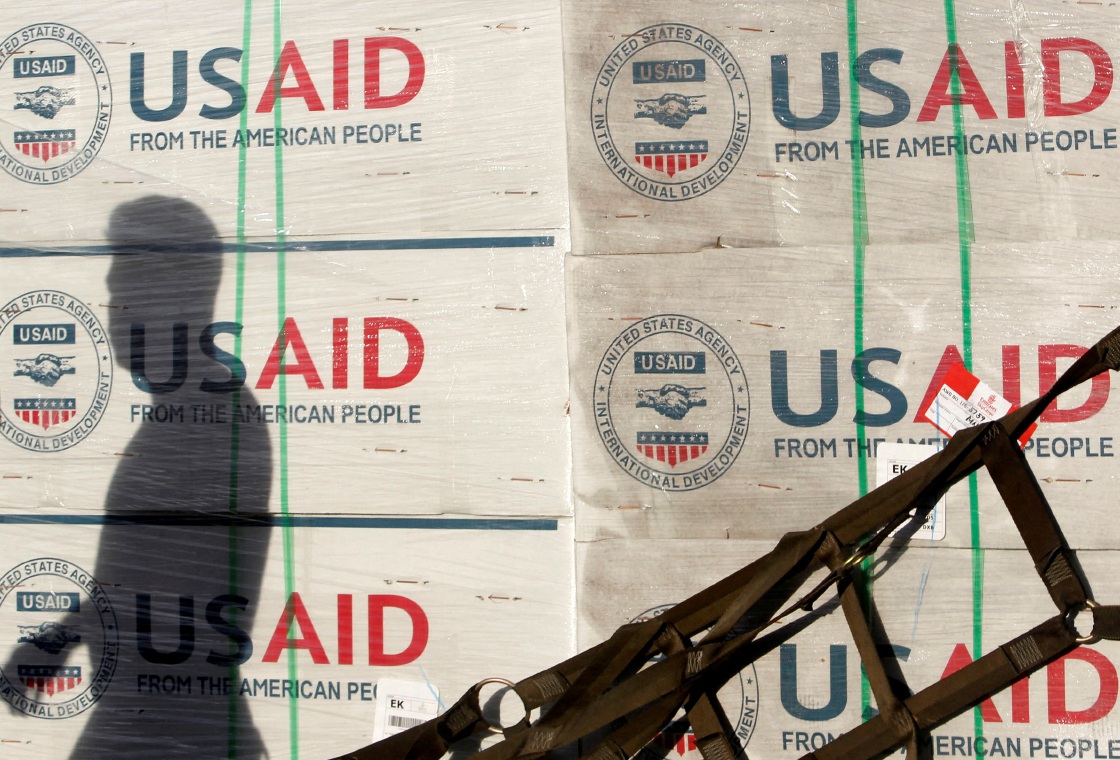
Due to U.S. aid cuts, food supplies that could feed 3.5 million people for a month are rotting in warehouses around the world and could eventually become useless, according to five people with knowledge of the situation.
According to two sources from other relief organizations and three former employees of the U.S. Agency for International Development, the food supplies have been trapped within four U.S. government warehouses since the Trump administration decided in January to reduce international aid programs.
Two of the individuals stated that it is possible that some stockpiles that are scheduled to expire as early as July will be destroyed, either by burning them, turning them into animal feed, or getting rid of them in some other way.
The five individuals stated that between 60,000 and 66,000 metric tonnes of food, acquired from American farmers and manufacturers, are stored in the warehouses, which are managed by USAID’s Bureau for Humanitarian Assistance (BHA).
According to an undated inventory list, the warehouses, which are situated in Houston, Dubai, South Africa, and Djibouti, hold around 66,000 tonnes of items, such as fortified cereals, vegetable oil, and high-energy cookies.
The Reuters-reviewed document, supplied by an aid official and confirmed as current by a U.S. government source, shows that such goods are worth more than $98 million.
Using data from the World Food Programme, the largest humanitarian organization in the world, Reuters calculated that the amount of food could feed more than a million people for three months, or the whole population of Gaza for a month and a half.
According to the United Nations, one tonne of food, which usually consists of cereals, pulses, and oil, may provide for about 1,660 people’s daily needs.
President Donald Trump’s destruction of USAID and reductions in humanitarian aid spending coincide with rising global hunger levels brought on by warfare and climate change, which are pushing more people toward famine and reversing decades of progress.
Globally, 343 million people experience severe food insecurity, according to the World Food Programme. Of those, 1.9 million people are at risk of starvation and suffering from catastrophic hunger. The majority of them are in Sudan and Gaza, although there are also some in South Sudan, Haiti, and Mali.
As part of the USAID decommissioning process, a State Department spokesperson, who is in charge of USAID, responded to specific inquiries on the food supplies by saying that the department was working to guarantee the continuous operation of aid programs and their transfer by July.
“USAID is continuously consulting with partners on where to best distribute commodities at USAID prepositioning warehouses for use in emergency programs ahead of their expiration dates,” stated a spokesman.
A FEW FOOD ITEMS CONSIDERED TO BE DESTROYED
The sources claimed that despite the Trump administration’s waivers for certain humanitarian initiatives, such as those in Gaza and Sudan, the termination of contracts and the freezing of money required to reimburse suppliers, shippers, and contractors have left food supplies trapped in the four warehouses.
According to two former USAID individuals briefed on the matter, a plan to transfer the goods to humanitarian groups capable of distributing them has been put on hold. The initiative is pending approval from the Office of Foreign Assistance at the State Department, according to the two former USAID sources.
In charge of the office is Jeremy Lewin, a 28-year-old former employee of Elon Musk’s Department of Government Efficiency who is currently in charge of USAID’s decommissioning.
Requests for comment from DOGE, the Office of Foreign Assistance, and Lewin himself were not answered.
An aid official familiar with the inventories and a former USAID official said that about 500 tonnes of high-energy biscuits kept at a USAID warehouse in Dubai are set to expire in July. According to calculations made by Reuters, the biscuits could provide at least 27,000 severely malnourished children with food for a month.
In a normal year, only about 20 tonnes of food might be disposed of in this manner due to damage in transit or storage, the former USAID official added, adding that the biscuits are now likely to be incinerated or converted into animal feed.
The former official claimed that some of those goods were originally meant for famine-stricken Sudan and Gaza.
When asked how much of the food aid in storage was nearing expiration and if it would be destroyed, the State Department official did not immediately answer.
In a March letter to Congress, USAID announced that it would lay off nearly all of its employees in two rounds on July 1 and September 2 as it gets ready to shut down. According to the two former USAID sources, many of the essential employees required to run the warehouses or transport the goods would be leaving in July.
Children Passing Away
The United States is the largest giver of humanitarian aid in the world, accounting for at least 38% of all UN donations. According to official records, it distributed $61 billion in international aid last year, with USAID accounting for little over half of that amount. opens new tab.
High-energy biscuits and the peanut-based paste Plumpy’Nut are examples of ready-to-use therapeutic foods (RUTF) that are included in U.S. food aid.
According to Navyn Salem, the founder of Edesia, a U.S.-based company that makes Plumpy’Nut, USAID’s termination of transportation contracts caused a huge backlog, forcing the company to rent a second warehouse to hold its own inventory.
According to her, the ensuing 5,000-ton stockpile, valued at $13 million, could feed over 484,000 children.
After exchanging emails with Lewin, Salem stated that she is “hopeful” that a solution would be found quickly to provide her product to the needy kids.
In late March, the United Nations children’s agency UNICEF issued a warning that 2.4 million children with severe acute malnutrition might have to forgo these essential supplies for the remainder of the year since RUTF stockpiles were running low in 17 countries as a result of funding cuts.
Most of the food stocks that USAID has pre-positioned are kept in the four warehouses. These may be quickly sent to countries like Sudan, where 25 million people, or half of the population, suffer from severe hunger, during regular times.
Following the changes, the International Rescue Committee, which primarily receives financing from the United States, is reducing its programs, according to Jeanette Bailey, director of nutrition.
According to her, it is challenging to quantify the effects of the disruption in U.S. aid flows on worldwide therapeutic food shortages, especially in areas where aid programs are no longer in operation.
“What we do know, though, is that if a child’s in an inpatient stabilization centre and they’re no longer able to access treatment, more than 60% of those children are at risk of dying very quickly,” she explained.
The non-profit organization Action Against Hunger, which depends on the United States for more than 30% of its worldwide funding, reported last month that at least six children had already died as a result of U.S. budget cuts. The organization has opened new programs in the Democratic Republic of the Congo after being forced to halt admissions.
CUTS WREAKING MAYhem
“The Trump administration’s budget cuts threw the Bureau for Humanitarian Affairs, which oversees the U.S. government’s aid efforts abroad, into disarray,” the five individuals added.
The bureau’s personnel were among the thousands of USAID workers placed on administrative leave while they awaited termination. Even though some employees were allowed to return to work until their termination dates, aid administration has not recovered.
Concerns regarding future aid distribution were raised when three sources told Reuters that USAID has canceled the contract to operate warehouses in the port city of Durban, South Africa. Independent confirmation of that was not possible for Reuters.
The Djibouti and Dubai facilities will be turned over to an unnamed State Department team, according to two former USAID officials. No statement was issued by the State Department.
The WFP, which is mostly dependent on U.S. financing, did not comment on the food supplies that are stranded.
According to the spokesman, “We greatly appreciate the support from all our donors, including the U.S., and we will continue to work with partners to advocate for the needs of the most vulnerable in urgent need of life-saving assistance” when asked if it was in talks to release them.