White Afrikaner separatists in South Africa seek Trump’s assistance in becoming a state
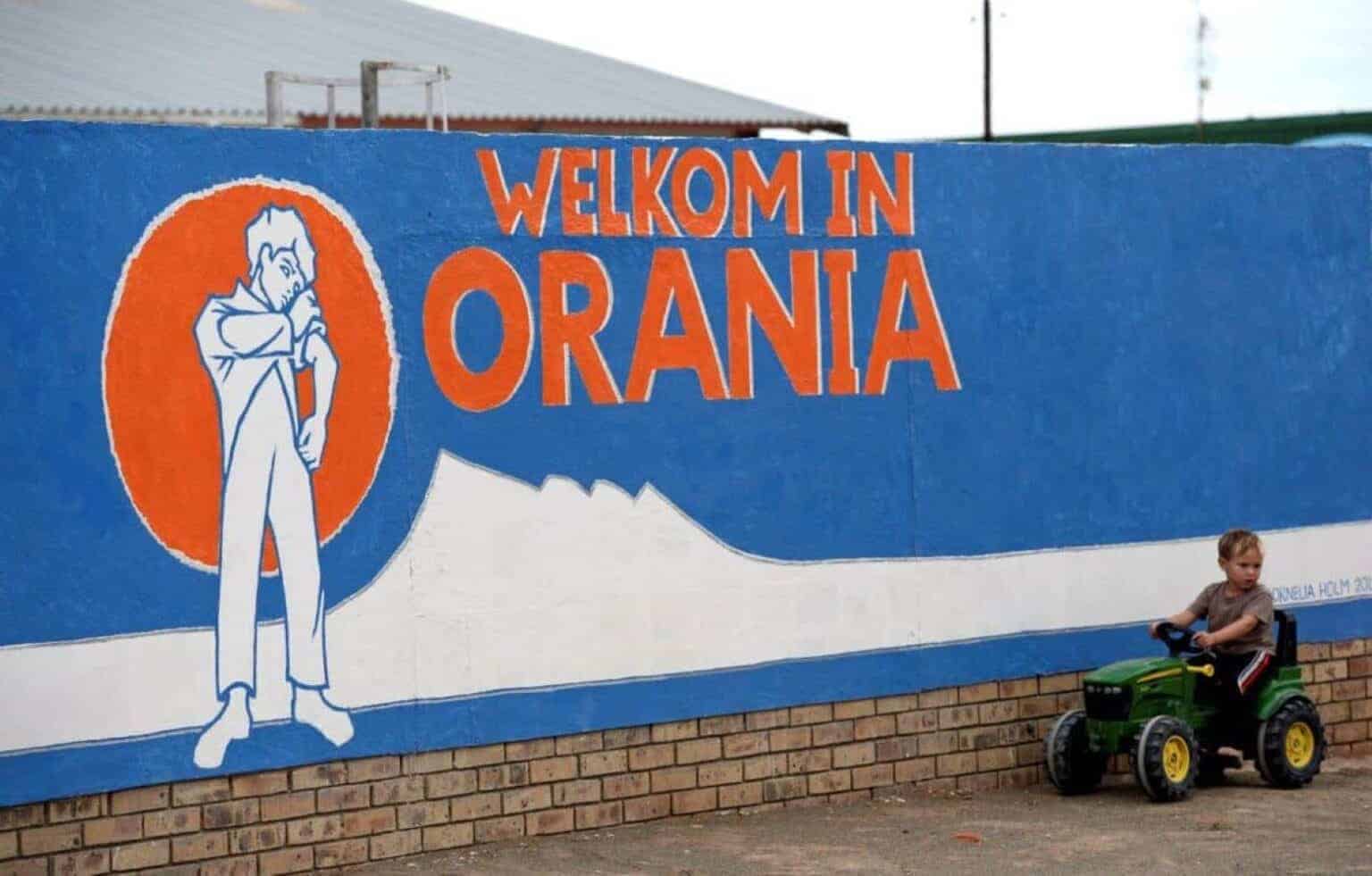
Approximately thirty years ago, after apartheid ended, a group of white Afrikaners were so opposed to majority Black rule that they created a separatist enclave, the only town in South Africa where all of the people living there, including the lowest-level employees, are white.
Orania’s 3,000 inhabitants in the semi-arid Karoo region now want U.S. President Donald Trump to assist them in becoming a state.
In an attempt to gain recognition as an independent nation, Oranian community leaders traveled to the US last week. The town is recognized by South African authorities as having the authority to levy local taxes and provide services.
“We wanted to… gain recognition, with the American focus on South Africa now,” Joost Strydom, the leader of the Orania Movement, told Reuters while standing atop a hill covered in bronze statues of former Afrikaner leaders, including those from the racist white minority rule that was overthrown by domestic opposition and global outcry.
Following the end of apartheid in 1994 and the election of Nelson Mandela as South Africa’s first Black president, Afrikaner nationalists lost their hold on power, and the 8,000-hectare community is currently experiencing an unprecedented surge in support from right-wing Americans.
The Orania leaders had meetings with influential people, think tanks, and lower-level Republican lawmakers in New York and Washington.
“We told them South Africa is such a … diverse country that it’s not a good idea to try and manage it centrally,” explained Strydom.
When Reuters spoke with three senior Orania executives, they were evasive about the assistance they were looking for in the United States. In order to maintain up with its 15% population growth, infrastructure, and energy independence—which it has nearly half achieved with solar—they stated that they were not looking for handouts but rather for investment to create homes.
Strydom would not confirm if his group communicated with the Trump administration. A request for comment from the U.S. State Department was not immediately answered.
“Orania is not a nation,” Chrispin Phiri, a spokesman for the South African foreign ministry, told Reuters. Both our constitution and South African laws apply to them.
Allegations have been made back home that these excursions exacerbate racial tensions, as other Afrikaner nationalist parties have also been to the United States to form alliances with largely white, Republican audiences.
Last week, Orania’s leaders were accused of “destroying the unity of this country” by the left-wing Economic Freedom Fighters (EFF), a complaint they deny.
“FOUNDATION OF SOMETHING”
The descendants of Dutch settlers who started coming in the 1600s are known as Afrikaners. In South Africa, they opposed the British Empire, but after seizing power, they used discriminatory legislation to further entrench racial segregation.
“On land alone,” stated Phiri, a spokesman for the foreign ministry. “There were 17,000 laws.” “We had… to reconstruct South Africa into a country that represents all those who live in it.”
A group of roughly 300 Afrikaners purchased Orania, a former abandoned water project on the muddy Orange River, in 1991 as apartheid came to an end in order to establish a homeland reserved for white Afrikaners.
“It’s the start of something,” according to former Orania Movement leader Carel Boshoff, who compared his community’s aspiration for independence—Orania even has its own unofficial currency—to that of Israel, which was founded following World War Two in spite of strong opposition from the local Arab population.
Boshoff, whose father established the town and whose ancestor, Hendrick Verwoerd, is commonly considered the man who created apartheid, envisions a region that stretches almost 1,000 miles to the west coast.
Orania’s operations are financed by local taxes as well as contributions from citizens and supporters.
Its leaders were disappointed to learn that, despite Trump’s February promise to resettle white South African farmers and their families as refugees, the only solution that anyone in the US was willing to discuss was U.S residents.
Boshoff said to Reuters, “We can’t be exporting our people,” while holding a framed picture of his late grandfather. “We told them … ‘help us here’,” he recalled.
Some right-wingers in the United States have attempted to unite with Afrikaners in their opposition to diversity programs that seek to give historically marginalized non-white communities more influence. Trump’s adviser Elon Musk, who was born in South Africa, has made fun of South Africa’s Black empowerment policies.
Because of those laws, Hanlie Pieters, who had lived in Johannesburg for 25 years, went to Orania eight months ago to take a position as head of marketing for the town’s technical college.
“Our children … what opportunities will they have?” While apprentice plumbers and electricians practiced in a neighboring shed, Pieters lamented the need for quotas for Black workers.
Most poor Black South Africans, who make up a third of the country’s workforce, are unemployed.
A 49-year-old unemployed guy named Bongani Zitha expressed his opinion that “people in Orania… are doing very well” in comparison to many South Africans. “So many individuals are searching for work. He moaned, “It’s harder.
At least the inhabitants of Orania have “rights to health, education, everything,” according to Zitha, who has lived in a corrugated shanty community in Soweto without piped water or sewerage since 1995.
Additionally, he noted, Orania’s citizens are free to live wherever they choose, unlike himself under white minority rule.