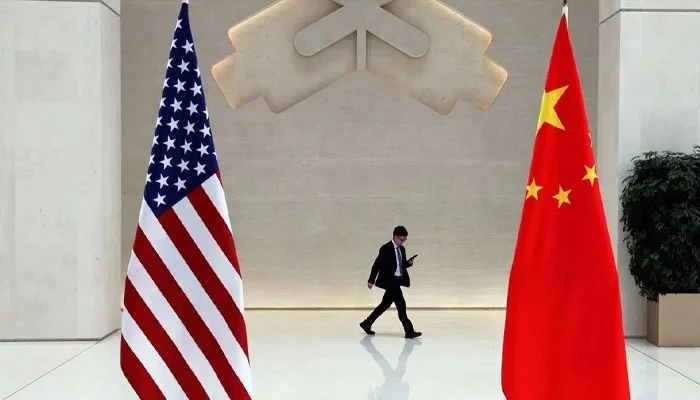
Citing security concerns, the U.S. government has prohibited American personnel in China from engaging in romantic or sexual relationships with citizen Chinese.
According to insiders, the United States government has discreetly implemented a broad restriction that forbids any romantic or sexual connections between Chinese nationals and American government employees in China, as well as their family members and contractors who possess security clearances.
Personal ties for U.S. personnel stationed overseas are severely restricted by the directive, which was put into effect in January by then-US Ambassador Nicholas Burns prior to his departure. Some US organizations already had stringent rules about these kinds of connections, but since the Cold War, there hasn’t been a general “non-fraternization” policy.
According to reports, Congressmen voiced concerns last summer that the previous limitations were too lax, which led to the decision to broaden the prohibition. At first, the US Embassy and consulates solely prohibited US personnel from having relationships with Chinese nationals who worked as security and support workers. But just days before President Donald Trump took office in January, Burns expanded the regulation to include all Chinese nationals in China.
In mainland China, the policy is applicable to all US diplomatic posts, including the US consulate in Hong Kong, the embassy in Beijing, and the consulates in Guangzhou, Shanghai, Shenyang, and Wuhan. US employees who are stationed outside of China are unaffected.
Employees with prior relationships to Chinese nationals prior to the policy’s implementation are the lone exception. If they are not granted an exemption, these people will have to quit their jobs or break off their relationship. People who are found to be breaking the rule will be told to leave China right away.
In January, the policy was orally and electronically conveyed to U.S. personnel in China, but it has not been made public. The National Security Council referred questions back to the State Department, which declined to comment on the situation herself. Burns, who is currently the vice chair of the consulting firm The Cohen Group, did not reply to a request for comment.
Amid continued tensions between Washington and Beijing, the action signifies a considerable tightening of security procedures, with increased fears over foreign influence operations and espionage.
While proponents of the program regard it as an essential measure to safeguard American personnel from any security threats, detractors contend that it could strain diplomatic relations and individual liberties.