DR Congo crisis: Joseph Mukumadi, a former governor of Sankuru province, joins AFC/M23
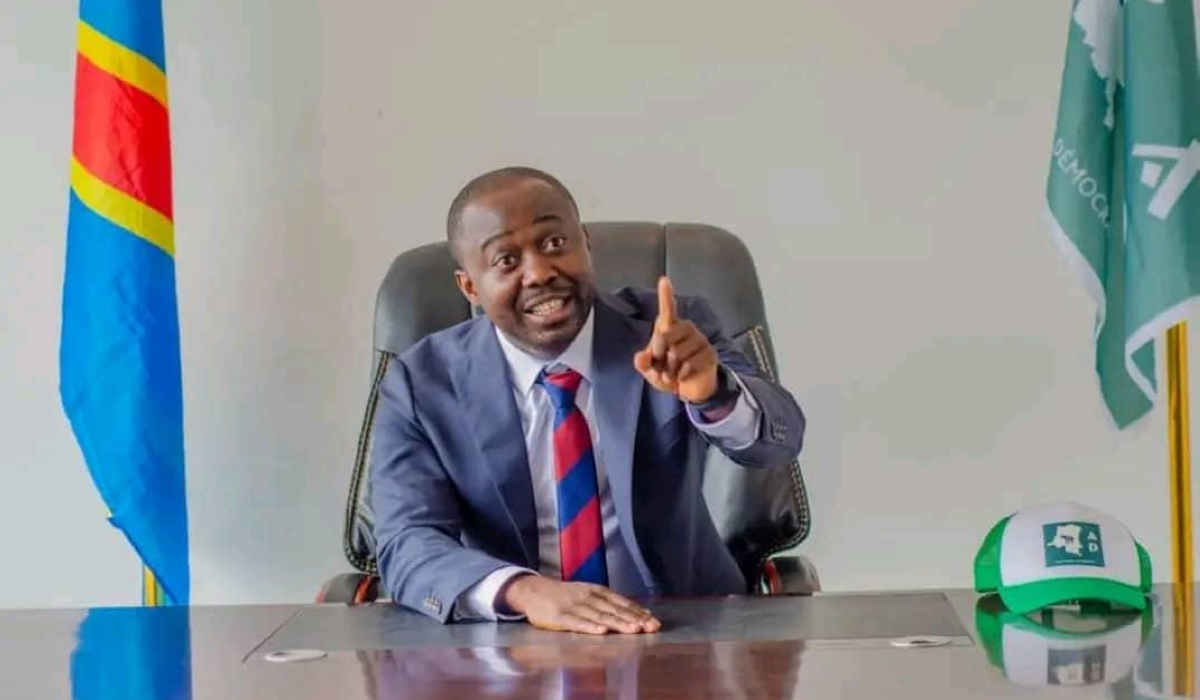
Former Sankuru province governor Joseph Stéphane Mukumadi publicly announced on Thursday, April 3, that he had joined the Alliance Fleuve Congo (AFC/M23) rebellion and encouraged Congolese to do the same in order “to put an end to the dictatorship of the Kinshasa regime and allow the total liberation of our country.”
Mukumadi joined the revolt five days after Rex Kazadi, a European candidate for the presidency of the Democratic Republic of the Congo in December 2023, registered with the AFC/M23 on March 30.
According to Mukumadi, “it is important for every Congolese worthy of their name, regardless of class, political affiliation, or personal loyalty, to unite for a noble cause, the freedom of the people.”
The AFC, in my opinion, represents the hope that we have all envisioned today.
The country is being held hostage by a political minority, the former governor said, adding: “There is a political class today that is holding the nation hostage and thinks that it alone and only it alone can eventually decide matters for millions of Congolese people.”
In addition to praising AFC/M23 coordinator Corneille Nangaa for bringing the Congolese together in their opposition to a flawed system of government, Mukumadi claimed he is backing “a noble cause.” The former governor claimed that a large number of people in the nation’s cities, notably Kinshasa, who are waiting for the last whistle, support the uprising.
Last Monday, the rebels permitted the forces from the Southern African Development Community (SADC), led by South Africa, to depart eastern Democratic Republic of the Congo with their weapons and gear.
Following the rebels’ January seizure of Goma, the capital of DR Congo’s North Kivu Province, the Congolese army coalition included the southern African forces that subsequently surrendered.
The number of members of Alliance Fleuve Congo has increased in recent months as a number of other opposition leaders and Congolese military organizations have joined. An armed self-defense organization called Twirwaneho, which defends the Banyamulenge community in South Kivu Province, declared in February that it has allied with AFC/M23 to oppose the Congolese government. This occurred soon after the death of Col. Michel Rukunda, the head of Twirwaneho, who was allegedly killed by a drone attack conducted by Congolese soldiers.
Alliance Fleuve Congo, led by former Congolese national electoral commission chairman Nangaa, is pushing for governance that upholds fundamental human rights, protects all Congolese residents, and tackles the underlying causes of conflict.
Tribalism, nepotism, corruption, and the genocide ideology propagated by the Rwandan genocidal militia, FDLR, which is supported by the Democratic Republic of the Congo, are among the vices that the rebellion has pledged to eradicate. An existential menace to the Congolese Tutsi minority, the FDLR is a terrorist organization backed by the Democratic Republic of the Congo that was established in the middle of the 2000s by the brains behind the 1994 Rwandan Genocide against the Tutsi.
Completely assimilated into the Congolese army coalition, the murderous militia teamed up with Kinshasa’s supporters in order to launch an assault on Rwanda. The greatest danger facing Rwanda and the region as a whole is the militia’s genocidal mindset.
On Sunday, March 30, Nangaa announced to the Congolese diaspora via a video message on X that “our revolution will not be selective” and that it “will not be a group of friends, nor a group of opportunists.”
“On the contrary,” he said, “we welcome everyone, regardless of background, based on your areas of skill. This will enable us to be a recognized state, a nation of dignified people, and a nation capable of meeting all the challenges of the new period. Our revolution is still advancing relentlessly toward more freedom, justice, and prosperity for all Congolese living together.
The Congolese military has lost a lot of soldiers in the conflict with AFC/M23 insurgents since January. FDLR, Burundian military troops, South African-led SADC forces, Wazalendo ethnic militias, hundreds of European mercenaries, and UN soldiers made up the Congolese army alliance.
After the Congolese armed forces (FARDC) in coalition repeatedly violated a ceasefire, which led to intense combat, the rebels responded swiftly to secure and stabilize the situation and restore order in Goma on January 27.
Following their capitulation, hundreds of Congolese soldiers joined the rebels.
Reports of brutality, theft, and atrocities spread by the Congolese army coalition caused the security situation in South Kivu to worsen. In response, the rebels once more attacked, seizing the important airfield of Kavumu before advancing south to seize the regional capital, Bukavu, on February 15.
The town of Walikale, located roughly 130 kilometers northwest of Goma, was taken by them on March 19. The rebels’ swift progress this year had taken them as far west as they had come.
Walikale has been an FDLR stronghold for many years.
In 2021, fighting between the M23 rebels and the Congolese army coalition restarted.
The Congolese government’s many shortcomings, such as Kinshasa’s inability to carry out a peace deal reached on March 23, 2009, led to the creation of the M23 on May 6, 2012.
After Kinshasa pledged to incorporate its warriors into the national army, among other things, the Congrès national pour la défense du people (CNDP), a former political-military organization that had been established roughly three years prior, put an end to the revolt in January 2009.
At a ceremony held at the Rumangabo military camp, approximately 45 kilometers north of Goma, the capital of North Kivu Province, top government officials, including the then-defense minister Charles Mwando Simba, who died in Belgium in December 2016, attended the induction of the first group of rebel fighters into the national army. A few days later, upon their fighters’ induction into the national army, CNDP authorities declared “the de facto transformation of CNDP into a political party,” which was officially acknowledged by the government.
But after declaring an end to rebellion and forming a political party, everything was back to normal after around 11 months. The chairman of the former rebel group that was now a political party, Désiré Kamanzi, resigned at that time because he was upset.
The implementation of the agreements we have signed with the government since January has been slow, which is one of the main reasons, Kamanzi said, adding that “we requested that there be held a regular national monitoring committee, but this was in vain.”
Founded in December 2023, Alliance Fleuve Congo is a larger and expanding rebel group that includes M23. The Rwandan genocidal militia and Burundian forces were part of a large Congolese army coalition supported by Western nations, especially Belgium, which made the security situation in eastern DR Congo worse.