Trials of Congolese army defection reveal a force in ruins
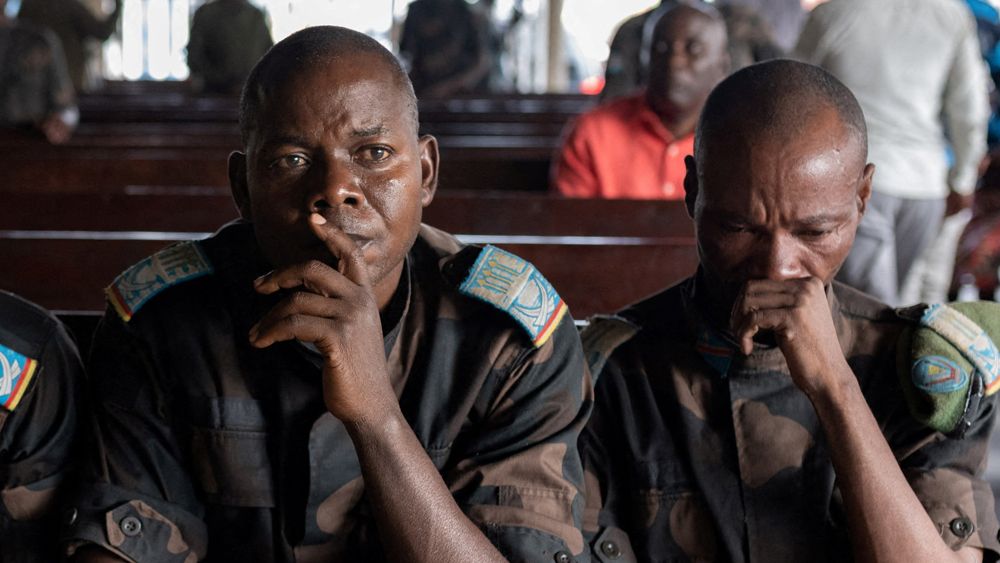
Last week, Congolese soldiers, dressed in a variety of streetwear and fatigues, rushed into a church to stand trial for alleged crimes such as rape and murder that they committed while fleeing a lightning-fast rebel onslaught.
Their remarks during the court martial procedures brought to light the dysfunction of an army whose problems extend far beyond the ranks and files, but which has now lost more land in eastern Congo than ever before to M23 insurgents backed by Rwanda.
Testimony gathered from over 300 soldiers’ quick-fire trials, three senior army officers’ interviews, and a private U.N. memo obtained by Reuters paint a somber picture of a fighting force crippled by long-standing issues, including corruption and low pay that reform initiatives have not been able to address.
The private U.N. document that gave an update on the battle stated that the turmoil of the previous several weeks had severely taxed the army’s frail chain of command, increasing the likelihood of atrocities against civilians.
According to the top officers, the government of President Felix Tshisekedi has made great efforts to recruit new troops and purchase new weapons, but this has not had much of an impact on the front-line troops, who they described as being underpaid and ill-equipped.
“We are criticized, but we suffer like the rest of the population,” a colonel who has led troops in the region of South Kivu put it.
The allegations brought by military prosecutors during the trials in Musienene last week and Bukavu, the provincial seat of South Kivu, earlier in February included extortion, theft, pillage, and loss of combat weapons.
While acknowledging that several soldiers had committed such acts, the majority of the accused denied any involvement, claiming they had only been detached from their groups.
Siko Mongombo Brice, a soldier, told Reuters that after hours of intense fighting in North Kivu, he lost sight of his fellow soldiers. He denied being deserted when he was arrested by authorities in the village of Kitsumbiro.
“It wasn’t an airplane. “We were trying to find our unit,” he stated. They spotted us in this village, but we have no idea how we got there. There are thieves and innocent individuals like us. The truth is known only by God.
“WE WERE BOMBED”
More than 260 soldiers, including 55 in Musienene on Friday, have been sentenced to death as a result of the trials. The army’s withdrawal from Bukavu on February 14 coincided with a jail break in which almost 200 people managed to escape.
The accused soldiers had “dishonoured the army” and committed “atrocities” that might incite the populace to support the insurgents’ assault, according to Lieutenant Colonel Mak Hazukay, the army’s spokesman.
The M23 offensive since late December is already the most severe escalation in nearly ten years of the region’s protracted conflict, which has its roots in the 1994 Rwandan genocide that spilled into Congo and the fight for control of Congo’s abundant natural resources.
U.N. specialists claim that thousands of Rwandan military support the rebels, and their better equipment and armament generates a glaring disparity on the battlefield, according to officials.
“We were bombed a lot, but we did resist occasionally. The colonel declared, “The Rwandans have terrifying weapons,” and allied Burundian forces also retreated. “It’s not just us.”
In response to the Congolese army and anti-Kigali militias, Rwanda claims its forces are defending themselves and denies supplying M23 with weapons and troops.
Not just Congolese foot soldiers are escaping.
“The military command and provincial authorities fled by boat on Lake Kivu towards Bukavu without informing their soldiers the night before the rebels took control of Goma, the largest city in east Congo,” the U.N. memo stated.
These actions by military officials constitute a blow to morale, which has already been damaged by monthly pay of about $100.
The Stockholm International Peace Research Institute’s financial statistics shows that military spending more than doubled to $794 million in 2023, more than double under Tshisekedi.
“TRADESTED FROM WITHIN”
Tshisekedi has accused military leaders of being “betrayed from within” and chastised them for the subpar performance.
However, he has been criticized for embracing militias that have proven hard to manage while relying largely on mercenaries and regional forces.
“Among these new recruits, there were thugs,” a general familiar with eastern military warfare told Reuters.
According to Tshisekedi’s office, some military personnel lacked a “sense of duty” to the country and lacked the necessary training, in response to inquiries from Reuters. The president “wants to do it differently” and acknowledged that the issues existed before Tshisekedi.
For the time being, the lack of discipline keeps residents of Uvira, a city on the Burundian border, on edge as conflicts between military and incorporated militias continue.
After militias attempted to disarm escaping soldiers, a humanitarian source reported that the confrontations had left 30 people dead and over 100 injured.
On February 26, generals declared that they were conducting an operation to find soldiers who were accused of committing “intolerable acts of barbarity” in and around Uvira.