Pope Francis is an Argentinean who has never been back home
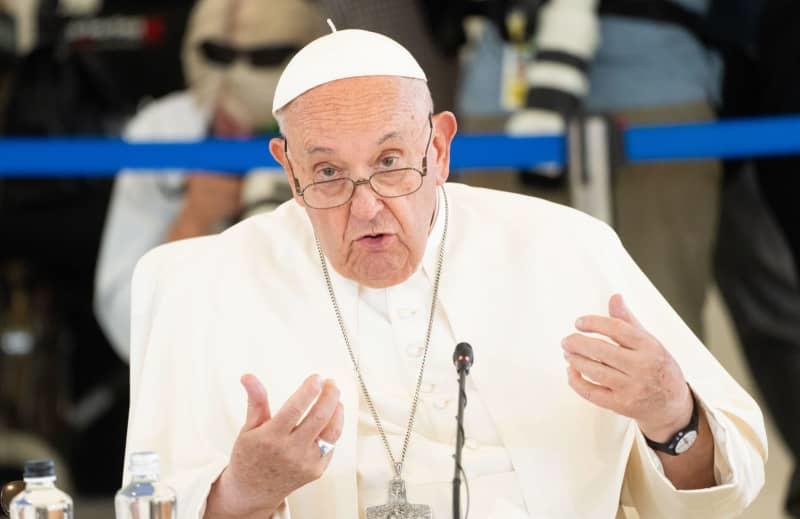
Pope Francis departed Argentina in 2013 to take over as leader of the Roman Catholic Church, and Argentineans have long awaited his return. His health is fragile as he fights double pneumonia, therefore it is becoming less probable that he will make a comeback.
Pope Francis, 88, has had a lung infection that has put him in severe health. His two weeks in the Gemelli hospital in Rome highlights his weakness and is the longest stay of his pontificate.
During his pontificate, Francis has traveled abroad more than forty-five times, including the first trips to Iraq, the United Arab Emirates, Myanmar, North Macedonia, Bahrain, and Mongolia by any pope.
However, the former Buenos Aires archbishop has never been back in Argentina.
According to Jimmy Burns, author of the 2015 book “Francis, Pope of Good Promise,” “one of the great curiosities of his papacy was the fact that, unlike his predecessors, Francis never visited his native country.”
According to Burns, Francis did not want to be perceived as supporting either the conservatives or the left-leaning Peronists in the nation’s divisive political climate.
“Any visit would try and be exploited by one side or the other, and he would unwittingly fuel those divisions,” he stated.
Soon after Francis entered office and traveled to Brazil, many in Argentina expected him visit the country. Last year, there was talk of a trip once more. However, the visit never happened in either instance.
Guillermo Marco, who served as the pope’s spokesperson while he was Cardinal Jorge Bergoglio in Buenos Aires, told Reuters that Argentina had lost a “wasted opportunity.” According to him, Francis possessed a “tango soul”—a reference to the dance and music that originated in Buenos Aires’ back neighborhoods.
“He would have liked to (come) if he could have made a simple trip, let’s say, where he came to visit the people, he loves and, I don’t know, celebrate a mass for the people,” Marco, who still has a good relationship with Francis, stated.
“But he is fully aware there is a whole network of supporters and detractors who are fighting over him.”
Although “they are my people,” the pope told reporters in September that he had planned to visit Argentina but that “various matters had to be resolved first.”
The Argentine bishops’ conference spokesperson, Maximo Jurcinovic, stated that the Church would not comment on other issues and was concentrating on praying for the pope’s health.
According to Marco, when he spoke with Francis in late January, he sounded exhausted.
“He is 88 years old and then you add to those 88 years the worries and pace of life that he tries to lead,” he stated.
“He seems to have a spiritual strength and willpower that God bestows upon him, causing his body to perform actions, even though his body is already telling him, ‘I can’t.'” That’s what happened to him now, in part.
“THE CHORUS IS SEPARATED.”
He is the first Latin American pope to hold the office, and Argentina has experienced repeated economic crises and political unrest during his tenure. President Javier Milei, who led the current administration, has imposed strict austerity measures while also aiding in economic stabilization. Although he has since made amends, Milei previously referred to Francis as the devil’s agent on Earth.
Regardless of the political climate throughout the years, some people believed Francis ought to have made the trip.
“There is disagreement among the chorus. The Argentine journalist Sergio Rubin, who co-wrote the papal biography “The Jesuit,” stated that some people believe he should have arrived anyhow since it would have somewhat healed the political rift.
Bergoglio once attended a Jesuit school in Argentina, and Rogelio Pfirter, who served as ambassador to the Vatican from 2016 to 2019, said the pope’s focus had been Francis’ efforts to increase inclusivity in the Church.
“I have no doubt that everything Argentine and the homeland itself is something that has a special place in his head and in his heart,” he stated to Reuters. The pope’s legacy of “making a papacy for everyone,” however, has been one of the greatest, according to Pfirter.
“From the pope’s perspective, it has probably been much more important to travel to the Pacific, travel to Africa, travel to some other Latin American countries than to visit regions where the Church already has a strong position.”
Many of Argentina’s supporters would still prefer to welcome Francis home and remember him as Bergoglio, who was born to Italian immigrants in Buenos Aires in 1936.
At a recent mass in Buenos Aires, Claudia Nudel said, “That the pope has not come until now hurts me, it hurts me a little,” amid prayers for the pope’s recuperation.
At the mass, Silvia Leda, 70, stated: “I would have liked him to come, but I think the most important thing is what he can do for the world.”