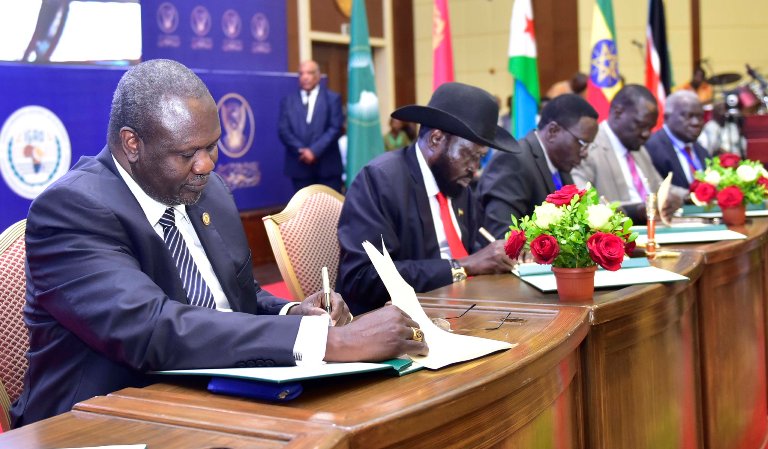
There’s no need to worry because delegates are often allowed to go back and talk with their members during mediations.
“The Transitional Government of National Unity is made up of five parties with representatives in Tumaini,” Lt-Gen Sumbeiywo said. “It makes sense for them to tell their members what they have done.”
Sumbeiywo is in charge of the talks between the coalition government led by President Salva Kiir and groups that refused to sign the 2018 peace deal that set up the transitional government. Sumbeiywo helped South Sudan get its independence from Sudan. The proper name for these talks is the Tumaini Initiative.
Some members of the South Sudan Opposition Movements Alliance (Ssoma) who were in the talks were worried that the government group was taking too long in Juba. This was because there were rumors that some people in the government and security sector were against the Tumaini and were trying to stop it.
Some people who work for The EastAfrican said that the coalition government had been debating whether to let the rebel groups join. Some high-level government officials were worried that it would make them less important.
The East African also found out that some top security agents were strongly against the deal.
President Kiir fired Gen. Akol Koor Kuc as head of the National Security Services (NSS) and made him governor of a state last week. It wasn’t clear if Kuc was one of those who were against it, and Kiir didn’t say why he fired him.
Dr. Riek Machar, leader of the SPLM-IO and a member of the coalition government, spoke out against the Tumaini because some of the protocols would go against the terms of the 2018 peace agreement, which was officially called the Resolution of the Conflict in the Republic of South Sudan (R-ARCSS). The Igad regional bloc brokered and mediated the agreement.
Concerning the nine protocols, they cover measures to build trust, problems related to communal violence and land, changes to the justice system, transitional justice, and accountability; changes to the security system; the permanent constitutional process; economic recovery; access and support for humanitarian workers; and sharing of responsibility.
Ssoma, on the other hand, says the transitional government in Nairobi has given up on the nine protocols, which he says are the only way to stop the country from being in constant war.
The youth representative at Tumaini Initiative, Patrick Godi, says that there are problems with the protocols on economic recovery, judicial and security sector reforms, but these problems are being talked about in Juba and will be fixed soon.
The leader of another group in the talks, the Real SPLM, Pagan Amum, said that the talks have not broken down.
“The government hasn’t come back to the table yet.” “Please be patient while we wait for them,” he said.
According to a briefing released on September 30 by the African Center for the Constructive Resolution of Disputes (Accord) in Durban, the Tumaini Initiative may lose its credibility if it is seen as a separate mechanism from the larger peace process, even though it is a great chance to build consensus and bring people together politically.
The Accord briefing also said, “Furthermore, if it is added to the extended R-ARCSS and the Roadmap, it could be seen as just another version of the status quo, which has failed over and over again to address the root causes of South Sudan’s conflict.”
A political analyst from South Sudan named Mogga Loyo said that people are hoping that the Tumaini Initiative will not only work with interest groups but also include the people in all parts of the talks.
The polls that were supposed to happen in December were pushed back by South Sudan’s transitional government, which also got an extra 24 months in power. Some officials agreed that the country wasn’t ready for the elections, but supporters were very critical of the extension and said they might stop giving money.