As it strives for additional knowledge and investment to strengthen the business, Ivory Coast may sell a larger part in its Transcao cocoa processor to Malaysian cocoa group Guan Chong Berhad (GNCH.KL), opens new tab, the industry’s regulator told Reuters.
The Coffee and Cocoa Council (CCC) of the Ivory Coast has decided to sell a 25% share of Transcao to Guan Chong Berhad (GCB)’s Singaporean affiliate. This announcement was made on Wednesday.
According to the head of the country’s cocoa regulator in West Africa, if the Ivorian government gives its consent, the GCB subsidiary may increase its position even further in the burgeoning Asian market as part of the country’s efforts to strengthen its interests there.
“We want to go beyond and master all the trades related to processing, and GCB will help us achieve this goal,” Yves Brahima Kone, the director of the CCC, stated that evening on Wednesday.
“We have signed this participation agreement with GCB because we want … to have a foothold in Asia,” he stated.
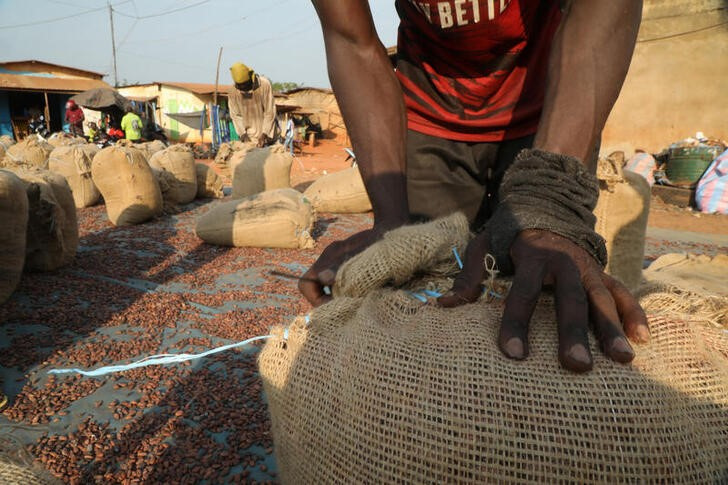
The world’s greatest producer of cocoa is Ivory Coast, however most of its production is exported as beans. Transcao is a component of its plan to become a dominant player in the processing of cocoa.
According to Kone, the company plans to increase its total capacity to 190,000 tons by the end of 2025. It now has one operational plant with a capacity of 50,000 metric tons, and another that will begin operations at the end of 2024.
In order to persuade Ivorian enterprises to process locally, the state has launched an aggressive policy in recent years that includes providing tax breaks and other advantages.
According to Kone, the collaboration with GCB will yield invaluable technical expertise.
There’s a significant training component as well. To learn and grasp GCB’s know-how, we will have Ivorians in the technical, sales, and commercial teams,” he stated.
Ivory Coast now has more than 800,000 tons of installed capacity for processing, but after all of the processing plants that are currently under construction are operational, that capacity should rise to 1 million tons in the next two years.