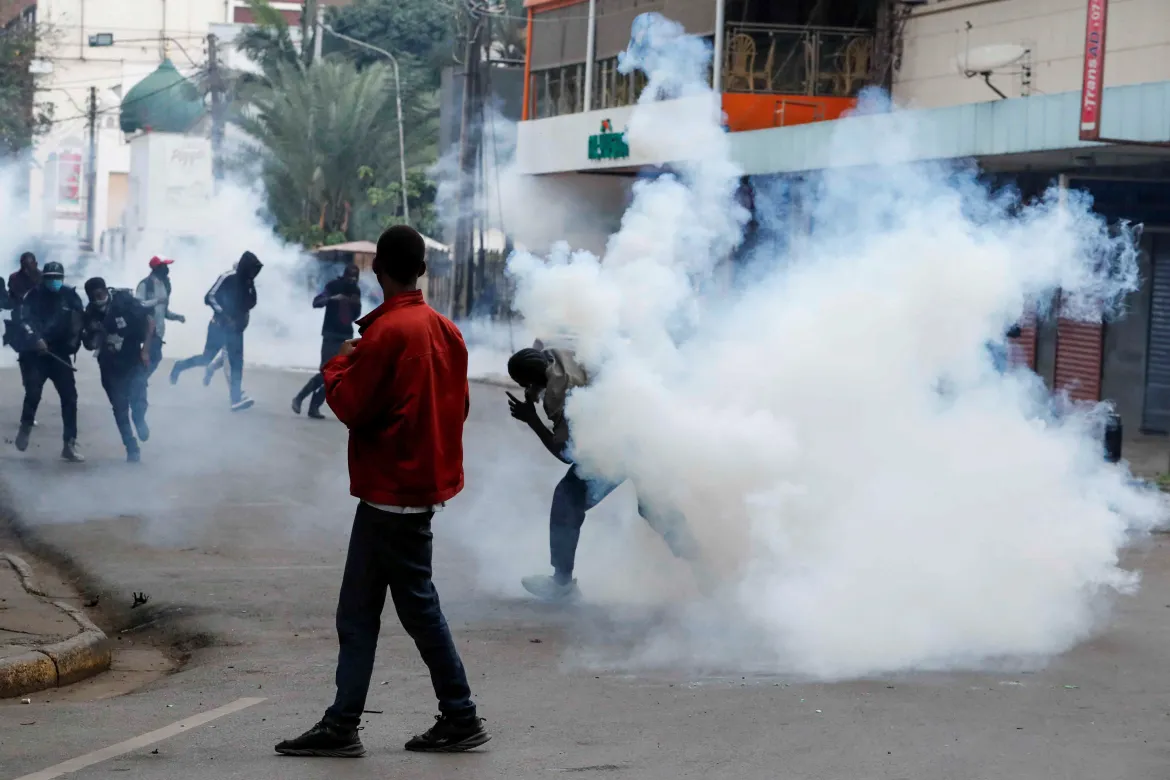
In an effort to build on previous concessions and force President William Ruto to step down, police used tear gas on pockets of anti-government protestors gathered in the center of Nairobi, the capital of Kenya, on Thursday.
The “Nane Nane” march—named “eight eight” because of the date—comes after many weeks of parallel pro-reform demonstrations during which Ruto reorganized his government and abandoned proposed tax increases.
Over 50 people have died as a result of the statewide protests spearheaded by young people that started out peacefully in June before becoming deadly.
After riot police put up roadblocks and used tear gas canisters to scatter small groups of demonstrators around Nairobi’s business center, shops closed and the streets were barren. One group of twelve protestors yelling “Ruto must go” was targeted by police with tear gas, according to Reuters.
126 persons were detained by the police in Nairobi out of 174 nationwide, according to a statement released by acting inspector general Gilbert Masengeli.
The International Press Association of East Africa, which represents hundreds of journalists in the area, reported on X that at least three journalists were hurt as police opened fire with tear gas canisters near them.
Additionally, opposition financier and presidential candidate Jimi Wanjigi’s residence was raided by police, according to a message from his attorney Willis Otieno to Reuters.
“He seems to have been placed under house arrest illegally,” Otieno stated.
Masengeli reported that when police searched Wanjigi’s residence, they found communications equipment and tear gas canisters in a vehicle. He did not clarify how the raid was connected to the protests or whether Wanjigi was one of those detained.
After some protestors briefly stormed parliament in June, Ruto gave in to pressure and canceled the additional taxes, igniting the largest crisis of his two years in government.
Last month, Ruto dismissed every member of his cabinet save the foreign minister, which was a win for activists and demonstrators who had called for significant reforms.
Activists denounced Ruto’s appointment of opposition MPs to his cabinet as a shady agreement and renewed their calls for his resignation. They demanded comprehensive changes to combat corruption as well as better service delivery from local, state, and federal administrations.
According to Ruto, the new government will meet the demands of the protest movement and reflects national unity. While he has mostly supported the actions of the police, he has pledged to look into claims of mistreatment by them during protests.
On Thursday, Ruto’s newly assembled government took its oath of office.
In a statement following the ministers’ oath of office, he stated, “Where Kenya is today, while competition is healthy and good, there is a moment when the interest of a nation is greater than the interest of a political formation.”
The majority of the protest planning was done online, and there are no recognized leaders.
Following his initial commendation of the protestors for their nonviolence, Ruto has become more critical of them.
“The rule of law serves as the solid foundation for our nation, which is proudly democratic. Anarchy, instability, and bloodshed have no place in Embu County,” Ruto said on Wednesday.
Preceding Thursday’s protests, the Kenyan police issued an alert advising citizens to stay away from congested locations and stated that they were allocating enough officers nationwide.