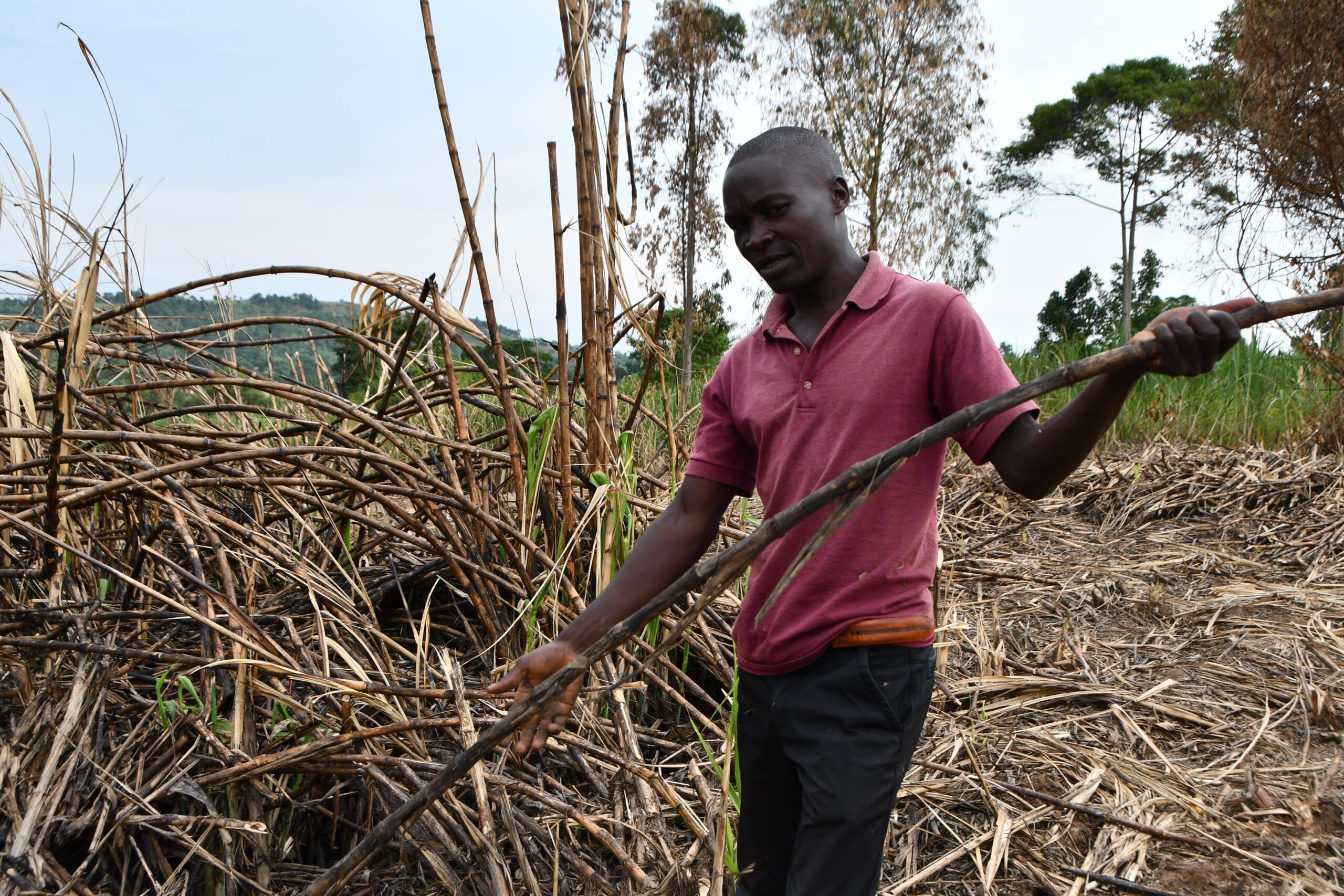
The sector is in disarray as Ugandan customers rejoice over the lowest retail sugar prices in five years.
The rapidly contracting regional markets that are causing domestic stocks to soar to previously unheard-of heights have resulted in a surplus that outgrowers are criticizing.
In protest at the decline in cane prices from Ush250,000 ($67.72) per tonne, little over a year ago, to Ush140,000 ($37.92) today, growers in the eastern region of Buikwe decided this week to stop supplying cane to Sugar Corporation of Uganda Ltd (Scoul), located in Lugazi.
The millers claim they are in a bind and threaten more drops in output unless congested regional markets allow Uganda access.
“It is erroneous to think that cane prices solely represent the availability of cane; instead, they are more indicative of the difficulties in the refined sugar market,” stated Wilbur Mubiru, a representative of the trade association Uganda Sugar Technologists Association.
“Any difficulties we encounter in the refined sugar market trickle down to the cost of cane. Although there is now little we can do about it, we and outgrowers would be glad if we had better access to the East African market.
Retail prices in Uganda have dropped dramatically recently, averaging Ush3,300 ($0.89) per kilogram. At the top price of Ush7,000 ($1.90) per kilogram three years ago, that is less than half. Numerous farmers stopped cultivating sugarcane as a result of the Covid-19 shutdowns in 2020–21, which negatively impacted Uganda’s demand for sugar.
However, after the region’s dry spell and markets opened up as a result of delays to international shipments, demand surged, driving up retail prices.
A new normal was established by the sharp price recovery, which prompted more people to plant cane. Some millers are now projecting additional price declines.
Albert Bituura, general manager of Bwendero Sugar, a small miller situated in the Hoima district of western Uganda, stated, “We see cane prices falling even more, as the crop planted over the past two years reaches maturity.”
“Due to abundant rainfall during the previous 18 months, Kenya’s local sugar supply is currently oversupplied, making us dependent on that market. As a result, the local market has taken off.”
The 16 sugar plants in Uganda have an installed capacity of 1.2 million tonnes annually, but due to limited access to export markets, they are barely using half of that potential. Just 0.4 million metric tons are consumed domestically. At one point, Ugandan exports reached a height of 100,000 tonnes, making Kenya the largest regional market overall.
Although Uganda has the capacity to supply Kenya with anywhere from 120,000 to 150,000 tons of sugar yearly, Mr. Mubiru told The EastAfrican that frequent policy reversals have hindered market access.
There are rumors circulating that Kenya has banned Ugandan milk from entering their market. Mr. Mubiru stated, “We fear sugar may be next.”
The millers cannot mill more sugar than they can sell, so they have sugar on hand, so the demand for cane will remain low if that occurs, therefore cane growers should prepare for worse, Mr. Mubiru added.
The outside growers demand higher cane prices, citing exorbitant production expenses as justification. Harvesting, loading, and transportation, according to a Buikwe farmer, are the three cost centers.
Millers have been contemplating automating the process of loading and harvesting, but they have encountered opposition and threats of arson. Growers are the most vulnerable due to the industry’s backpedaling, which has left an uneven status quo.
Although loading may seem easy, it requires a highly specialized skill set, and very few loaders are able to maximize the carrying capacity of vehicles in terms of both volume and weight. They are monopolists, ruthless and tense all the time. Because you can’t negotiate with them, we just accept their offer,” he remarked.