Kenya struggles to satisfy local communities and refugees
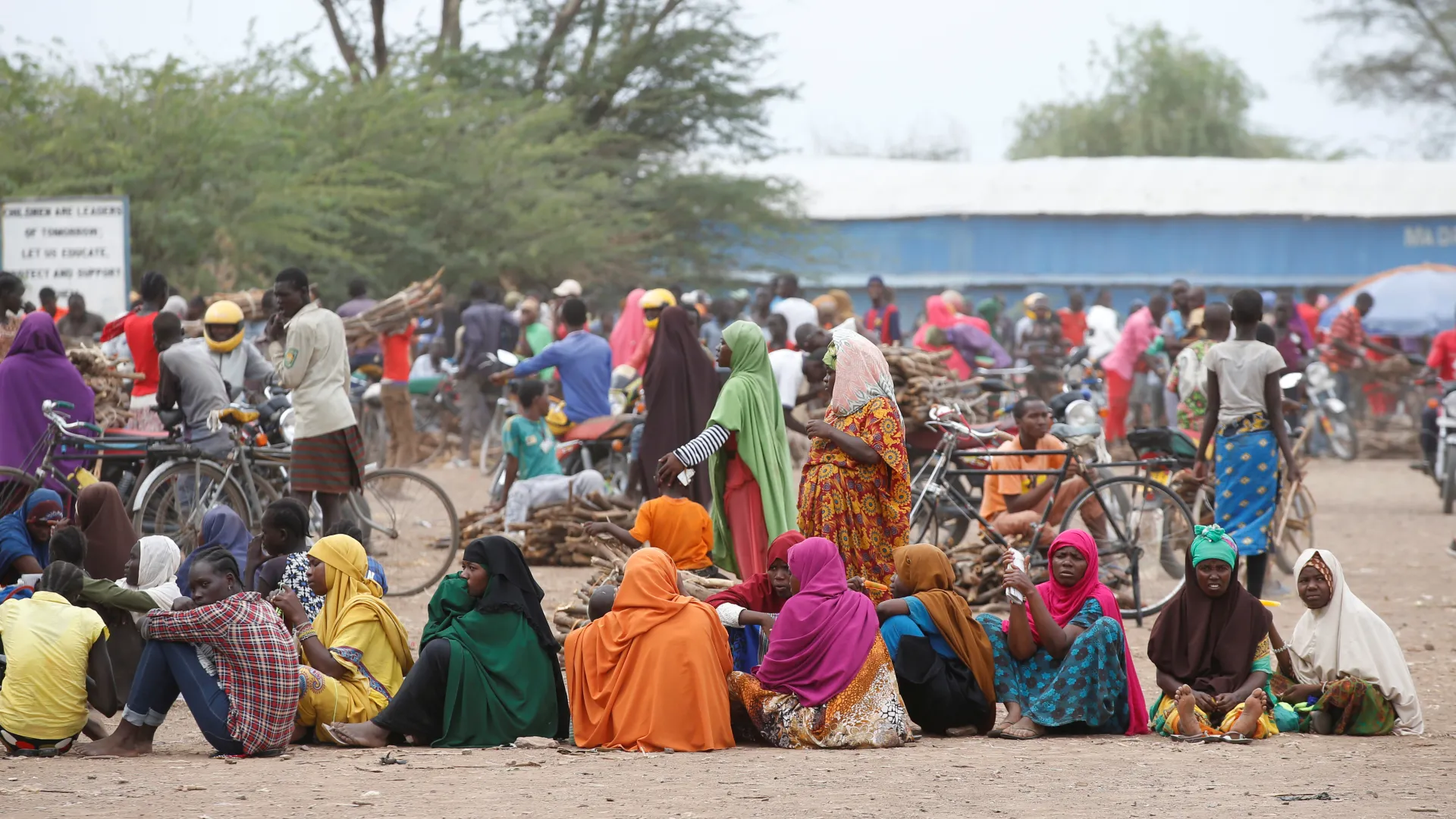
For the past 22 years, Rose Chelia has only lived in the Kakuma Refugee Camp in Turkana County, Kenya.
She sought safety at this camp in the northwest of Kenya after fleeing the Second Sudanese Civil War, which ultimately resulted in South Sudan’s secession in 2011.
She finds herself in a difficult situation when requested to leave because there aren’t enough basic supplies in the camp. She had known this house, nevertheless, since she was a young child. But in actuality, she is not a Kenyan.
After the Kenyan government decided to give the estimated 700,000 refugees living in the country a unique form of identity, which would allow them to go around and conduct business, look for employment, and even attend school like locals, the problem might finally be resolved as of November of this year.
The Shirika Plan, which will turn both the Dadaab Refugee Camp in Garissa County and Kakuma into official municipalities, might cost up to $1 billion to maintain and upgrade.
Since I’ve never returned home after escaping a battle, I don’t currently know how to go there. In a recent interview, Ms. Chelia stated, “I have spent my entire childhood at the camp.”
Her narrative is identical to that of Mr. Salum Ramadhan of the Democratic Republic of the Congo (DRC). It was 1992 when he came here. Kakuma was once a 17 km2 area of land that would subsequently be divided into four pieces, all of which were occupied for decades by camps and refugee housing.
“I am grateful Kenya gave me a second home to restart my life after I fled civil war in my country in 2011,” Mr. Ramadhan stated, despite the difficulties.
In 2015, Kenya decided to create the Kalobeyei Integrated Settlement on a 15km2 plot of ground 20 kilometers away from the Kakuma refugee camp due to overcrowding that resulted in increased insecurity and appalling living conditions. The camp has 188,000 residents.
The UNHCR, the Nairobi National Government, the Turkana County Government, and the elders of the host community had been negotiating for a year before this happened.
Eventually, though, the government ran out of room to continue providing further space. Concerns over security also stoked rumors that some criminals were taking refuge in the camps. Frequently, UNHCR denied the allegations at Dadaab and Kakuma.
Kenya cannot legally drive refugees out despite being a signatory to numerous international treaties at the UN and the African Union on their protection. Additionally, it cannot close the camp unless they consent. If it comes to that, turning the camps into municipals has emerged as a compromise.
Residents, however, believe that the government is favoring refugees over hosts. Turkana West Sub County residents, where these camps are situated, have stated that they have continued to bear the price of hosting refugees, including environmental damage, reductions in grazing areas, and difficulties obtaining essential services like water and healthcare.
By official count, as of the end of February this year, Kakuma Refugee Camp and Kalobeyei Integrated Settlement housed 283,969 refugees and asylum seekers.
The Kalobeyei Integrated Socio-Economic Development Program, a Turkana-based endeavor, was responsible for the establishment of the Kalobeyei settlement. Its objective was to foster cooperation and coordination among the Kenyan government, UN agencies, development partners, NGOs, the private sector, and civil society in order to construct sustainable services and economic endeavors at the new settlement.
The necessary land was first granted by the county government, which is in charge of the community land and, with the help of the host community, along with the national government and development partners that are dedicated to fostering integration between the host community and refugees.
The colony, according to former governor of Turkana Josphat Nanok, was intended to take advantage of the socioeconomic effects of the refugees’ presence in Turkana, where they frequently drew aid.
Authorities now claim that integration will benefit both sides of the border instead of encampment.
An analysis conducted in 2017 by the International Finance Corporation supported integration. Called Kakuma as a Marketplace, it proved that the town, home to 60,000 residents and more than 180,000 refugees, had an annual GDP of $56 million (KSh7.2 billion) depending on household consumption.
By converting camps into integrated settlements for both refugees and asylum seekers, the present multi-year Shirika Plan seeks to advance the socioeconomic integration of refugees in Kenya. People who don’t have immediate plans to return home, like Mr. Ramadhan and Ms. Chelia, benefit from it.
Governor Jeremiah Lomorukai states that he is in favor of the Plan—but only if it does not penalize the residents.
“Countries that accept refugees struggle with extreme poverty, and their situation requires attention as well,” he stated to The EastAfrican.
“Among other benefits, Shirika plan should involve these host communities in resource sharing and employment for a successful transition and integration.” stated Mr. Lomorukai.
In observance of World Refugees Day, June 20, the governor participated in a major stakeholders’ appraisal forum in Nairobi to formally adopt the plan. UNHCR Country Representative Caroline Van Buren, UN-Resident Coordinator Dr. Stephen Jackson, Principal Secretary for State Department of Foreign Affairs Dr. Korir Sing’oei, and his Immigration and Citizenship counterpart Prof. Julius Bitok were also present.
They all promised to back the plan, which calls for the existing camps for refugees in Dadaab and Kakuma to be reorganized into contemporary cities with the infrastructure needed to serve both the local population and the integrated refugees. This transformation will take place in phases between 2024 and 2031.
Using the Kalobeyei settlement camp as an example, they claimed that sharing resources, information, and socioeconomic opportunities does not accurately reflect the genuine meaning of integration as it exists today.
Beyond economic concerns, there are additional worries including the potential for Turkana culture to deteriorate as newcomers introduce different lifestyles to the County.
Currently, World Food Program’s universal service to “needs-based” support has been discontinued due to ration shortfall. According to this method, WFP will distribute food assistance depending on each family’s socioeconomic situation and level of food security, according to a June statement from Lauren Landis, the organization’s country director in Kenya.
Currently, the WFP supports 650,000 refugees, all of whom receive the same amount of food aid. The WFP’s Country Director stated, “Assisting those in the least need of humanitarian aid while weaning them off of it and assisting them in becoming self-reliant instead ensures that the most vulnerable are prioritized based on available resources.”