 "Where Africa Comes to Stay Informed."
US Edition
"Where Africa Comes to Stay Informed."
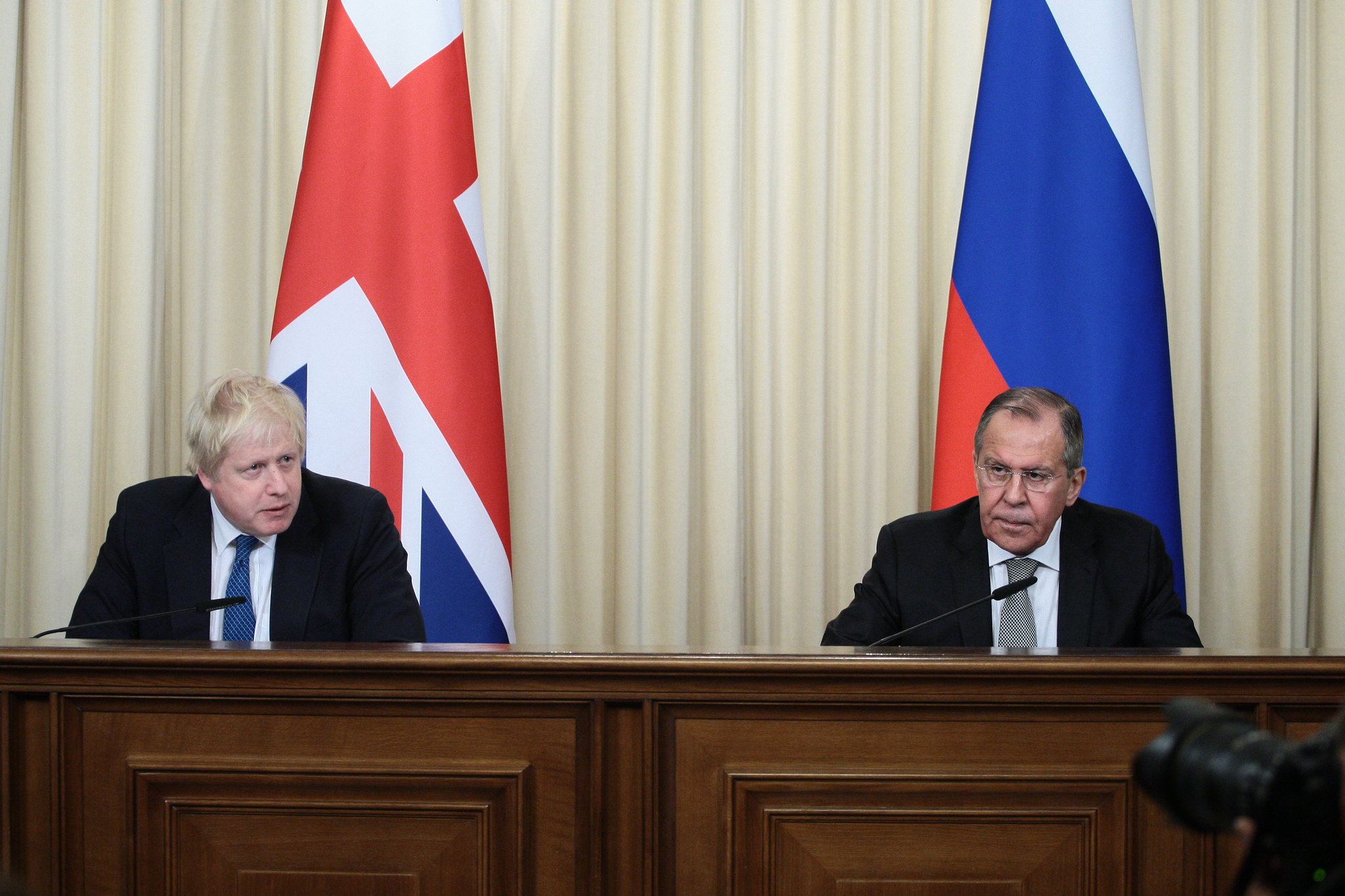
British households have been advised to hold stocks of food and drinking water at home so they can ride out a serious national emergency — a list that now openly includes armed conflict, cyberattacks and extreme weather — as unease over Russia's confrontation with the West deepens across Europe.
The guidance, carried by the BBC and other British outlets, forms part of a broader national resilience push aimed at making sure families can look after themselves while the state deals with a large-scale crisis. Ministers stopped short of suggesting that war with Russia was near.
Even so, the fact that conflict was named alongside cyberattacks and hostile-state activity was enough to refocus public attention on how exposed Britain would be to a wider European war. Whitehall has also started rewriting its so-called “war book,” the contingency blueprint that has gone decades without a serious overhaul.
Sir Richard Knighton, Britain's Chief of the Defence Staff, was reported to have called today's security picture the “most dangerous” stretch of a military career spanning 35 years.
The push on preparedness came after Western intelligence officials cautioned that Moscow may be quietly setting up the paperwork for a fresh call-up of troops once its parliamentary vote is over. Russia's three-day election opened on Friday and closes today.
Ukraine's President, Volodymyr Zelenskyy, has argued that the Kremlin could look to swell its forces by hundreds of thousands of soldiers once the ballot is behind it. President Vladimir Putin has waved away that speculation, calling talk of another mobilization “nonsense.”
What worries Western capitals is where any extra manpower might end up — not only inside Ukraine, but along Russia's western border with NATO. Those fears sit on top of a string of cyber intrusions, sabotage attempts and other hybrid operations across the continent that have been linked to Russia.
Poland's Prime Minister, Donald Tusk, told lawmakers on Saturday that material from NATO partners, Ukraine and Polish services all pointed the same way: Russia may try hybrid drone and missile strikes on states that back Kyiv. Such strikes, he said, would probably be dressed up as accidents — a way of probing the alliance's reflexes and sapping the will to trigger collective defense.
“There is a real risk that the territory of one or several NATO countries on the eastern flank may be entered by drones or other types of missiles, which may even cause destruction,” Tusk told parliament.
“And the official narrative will be that this is an accident and that there is no reason for anyone to contemplate any response from NATO.”
Late autumn and winter, according to the Polish government's account of his remarks, could prove the most decisive phase of the war. Tusk also flagged a new generation of jet-powered Russian drones that fly faster and higher than earlier models, and said the Kremlin's aim was to erode NATO's unity and cast doubt on Article 5, the clause binding members to defend one another.
“Russia does not need to cross our border. It is already waging a hybrid war against us using drones, acts of sabotage and disinformation on the internet,” Tusk said.
He went on: “We are not seeking war, but if anyone dares to attack us, they will face a resolute response from us and our allies.” He also took aim at political rhetoric at home that risks splitting Europe, adding: “Whipping up hostility towards the European Union, towards our allies, towards Ukrainians, is directly implementing Russia’s strategy. Everyone must finally understand this.”
Set against all this, the UK Ministry of Defence framed Britain's stance as purely protective. The ministry said: “The UK is not seeking confrontation, but alongside our allies, we are ready to defend every inch of NATO territory.”
In practice, Britain has deepened its contribution to the alliance's eastern-flank defenses, sending Royal Air Force Typhoon jets to fly air-defense missions with allied units. It has likewise kept up military backing for Ukraine, Storm Shadow cruise missiles among the assistance provided — support Moscow has denounced repeatedly, with warnings that arms suppliers may pay a price.
Germany is running a similar reassessment. Deutsche Welle reported in August that Berlin was shoring up civil defense and emergency readiness in the wake of Russia's full-scale invasion and a run of security incidents around critical infrastructure. German investigators have separately looked into suspected sabotage of power installations; Reuters reported earlier this month that the country's electricity network was hit twice inside 24 hours as anxiety about hybrid warfare grew.
Berlin is also drawing up wider contingency plans covering everything from hybrid attacks to a full NATO conflict — a reflection of Germany's position as the main logistics hub for allied forces. Its defense leadership, meanwhile, has pressed for a quicker build-up of the armed forces, arguing that Moscow is expanding its military while using hybrid tools to destabilize Western societies.
Several European states have gone further still in readying their populations. Sweden has broadened both civil and military preparedness since the invasion began, and Finland keeps a large trained reserve backed by universal male conscription.
What is taking shape across the continent reaches well past the traditional idea of a ground war. Attention has shifted to the soft targets: undersea cables, energy grids, transport links, communications and digital systems. Cyber intrusions, sabotage, disinformation and the disruption of power and communications are now treated as standard features of modern conflict rather than side effects of it.
For now, the message from London is about resilience, not imminent war. Families are being asked to keep basic supplies to hand and to think through, in advance, how they would manage if normal life were interrupted for an extended period.



Comments
0