 "Where Africa Comes to Stay Informed."
US Edition
"Where Africa Comes to Stay Informed."
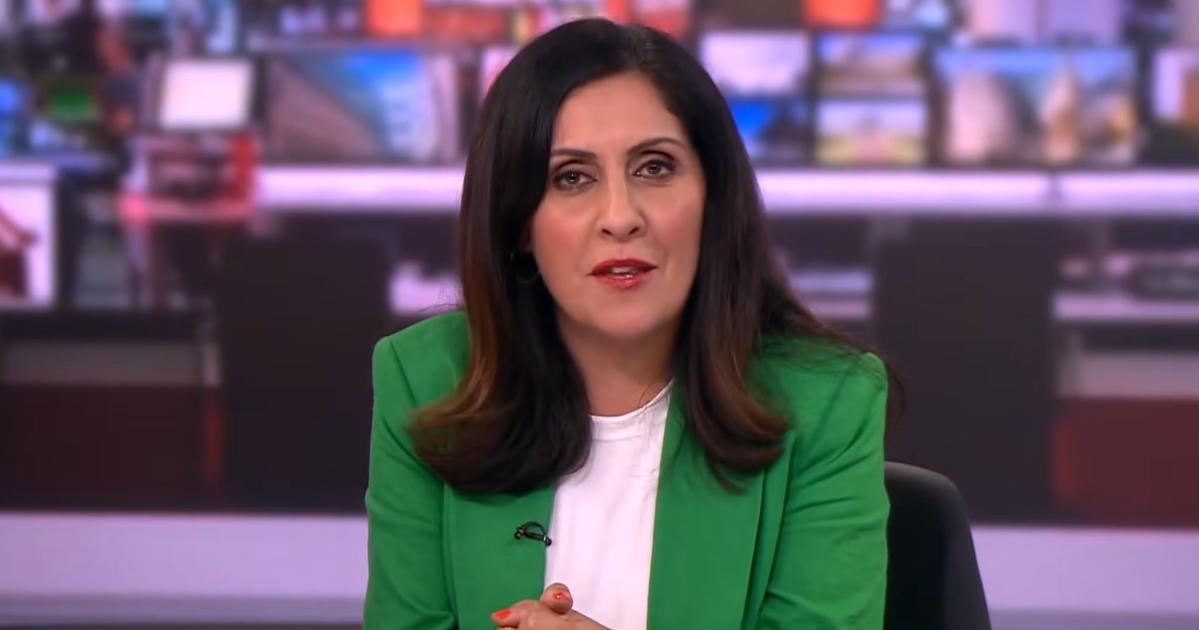
Maryam Moshiri shares that she has dedicated two years to managing an incurable blood cancer while maintaining her rigorous career at BBC News.
Maryam Moshiri, the chief presenter for BBC News, has disclosed her diagnosis of a rare and incurable form of blood cancer. She has chosen to share her experience publicly in order to raise awareness about the condition.
Moshiri, 49, who joined the BBC in 2003 and is one of the broadcaster’s most recognized news anchors, was diagnosed with polycythemia vera (PV) in November 2024.
She informed the BBC that, after two years of living with the condition, she had developed a deeper understanding of the disease and its impact on her life.
“It’s been two years since my diagnosis, and I feel that I’ve begun to grasp the disease much more clearly and how it impacts my life.” “I’ve got a handle on it to a degree now, so I felt it was really important to raise awareness,” she stated.
Moshiri stated that her condition would necessitate ongoing treatment for life.
“I will have to spend the rest of my life receiving treatment for this,” she added.
PV is an uncommon blood cancer characterized by the excessive production of red blood cells, resulting in thicker blood than usual and a heightened risk of blood clots.
The condition can increase the likelihood of serious complications such as stroke, heart attack, and deep vein thrombosis. Symptoms may encompass headaches, dizziness, confusion, and blurred vision.
Moshiri mentioned that she initially experienced minimal symptoms and that her condition was identified following routine blood tests ordered by her GP.
“My consultant informed me that I have been diagnosed with an incurable blood cancer,” she stated.
“For the most part, I experienced no symptoms, and that’s one of the challenges associated with this disease.
“The sole reason my condition was detected was due to my GP's meticulous approach in conducting my routine blood tests and promptly referring them for further diagnosis.”
As part of her initial treatment, Moshiri underwent several sessions of venesection, a procedure that involves drawing blood from a vein to decrease its viscosity.
She mentioned that she went through seven or eight sessions over a span of approximately five months, which left her feeling extremely fatigued due to a drop in her iron levels.
In the span of approximately five months, I underwent venesection seven or eight times. “You can imagine my iron levels plummeted, and I felt even more drained,” she said.
Moshiri subsequently commenced immunotherapy with interferon via the NHS. After the adjustments to the treatment, she noted a significant improvement in her condition.
“I’ve only required one venesection in approximately 15 months, which has been quite positive.” The past few months have surpassed the previous two years,” she remarked.
She emphasized that while PV is not curable, it can be effectively managed with the right treatment.
“I believe it’s crucial for people to recognize that while this blood cancer is incurable, it can be managed effectively with appropriate treatment, allowing individuals to lead a relatively healthy life.”
“It’s simply about discovering the appropriate treatment and ensuring its effectiveness for you.”
Moshiri expressed that she is “not the person I was two years ago” but now feels “much better.”
The presenter mentioned that one of the most significant challenges has been managing extreme fatigue, which has occasionally kept her from attending family events or engaging in playtime with her children.
“It’s a type of fatigue that goes beyond mere tiredness from a poor night’s sleep; it feels as if someone has entirely drained your energy, and no amount of rest seems to help.”
She also recognized the ambiguity regarding her condition, especially since PV can elevate the risk of significant complications. “Although I feel better than I have in two years, I’m uncertain about how I will feel in six months, one year, or two years.”
“Individuals with PV face an increased risk of stroke, heart attack, or DVT, so it’s essential for me to remain vigilant and take steps to mitigate these risks.”
Despite facing health challenges, Moshiri has persevered in her work and traveled internationally to report on significant stories for the BBC.
In the last two years, she has provided coverage from Qatar at the onset of the US-Israel war with Iran, reported from the Vatican during the new pope's selection, and traveled to Greenland for US Vice-President JD Vance’s visit.
She expressed gratitude to her husband, Jonathan, her children, and the BBC management for their unwavering support.
Moshiri mentioned that she took her time to inform her children, Iris, 13, Vivienne, 11, and Caspian, nine, about her illness as she wanted to avoid causing them any worry.
“It took me a long time to share this illness with them, as I didn't want to cause them any worry, but their understanding has been remarkable.” “When I say things like 'Mummy is too tired to play with you,’ they understand and don’t push it,” she said.
Blood Cancer UK states that in certain instances, PV may progress to myelofibrosis and, less commonly, acute myeloid leukemia (AML).
Helen Rowntree, chief executive of Blood Cancer UK, commended Moshiri for openly discussing her diagnosis and emphasized that increased awareness could help confront the silence surrounding blood cancers. “We deeply appreciate Maryam for courageously sharing her story,” Rowntree stated.
She observed that blood cancer may manifest with subtle symptoms that are challenging to recognize and that numerous patients navigate treatment and side effects while balancing work and family obligations.
Rowntree emphasized the importance of ongoing public and governmental backing for research aimed at developing more effective treatments that come with fewer side effects.
Moshiri expressed her optimism that ongoing scientific research would result in additional breakthroughs in the treatment of blood cancer. There is significant research being conducted on blood cancer, along with promising scientific advancements on the horizon. “I hope there will be some kind of advancement that will provide even greater benefits than the medications I’ve been prescribed,” she said.




Comments
0