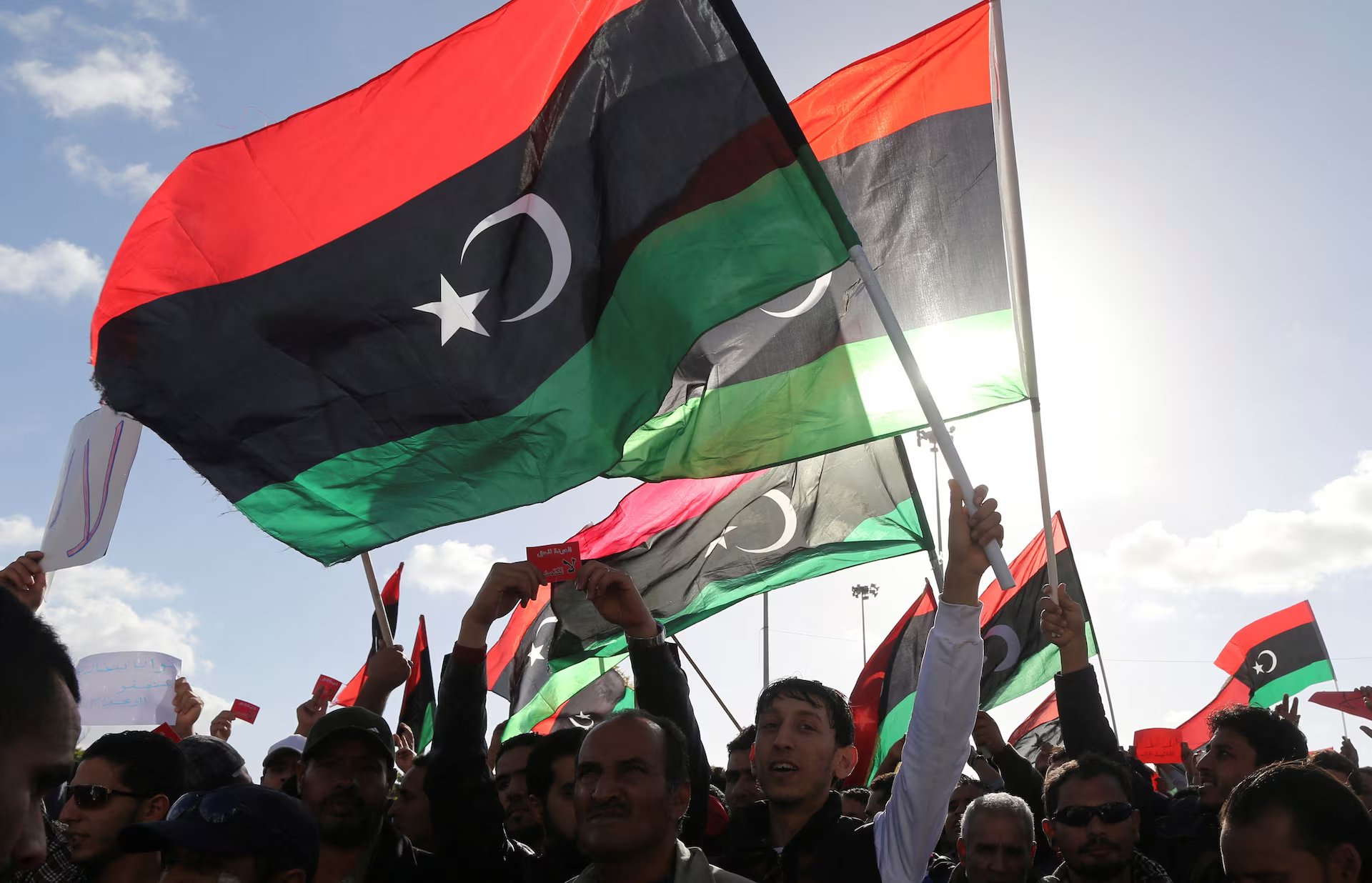
Representatives from Libya’s opposing political factions signed an agreement on Sunday to conduct long-overdue national elections within the next two years, aiming to address contentious matters regarding electoral laws and to reform the national elections body.
The political process aimed at resolving over a decade of conflict in Libya has been hindered since the collapse of an election scheduled for December 2021, due to disputes over the eligibility of the primary candidates.
Sunday’s signing ceremony took place at the United Nations Support Mission in Libya, UNSMIL, located in the Libyan capital, Tripoli.
It came after discussions in a more limited format, referred to as the 4+4, which included two representatives from each of Libya’s four primary institutions: the Government of National Unity, the High Council of State, the House of Representatives, and the Libyan National Army.
Walid Ellafi, the state minister of political affairs and communications in the Government of National Unity, stated that legislative and presidential elections ought to occur “within a period not exceeding 24 months” under a single executive authority and unified national institutions.
Shibani AbuHamoud, head of the army’s general command delegation, stated that the 4+4 would collaborate with UNSMIL “to establish a framework within one month of the signing of the agreement to monitor all matters related to its implementation.
The agreement stipulates that should Libya’s House of Representatives and High Council of State not approve the deal within a month, the involved parties will pursue its adoption nationally as a constitutional document via extensive national mechanisms and will seek international support through the U.N. Security Council.
Since the NATO-backed uprising in 2011, Libya has experienced minimal stability and security.
It divided in 2014 between conflicting eastern and western factions, yet there has been minimal significant warfare since the ceasefire in 2020.
All of Libya’s major political players have consistently advocated for elections; however, many Libyans have expressed skepticism about participating in a vote that might displace most of them from their positions of power.