Pakistan’s army chief will meet with Iranian leaders in Tehran for talks as the US announces “Economic D-Day” targeting Iran
Pakistan’s army chief travels to Tehran as Washington readies unprecedented financial actions against Iran, heightening tensions regarding trade and Hormuz.
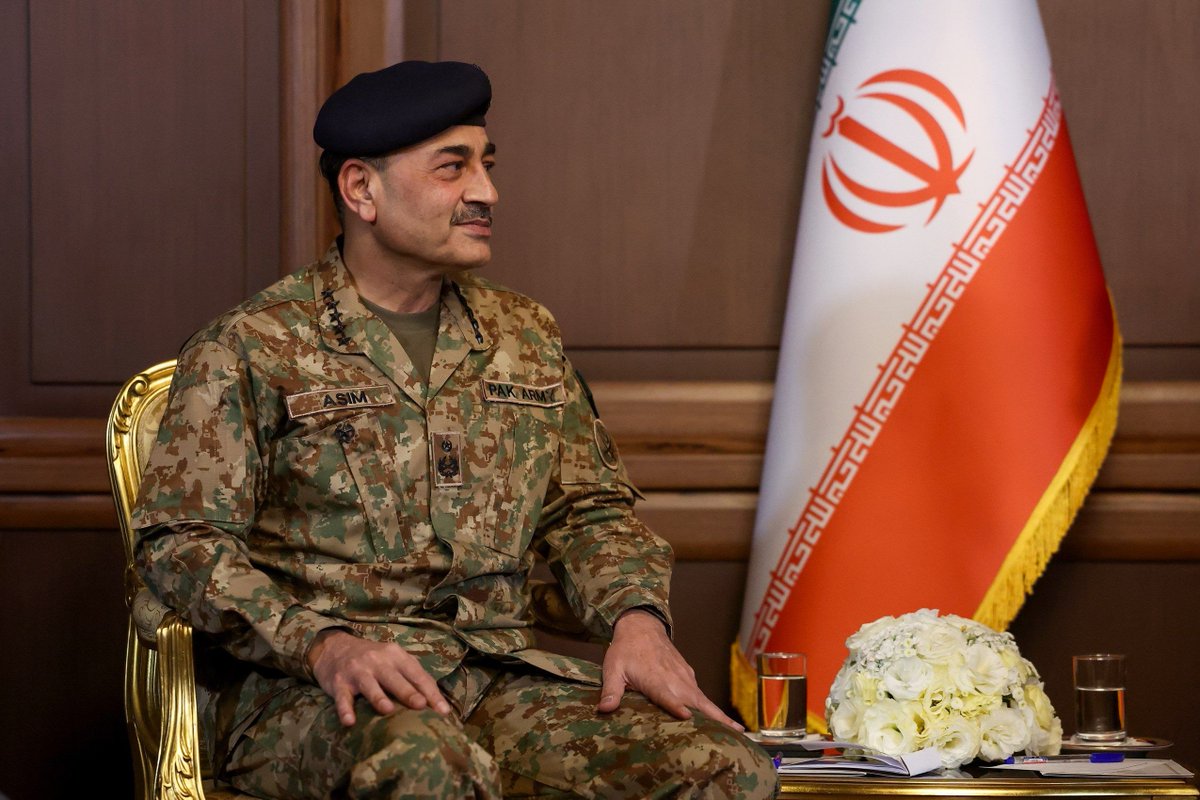
General Asim Munir, the army chief of Pakistan, arrived in Tehran on Monday for discussions focused on enhancing regional peace and stability, coinciding with the United States’ plans to announce what it calls its most extensive financial offensive against Iran.
US Treasury Secretary Scott Bessent is set to announce the measures during a press conference at 1 p.m. EDT (1700 GMT), focusing on countries and businesses that persist in trading with or supporting Iran’s economy.
Bessent characterized the proposed actions as “the single greatest financial offensive ever marshaled against an adversary,” cautioning nations that interact with Iran to rethink their economic relationships with Tehran.
According to a Pakistani source, Munir, who has established a rapport with US President Donald Trump, is anticipated to meet with individuals connected to Iran’s supreme leader during his visit.
Pakistan stated that the army chief’s visit was part of Islamabad’s initiatives to foster regional peace and stability.
The visit occurs during rising tensions between Washington and Tehran, especially concerning the Strait of Hormuz, an essential global oil shipping route.
Iran has dismissed the US threat, cautioning that it may cease all oil exports from the Gulf if Washington’s economic pressure persists.
Mohsen Rezaei, the secretary of Iran’s Supreme National Security Council, stated on Sunday that Iran would view any nation backing the US economic campaign against Tehran as engaging in an act of war.
“If the economic war persists, there will be no oil exports, neither via the Strait of Hormuz nor from any location in the Persian Gulf,” Rezaei stated in a social media post.
Iran has issued new warnings to shipping operators, stating that vessels must not transit the Strait of Hormuz without obtaining permission from Tehran.
Tehran announced that Oman’s foreign minister is anticipated to visit Iran on Tuesday to engage in discussions centered on the strategic waterway.
The most recent escalation occurred when a projectile hit a tanker to the west of Saudi Arabia’s Red Sea port city of Yanbu on Monday, igniting a fire on the vessel’s main deck.
The United Kingdom Maritime Trade Operations, responsible for monitoring shipping activity in the region, reported the incident without disclosing the identity of the entity that launched the projectile.
Last month, Houthi forces supported by Iran announced their intention to obstruct Saudi oil exports redirected to the Red Sea in order to prevent disruptions in the Strait of Hormuz.
Despite the absence of direct military strikes between the US and Iran in recent weeks, tensions persist, fueled by months of conflict and ongoing assaults on vessels in the Gulf region.
The conflict has resulted in the deaths of thousands, primarily in Iran and Lebanon, following the strikes initiated by the US and Israel on February 28.
The attacks have notably diminished Iran’s conventional military capabilities and harmed infrastructure, yet Iran has maintained sufficient missile and drone capacity to pose a threat to neighboring Gulf states and shipping.
The resulting disruption has nearly halted maritime traffic through the Strait of Hormuz, exerting pressure on global fuel markets.
Oil prices declined by over $1 a barrel on Monday as investors capitalized on profits in anticipation of the forthcoming US announcement.
China, a significant economic ally of Iran, dismissed the US pressure campaign, asserting that sanctions and coercive measures would not settle the disagreement.
China’s foreign ministry stated that Beijing would implement necessary measures to safeguard its interests following Bessent’s call for the country to collaborate with Washington.
Iran has also rejected the most recent threats from the US.
Deputy Foreign Minister Kazem Gharibabadi stated that Washington has consistently forecasted Iran’s collapse over the last 48 years, contending that only the titles of the unsuccessful initiatives have varied.
“Iran has continued to be strong and resolute,” he stated.
Nevertheless, the increasing economic strain arises during a challenging period for Iran, which was already grappling with sanctions, soaring inflation, a depreciating currency, energy shortages, and inherent structural vulnerabilities prior to the recent conflict.
The conflict has exacerbated damage to infrastructure, hindered trade and production, and heightened the financial strain of rebuilding efforts.
Iranian officials have privately voiced worries that further US sanctions might exacerbate economic difficulties, provoke renewed unrest, and further erode confidence in the Islamic Republic.