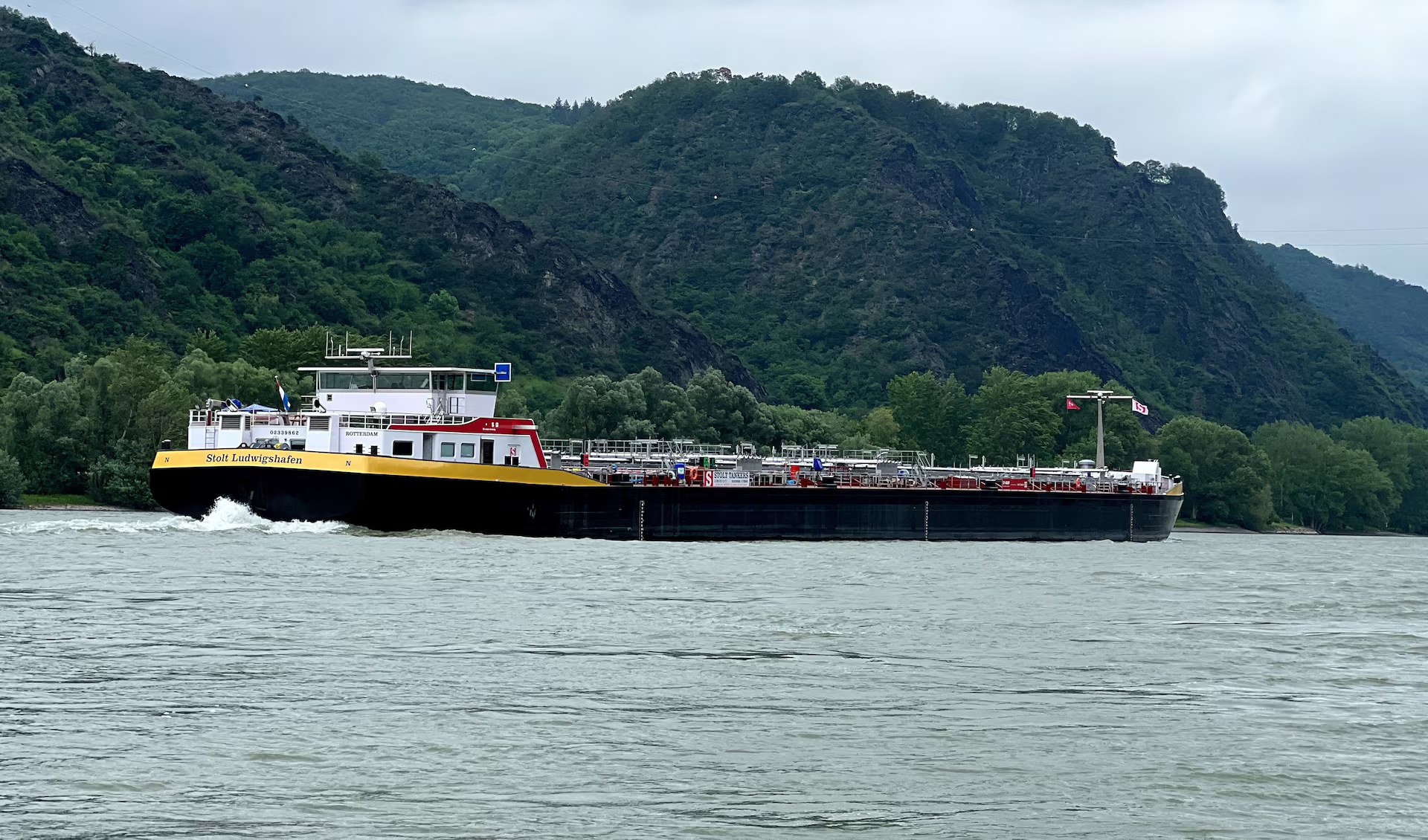
Water levels in the Rhine have reached unprecedented lows, causing disruptions in cargo transport and prompting companies to reroute shipments to road and rail options.
The Rhine River has reached a new record low at the Kaub gage near Koblenz, causing disruptions in cargo transport and prompting companies to explore alternative routes amid Europe’s ongoing heatwave.
Germany’s inland waterways agency, WSV, reported that the water level at Kaub dropped to a mere 6 centimeters late Friday, before experiencing a slight increase to 8 cm early Saturday.
The most recent measurement is lower than the earlier record of 10 cm noted on Friday and considerably beneath the previous low of 25 cm documented in 2018.
The Kaub gage measures the water level instead of the river’s full depth, yet its readings are commonly utilized as a significant indicator of navigability along the Rhine. The river is estimated to be approximately one meter deeper than the gauge reading at that location.
Water levels at Kaub have consistently stayed below 78 cm since mid-July, leading to growing challenges for vessels transporting heavy cargo along this crucial waterway.
The Kiel Institute for the World Economy estimates that industrial production may decrease by approximately 1% if water levels at Kaub stay below 78 cm for 30 consecutive days, as experienced during significant low-water periods in 2018 and 2022.
The Rhine serves as a vital transport corridor in Europe, facilitating the movement of chemicals, fuel, commodities, and various industrial goods among key industrial centers and ports.
However, the progressively shallow waters have compelled shipping companies to decrease cargo loads, while certain businesses are opting for road and rail transport to deliver essential supplies.
German chemical manufacturers, utilities, steel producers, and agricultural traders are currently encountering increased transportation expenses, delays, and the potential for production cuts due to low water levels that are limiting river traffic.
As freight movement on the Rhine faces growing limitations, a greater volume of cargo is being shifted to roads and railroads, intensifying the strain on alternative supply networks amid the ongoing heatwave.