China’s missile test reveals a growing divide in the Pacific regarding the increasing military presence
China’s missile test reveals a divide in the Pacific, as an increasing military presence and intensifying competition among major powers heighten regional anxieties.
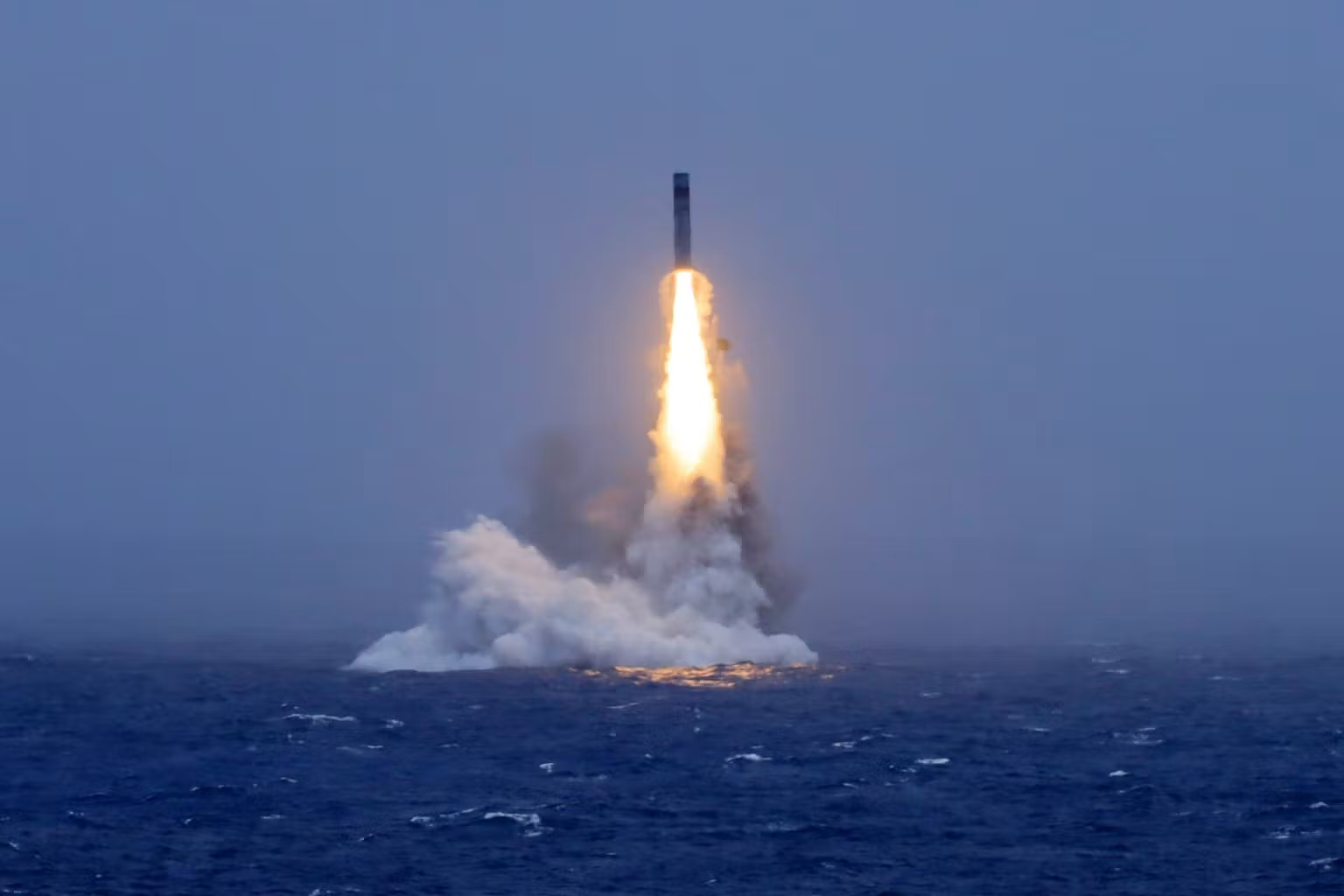
The missile was launched on July 6, representing China’s initial public acknowledgment of a submarine-launched ballistic missile test in the Pacific.
The test occurred just hours after Australia and Fiji formalized a significant mutual defense treaty, referred to as the Ocean of Peace Alliance, underscoring the region’s increasingly intricate security landscape.
Despite the concerns expressed by various Pacific leaders, the foreign ministers of the region were unable to come to a consensus on a joint statement addressing the Chinese missile launch during their meeting in Suva last week.
Papua New Guinea’s Foreign Minister, Justin Tkatchenko, characterized the test as “completely inappropriate,” contending that it did little to aid in the preservation of peace in the Pacific.
Tkatchenko stated that China, which has strong ties with Papua New Guinea, had notified Port Moresby prior to the launch, although it did not disclose specifics regarding the missile’s eventual landing location.
China justified the exercise, stating that it was a component of a regular military training program carried out safely and in compliance with international law.
Beijing also encouraged countries to avoid over-interpreting the test.
The launch occurs amid increasing military activity throughout the Pacific, as China, the United States, and their allies vie for enhanced strategic influence in the area.
Chinese naval deployments and military exercises have aligned with drills conducted by the United States and its allies near Guam and Hawaii, while Australia has enhanced its defense cooperation with Pacific Island nations.
The United States has a notable presence of military facilities and personnel throughout the Pacific, including locations such as Hawaii, Guam, and the Marshall Islands.
The increasing frequency of military exercises and security agreements has sparked worries among Pacific officials that the region’s enduring goal of being an “Ocean of Peace” may be jeopardized.
Tuvalu’s Permanent Foreign Secretary, Pasuna Tuaga, voiced apprehension regarding the rising militarization, highlighting not only China’s missile test but also security agreements like AUKUS, the defense partnership involving Australia, Britain, and the United States.
In September 2025, Pacific leaders endorsed the Ocean of Peace Declaration, pledging to safeguard regional peace and enhance international security while also acknowledging the right of Pacific peoples to peace.
David Peebles from the Australian National University’s Pacific Security College noted that Pacific nations have traditionally pushed back against having their security priorities dictated by larger external powers.
He characterized the Ocean of Peace initiative as a commitment by Pacific nations to assume greater responsibility for their regional security agenda.
The defense agreement signed by Australia and Fiji on July 6 preceded the declaration.
Under the Ocean of Peace Alliance, Australia and Fiji have pledged to assist one another during times of need, marking Fiji’s inaugural formal defense alliance.
Proponents contend that these collaborations could offer tangible advantages, such as disaster response, monitoring for illegal fishing, law enforcement, and access to military training and resources.
Critics express concern that the expansion of defense partnerships may lead to increased militarization and diminish the control Pacific nations have over their territory and infrastructure.
Rick Houenipwela, the Foreign Minister of the Solomon Islands and chair of the Suva meeting, emphasized that decisions impacting the region should be “conceived by the Pacific, shaped by the Pacific, and only by the Pacific.”
The meeting concluded without a unified response to China’s missile test.
According to officials familiar with the discussions, Kiribati and Nauru, which enhanced their diplomatic ties with Beijing after changing their recognition from Taiwan in 2019 and 2024, respectively, did not endorse certain elements of the proposed statement.
New Zealand Foreign Minister Winston Peters attributed the inability to achieve consensus to external influence, though he refrained from naming any specific country.
The disagreement underscores the challenging decisions facing Pacific Island governments, each with its own economic, political, and security priorities.
Some countries prefer to enhance security cooperation with Australia, New Zealand, and the United States, while others are wary of becoming more closely aligned with major military powers.
Fiji Foreign Minister Sakiasi Ditoka recognized the challenge, stating that Pacific governments aimed to avoid military preparations while understanding that specific security capabilities could aid in their protection.
Fiji made its debut in the Rim of the Pacific, or RIMPAC, military exercise last month.
The exercise led by the US unites military forces from various nations throughout the Pacific and beyond, highlighting the region’s increasing significance in broader strategic competition.
Pacific leaders are set to discuss China’s missile test, regional security, and divisions regarding militarization during their upcoming gathering in Palau for the Pacific Islands Forum leaders’ meeting later this month.