Keffe D claims he has never read the book that led to the charges against him for the murder of Tupac
Days prior to jury selection in Las Vegas, Duane Davis informed 8 News Now that his co-author completed Compton Street Legend independently, prosecutors intend to present it to the jury regardless.
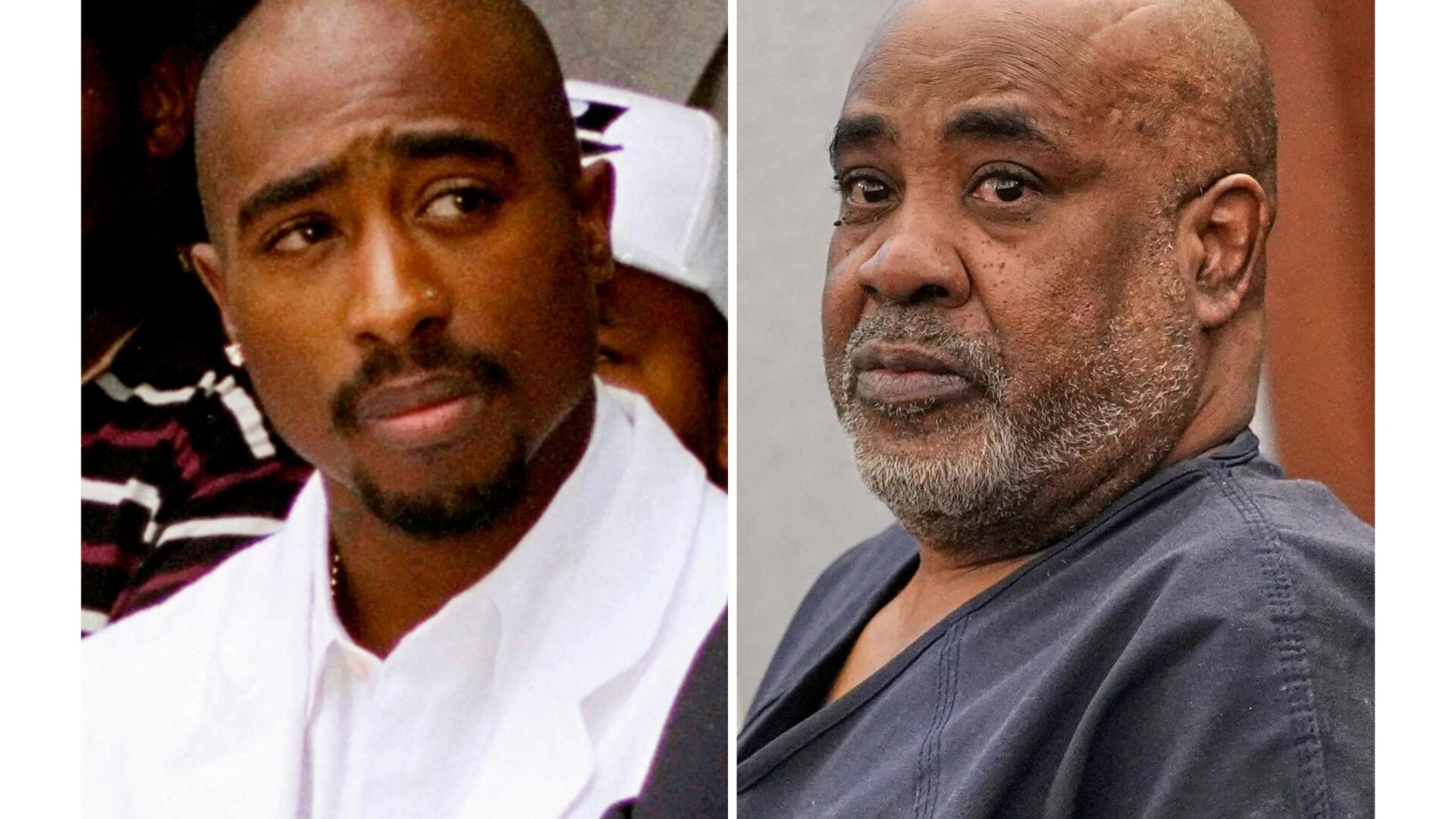
Duane “Keffe D” Davis claims he has never read Compton Street Legend, the 2019 memoir that prosecutors are presenting as key evidence in their assertion that he orchestrated the 1996 murder of Tupac Shakur. He made the claim in an extensive jailhouse interview with the 8 News Now Investigators in Las Vegas, published days before his murder trial begins Monday, August 10, at the Regional Justice Center in Clark County.
His account is that he handed his life story to a co-author, and the co-author did the rest. In a previous interview with ABC News conducted at the Clark County Detention Center, Davis stated clearly that he shared aspects of his life with the man, who then conducted his own research and authored the book independently.
That argument is crucial, as the state’s case relies heavily on Davis’s statements. Prosecutors are relying on the book, on a recording of a 2008 police interview, and on the long run of media appearances he gave between 2018 and 2023, including a BET documentary and paid sit-downs with VladTV. His attorneys tried to get the book and the 2008 recording thrown out before trial and lost. Their argument was that the memoir was fictionalized and had a co-author, which makes it impossible to know which parts came from Davis himself. They contended that the 2008 discussion with a federal task force probing the deaths of Christopher Wallace and Tupac was intended to be confidential and should not be utilized against him.
That 2008 session is worth understanding, because it is the origin of everything that followed. Davis addressed a joint Los Angeles task force under a proffer agreement, a deal in which an individual shares their knowledge with investigators, ensuring that the specific information provided cannot be utilized for prosecution. It serves as a widely used instrument for fostering collaboration. The issue for Davis is that the agreement was made with California authorities regarding a separate case. In 2009, he recounted his account once more to the Las Vegas police, who had never been involved in that agreement and were not required to uphold it. Nevada prosecutors have stated in court filings that he did not receive immunity in either state.
Davis, now 63, is charged with one count of murder involving a deadly weapon, with the intention to promote or assist a criminal gang. He entered a plea of not guilty and has remained in custody since his arrest close to his home in Henderson on September 29, 2023. Prosecutors do not assert that he discharged the firearm. Their theory suggests that he orchestrated the event and supplied the weapon, with gunfire originating from the Cadillac in which he was a passenger, and he remains one of the few individuals from that vehicle still alive.
In the recent interview, he took his response a step beyond mere denial. When asked about his thoughts on who killed Tupac, Davis indicated Reggie Wright Jr., the former head of security at Death Row Records, who is included on the state’s witness list. He alleged that Wright was dishonest and claimed that both Wright and retired LAPD detective Greg Kading have made threats against his son and family during interviews. Wright has consistently denied any involvement for years. He has previously said Davis confessed to the LAPD in 2008, to Las Vegas police in 2009, and then publicly from 2018 to 2023 on BET, on YouTube, and in his own book, and he is only turning on him now because he got arrested and has nothing else. Davis also denied any involvement in the 1997 murder of Biggie Smalls, a case in which he was previously considered a suspect.
The witness list released by the state on Monday resembles a chronicle of Las Vegas history. It features Nevada Governor Joe Lombardo, who served as Clark County sheriff at the time of Davis’s arrest; former Las Vegas mayor Oscar Goodman; and Suge Knight, the co-founder of Death Row Records, who was driving the black BMW when Tupac was shot on September 7, 1996, following a Mike Tyson fight. Tupac passed away six days later at the age of 25.
The defense argues that Davis was not present at the scene whatsoever. His attorneys assert that there is no evidence he directed any actions and that the state is relying on witnesses who were not present. It has been reported that he exited the drug trade in 2009, subsequently held a steady job, and retired in 2014 due to health issues. In earlier interviews, Davis has stated that police are unable to place him in Las Vegas on that night, asserting that there is no gun and no car involved, and emphasizing that he should be attending his grandsons’ football and basketball games rather than being confined in a cell.
The trial is anticipated to last approximately one month. As reported by the Associated Press, it seems unlikely that the question the public has been asking for thirty years—who actually pulled the trigger—will be answered. Davis has consistently referenced his late nephew Orlando Anderson, who was seated in the back and tragically lost his life in an unrelated shooting in 1998. Anderson has not faced any charges.
For Tupac’s family, Monday is another round of something that has never ended. His stepbrother Maurice “Mopreme” Shakur shared with the AP that the past 30 years have been both exhausting and stressful. Davis stands as the sole individual ever charged in the case.