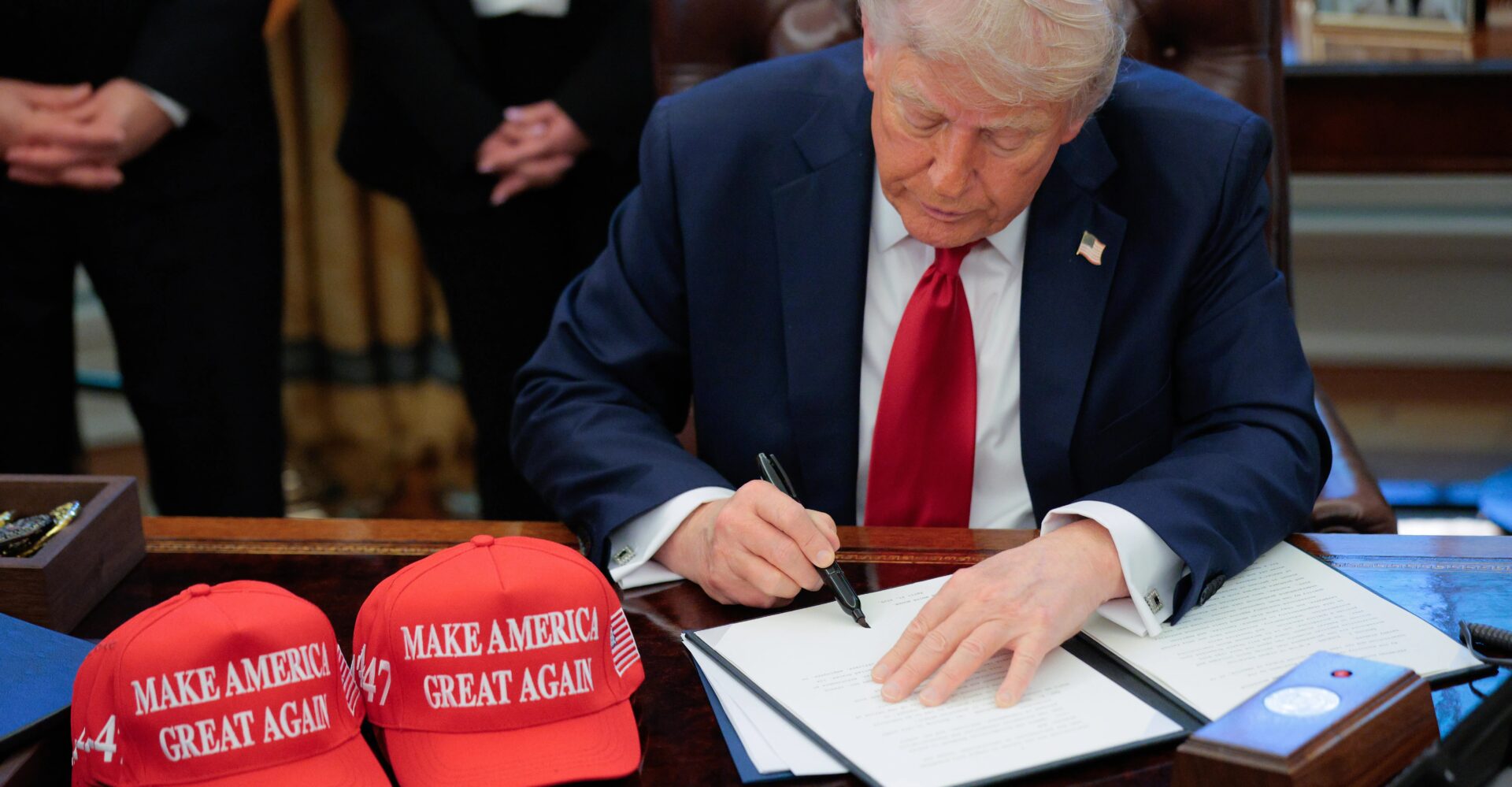
Donald Trump has once more signed new orders aimed at addressing birthright citizenship and birth tourism following the Supreme Court’s rejection of his previous policy attempt.
US President Donald Trump has enacted two new executive orders focused on limiting birthright citizenship, following the Supreme Court’s recent decision to thwart his earlier effort to abolish this constitutional right.
The first order expands the categories of non-citizens whose children would not automatically be eligible for US citizenship at birth. The second measure prohibits birth tourism, which involves pregnant women traveling to the US to give birth in order for their children to acquire American citizenship.
“This should have happened years ago, but we’re addressing it now,” Trump stated from the Oval Office while criticizing the Supreme Court’s decision to dismiss his previous attempt to terminate the 150-year-old policy.
“My administration has taken measures to protect against the threats posed by harmful foreign entities that seek to deceive American citizens by exploiting the kindness of our nation,” the first executive order states.
According to the order, automatic citizenship would not be granted to babies born in the US to two non-citizen parents if one parent is affiliated with a foreign terrorist organization, employed by a foreign government, has tried to acquire citizenship through fraudulent means, or resides in a US territory where federal law does not confer citizenship.
Birthright citizenship for individuals born in U.S. territories like Puerto Rico is safeguarded by federal law.
Trump and high-ranking officials in his administration have consistently condemned birth tourism, alleging that foreign nationals, particularly from Russia and China, are taking advantage of the system.
During a speech at the White House, Trump asserted that hundreds of thousands of babies had been born in the US as a result of birth tourism.
However, the non-partisan Migration Policy Institute estimates that each year, between 22,000 and 26,000 babies are born as a result of birth tourism. Government data referenced by the institute indicated that there were 9,600 births to mothers with foreign addresses in 2024.
“The notion is that individuals arrive here feigning the role of a tourist, acting as if they are mere visitors,” stated Stephen Miller, homeland security adviser and White House deputy chief of staff for policy.
“But the true motivation for their presence is to have a child, thereby granting that child automatic citizenship, (to) depart our country and then have a US citizen child,” he stated, noting that those children subsequently gain access to welfare benefits, the voting booth, and “all the other rights and privileges that are exclusively for Americans.”
Miller contended that the president possesses the power to prohibit birth tourism in accordance with the Immigration and Nationality Act, which grants the president the ability to establish exceptions and restrictions on entry into the United States.
Shortly after his return to office in 2025, Trump signed an executive order aimed at abolishing birthright citizenship as established by the 14th Amendment to the US Constitution.
That policy faced legal challenges, and in June, the Supreme Court determined that it could not be upheld, thereby maintaining the status of birthright citizenship. The ruling represented a significant blow to Trump’s attempts to strengthen US citizenship regulations.
The president criticized the judgment, describing it as “a bad decision, a very unfair decision.”
“Our nation is suffering because of it, and we are concluding in a different manner,” Trump stated.
Gabriel Chin, a professor at the University of California Davis School of Law, noted that certain aspects of the latest orders might withstand legal examination, yet cautioned that others “raise some serious constitutional questions.”
He stated that the president might possess the power to limit individuals entering the US for the purpose of childbirth.
“However, once it occurs, once a child is born in the United States, I believe the president lacks the authority to determine that the child is not a citizen,” he stated.
Chin characterized birth tourism as merely “a drop in the bucket” when compared to the millions of births documented in the US annually.
“It’s a rare occurrence,” he remarked.