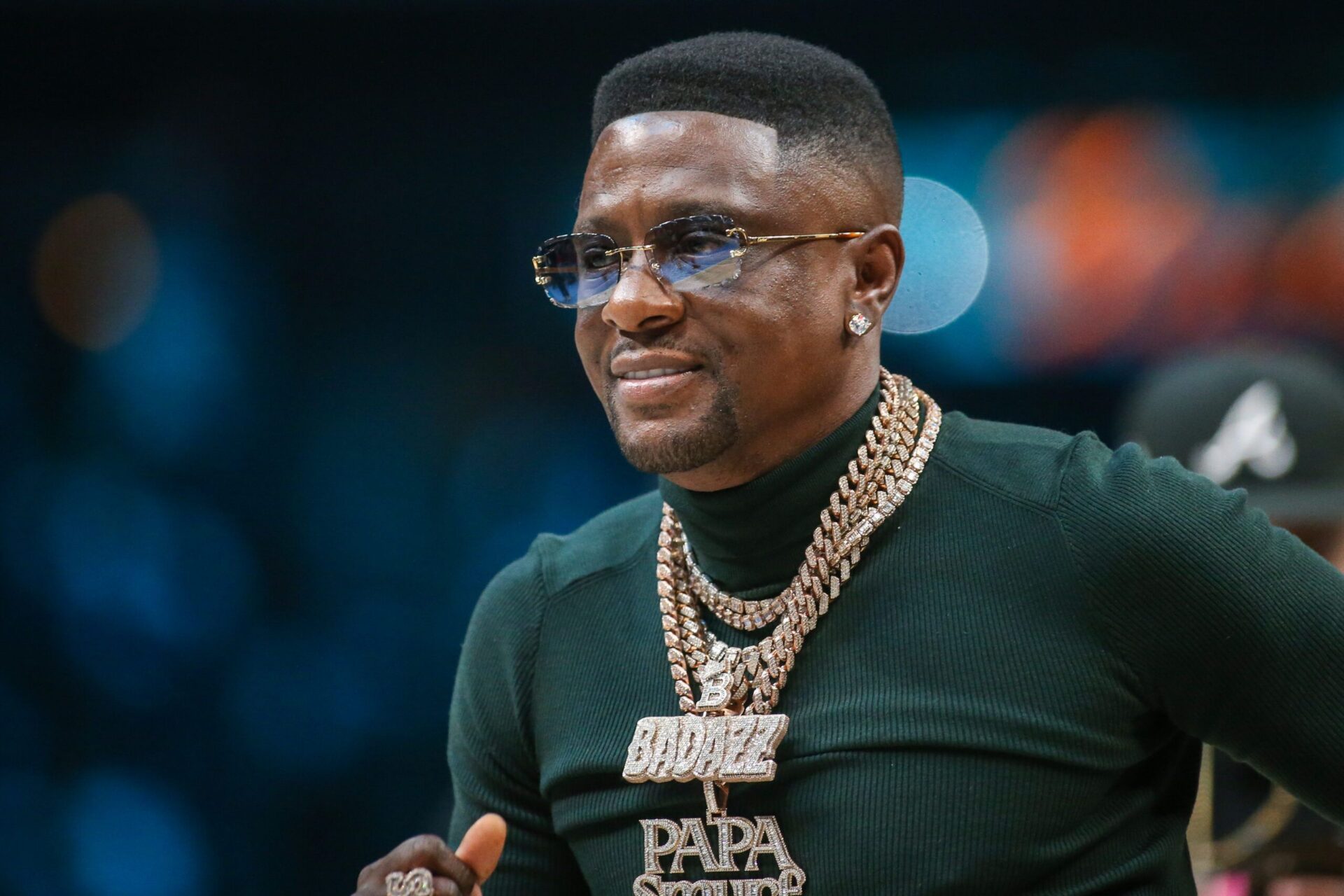
The rapper transformed a significant eligibility debate into a pop culture joke, drawing the WNBA into yet another intense discussion about fairness, identity, and respect.
Boosie’s remarks about the WNBA have thrust the rapper into yet another online culture clash, as he employed a movie reference to assert that trans women should not participate in the league. In a post on X, Boosie stated, “Keep them Juwanna mans out of the WNBA,” and suggested that trans women should “go try out for the NBA and match up against Wemby.” He also emphasized that individuals who express concerns about physical differences are not “hating on women’s sports.”
Boosie BadAzz (@BOOSIEOFFICIAL) posted a tweet featuring an extensive, all-caps message about women in sports, along with a #straightpride hashtag and a watermark in the background.
The reference originates from the 2002 sports comedy “Juwanna Mann.” The film centers on a disgraced male basketball player who disguises himself as a woman to pursue his career in a women’s league. Boosie employed that fictional act of deception as a metaphor for transgender participation, yet the analogy swiftly shifts the discussion from athletic regulations to an allegation that trans women are merely pretending.
Boosie did not specify the athlete from France referenced in his post. Nonetheless, the timing of Boosie’s remarks regarding the WNBA seems to be linked to the spotlight on French basketball player Julie Tétart. Tétart is a 6-foot-3 center currently playing for Monaco Basket Association in France’s second-tier league. During the 2025 to 2026 season, she averaged 21.2 points and 20.2 rebounds.
Tétart has yet to announce any WNBA deal, tryout, or formal offer. In an exchange on Instagram, she remarked, “If they reach out to me, I won’t decline.” She also acknowledged that she is older than most other prospects and that stronger players are ahead of her. Those details are significant because Boosie’s post framed the issue as an urgent competitive crisis while neglecting to consider Tétart’s age, league level, eligibility, scouting evaluation, or realistic prospects of making a WNBA roster.
Before Boosie’s involvement, the broader discussion had already centered on the WNBA. Indiana Fever guard Sophie Cunningham encountered a mix of support and criticism after expressing her views on transgender participation in women’s sports. Small rallies in support of her emerged outside Fever games, while opposing fans showcased transgender pride flags and expressed their disapproval through boos during the matches. The controversy escalated into a league disciplinary issue when a co-owner of the Seattle Storm faced fines and suspension due to an interaction with supporters of Cunningham.
The comments made by Boosie regarding the WNBA also fail to acknowledge the league’s intricate history with gender identity. An official announcement from the Golden State Valkyries characterized former All-Star Layshia Clarendon as the WNBA’s first openly transgender and nonbinary player. Clarendon concluded an 11-year playing career before transitioning into broadcasting. History demonstrates that referring to “Juwanna Mann” as a general descriptor is inaccurate. A fictional man covertly participating in a women’s league is not the same as every athlete who identifies as transgender or nonbinary.
The most significant critique of Boosie’s comments regarding the WNBA is that discussions of competitive fairness should be welcomed. Professional leagues consistently establish eligibility criteria, medical prerequisites, and roster regulations. We can analyze those policies without mocking an entire group of people. Boosie bypassed that distinction and characterized transgender identity as deceit before any WNBA team had shown interest in the athlete he seemed to reference.
Boosie’s post is likely to attract attention due to the instantly recognizable comparison to “Juwanna Mann.” It does not provide much clarity on how the WNBA presently assesses athletes, whether Tétart would meet the qualifications, or what evidence should inform future regulations. A serious sports debate demands more than just a humorous movie reference and a hypothetical matchup with Victor Wembanyama.