Fatal Kashmir Protests: Families Blame Security Forces for the Deaths of Their Loved Ones
Families in mourning are calling for justice as deadly protests regarding rights and escalating living costs sweep through Pakistan-administered Kashmir during the election period.
During a demonstration in Islamabad, Pakistan, on July 29, 2026, individuals chanted slogans in support of peaceful protesters in Pakistani Kashmir. Families of victims who lost their lives during weeks of violent protests in Pakistan-administered Kashmir have charged security forces with employing live ammunition against protesters, as tensions over economic difficulties and governance intensify amid the region’s election period.
The protests, spearheaded by the Joint Awami Action Committee (JAAC), have proliferated throughout the region recently, with participants calling for affordable electricity, lower flour prices, enhanced healthcare, better education, and the fulfillment of an agreement established with the governments of Pakistan and Pakistan-administered Kashmir in October.
Reports indicated that it became the first international media organization to gain access to the protest hotspot of Rawalakot, noting that dozens of people have been killed in clashes between protesters and security personnel over the past two months.
At a temporary medical clinic set up close to one of the protest sites, doctors reported a significant surge of critically injured patients, primarily affected by gunshot wounds.
The physician in charge of the temporary facility, referred to as Dr. Anwar, stated that the clinic was limited to offering emergency first aid, necessitating the transfer of patients needing specialized treatment to hospitals. “We have sufficient supplies to administer first aid.” We are capable of stopping bleeding, cleaning and dressing wounds, and removing superficial bullets. However, individuals with severe injuries to the chest, abdomen, head, or other critical organs require specialized medical facilities.
He stated that the clinic had treated between 50 and 60 critically injured patients since July 27, which included up to 20 individuals with gunshot wounds.
He stated that numerous protesters were hesitant to pursue treatment at government hospitals due to fears of arrest or additional attacks, a claim that the authorities denied.
Among those receiving treatment was Shafqat Hussain, who sustained a gunshot wound to the chest.
His friend, Ali, inquired why those protesting for essential needs had faced lethal violence. “We simply requested affordable flour, electricity, and our fundamental rights,” he stated. “Instead, our brothers are being slain. What was our offense? Why are live bullets being shot at us?
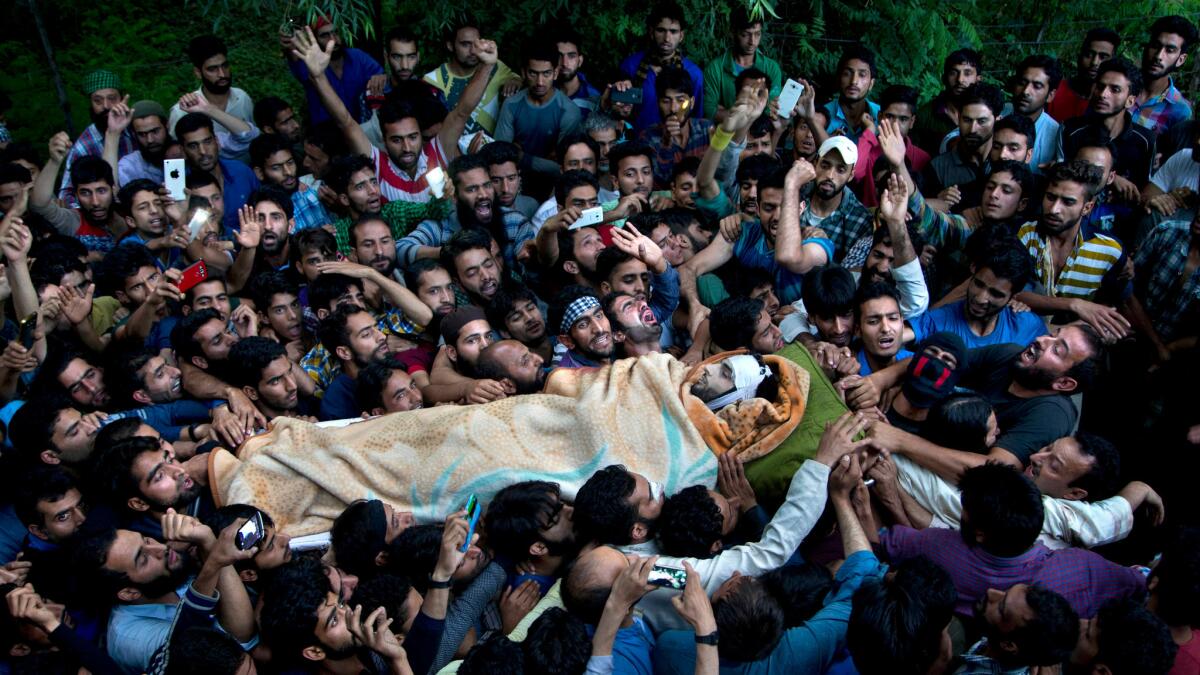
The violence has resulted in profound grief for many families.
Asma, whose only son was killed during the protests, stated that he was fully aware of the risks associated with participating in the demonstrations.
“We were simply advocating for our rights. We do not engage in acts of terrorism. He understood the risks involved, yet he felt that advocating for justice was essential. He often remarked that sacrificing one’s life for a righteous cause was a noble honor.
Another resident, Salman, shared that his younger brother lost his life while peacefully advocating for improved conditions.
The family cherished him as their youngest member. “It is a significant loss for us,” he stated. At the same time, I feel a sense of pride that he sacrificed his life in defense of the rights of the people. He was neither fighting nor attacking anyone.
Ayub, a retired member of Pakistan’s armed forces whose son also lost his life during the protests, held the regional administration responsible for summoning paramilitary forces. “I have never witnessed anything like what is occurring now. In my view, it is a profound injustice. ” My son has done nothing wrong. None of the protesters had committed any wrongdoing.
The government of Pakistan-administered Kashmir has refuted claims that security forces indiscriminately targeted peaceful demonstrators, asserting that law enforcement acted solely against those involved in assaults on security personnel, threats to public safety, or obstruction of lawful authority.
Authorities have accused the JAAC of trying to disrupt the ongoing elections, asserting that the group is armed and connected to foreign interests. The organization, which faced a ban in June and was labeled a foreign-funded terrorist group, denies the allegations, asserting that it is a peaceful movement supported by members of the Kashmiri diaspora rather than by India.
Newsmen reported observing food shortages in Rawalakot, where residents were sharing limited supplies as numerous shops stayed closed. Some residents reported that food was being transported into the city on motorcycles following the blockage of roads.
Authorities refuted claims of obstructing food or medical supplies from entering the area, stating that security measures were designed to ensure safe access.
Police have released drone footage and showcased firearms that they assert were recovered from JAAC members, alleging that some protesters were armed and assaulted security personnel.
JAAC official Umar Nazir refuted claims that the organization was involved in orchestrating violence, implying, without offering evidence, that some incidents may have been caused by unidentified infiltrators.
At the demonstrations observed, journalists noted the absence of visible weapons among the protesters, despite reports of gunfire from unidentified sources during the night.
Despite the escalating tensions, JAAC leaders assert their willingness to engage in dialogue while pledging to persist with protests until their demands are met.