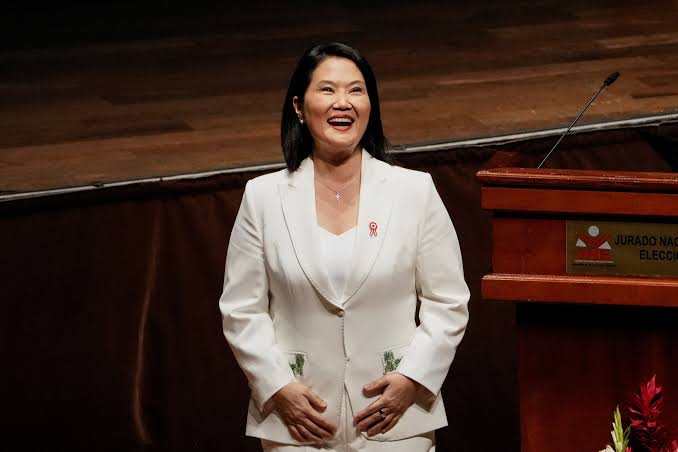
Keiko Fujimori is set to be sworn in as Peru’s president on Tuesday, marking her as the most recent in a series of conservative leaders chosen by voters across Latin America who are disillusioned by crime, sluggish economic growth, and political turmoil.
The 51-year-old daughter of former President Alberto Fujimori is set to become Peru’s first-ever elected female head of state.
Her victory in June’s presidential runoff signified the resurgence of one of Peru’s most significant and divisive political dynasties, culminating in a political revival following years of unsuccessful attempts.
Fujimori will become Peru’s 10th president since 2016, marking a period characterized by a tumultuous decade during which no leader managed to complete a full five-year term.
Her election signifies a wider rightward movement throughout Latin America, characterized by a series of recently elected leaders promoting stronger connections with the United States and more stringent crime policies.
Fujimori has stated that there is “very significant space” for collaboration with the U.S. administration. President Donald Trump expressed interest in Peru joining the “Shield of the Americas,” a regional initiative he proposed to combat transnational crime.
Washington has undertaken a significant initiative to strengthen its relationship with Peru, a key producer of copper and critical minerals, which boasts strategic Pacific ports, as part of its strategy to counter China’s influence in the region.
On Monday, Fujimori appointed Elmer Cuba, a former central bank board member, as the economy minister, along with Carlos Espa, a former presidential candidate who has also worked for the U.S. Embassy in Lima, serving as foreign minister.
We will establish the necessary consensus to transform decisions into tangible outcomes for the citizens,” Fujimori stated.
Congress is currently facing significant economic challenges.
Fujimori achieved a narrow victory over leftist congressman Roberto Sanchez in one of the closest elections in modern Peruvian history. Sanchez has claimed electoral fraud without presenting evidence and has vowed to head a left-wing opposition bloc in Congress.
Protests against her candidacy attracted hundreds of left-wing activists and civil society groups in Lima in the lead-up to the runoff. Demonstrations are scheduled to take place alongside Tuesday’s inauguration.
Fujimori’s Popular Force party is anticipated to secure the largest minority bloc in a fragmented Congress, marking the return to a bicameral structure for the first time in thirty years.
On July 26, a vote was held to elect the head of Congress, resulting in the incoming coalition securing the presidency of the Senate, while the opposition took leadership of the lower house, the Chamber of Deputies.
Securing ongoing legislative support may present difficulties.
There won’t be much room for a honeymoon period,” remarked Peruvian political analyst and independent business consultant Jeffrey Radzinsky. She must cultivate trust within a wide range of individuals who are skeptical of her, all the while fulfilling elevated expectations.
Peru has consistently demonstrated resilience as one of Latin America’s economies, even amidst years of political turmoil, primarily fueled by copper exports. The central bank has recently updated its growth forecast for 2026 to 3.4%, attributing this adjustment to increased domestic demand and investment.
Growth experienced a significant decline in May, driven by a steep drop in fishing output and a weakening of agricultural exports, highlighting the nation’s susceptibility to climate-related disruptions.
We anticipate the attendance of several regional leaders at Tuesday’s inauguration, including Javier Milei from Argentina, Jose Antonio Kast from Chile, and Daniel Noboa from Ecuador.