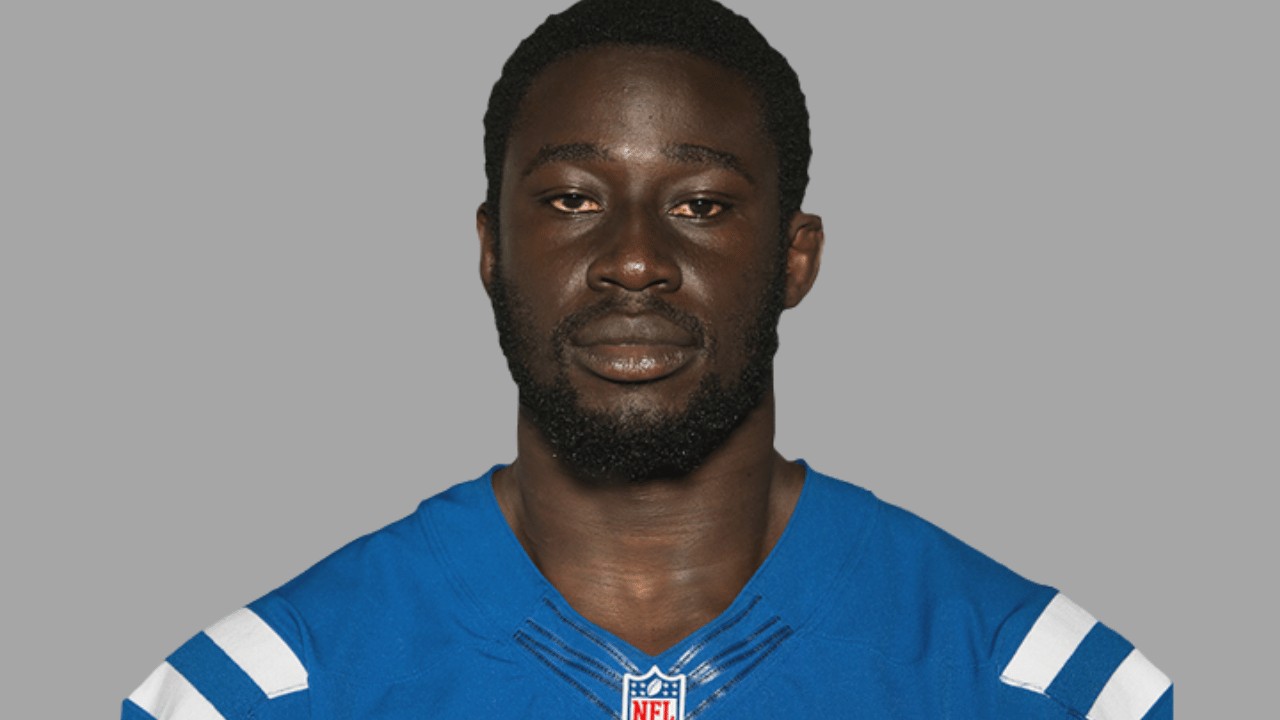
Daniel Adongo made history as the first Kenyan to join the NFL, but now he has been removed from the U.S. by ICE
The former Indianapolis Colts player was deported from the United States due to a visa overstay, a removal order, and years of legal complications, placing him among a select group of notable individuals involved in significant immigration cases.
Daniel Adongo has been deported, a turning point in the realm of sports as federal authorities confirmed that the former Indianapolis Colts linebacker was removed from the United States and returned to Kenya.
U.S. Immigration and Customs Enforcement reported that Adongo was removed on June 20, 2026, after the agency indicated he had stayed in the United States past the expiration of his visa in 2016. ICE reported that a Department of Justice immigration judge issued an order for his removal in March, which the agency executed three months later.
The situation is particularly remarkable given the improbability of his journey to the NFL from the outset. Adongo arrived in the United States in 2013, having established a professional rugby career abroad, and he had never lived in America before. He had no prior experience with American football before making the switch from rugby to outside linebacker. His eventual signing marked him as the first Kenyan to play in the NFL.
His time in the NFL was short-lived. Adongo played in five career games with Indianapolis. The team released him on December 17, 2015. By the following year, ICE indicated that his immigration status had become a concern due to the expiration of his visa and his continued presence in the country.
The legal history surrounding the deportation of Daniel Adongo necessitates a crucial differentiation among arrests, allegations, and convictions. Indiana authorities apprehended Adongo several times in connection with allegations of felony intimidation, battery, and disorderly conduct, according to ICE. None of the charges mentioned led to convictions. His only verified conviction was a misdemeanor criminal mischief case involving damage from 2020. ICE stated that he received a sentence of 364 days, whereas NBC reported that court records indicated his final jail order, after accounting for time served, was six months in county jail.
ICE Chicago Assistant Field Office Director Douglas Thompson provided a straightforward evaluation of the removal.
“This individual posed a significant threat to the community, which is now safer following his removal,” Thompson stated. “Individuals who breach immigration law are held to the same standards of accountability, including former professional athletes.”
The deportation also highlights the Laken Riley Act. ICE stated that Adongo was detained under federal law prior to his removal. The law was enacted as Public Law 119-1 on January 29, 2025. The detention provisions apply to specific noncitizens who fulfill certain immigration criteria and have been arrested for, charged with, convicted of, or acknowledged involvement in designated offenses such as burglary, theft, larceny, shoplifting, assaulting a law enforcement officer, or crimes that lead to death or serious bodily injury. That distinction is significant because the statute does not necessitate a conviction in every applicable situation for mandatory detention to be enforced.
Adongo’s story encompasses more than just his arrest record. Court records indicated that judges had determined Adongo to be incompetent to stand trial at various times. One of his attorneys and others suggested that injuries sustained during his rugby and football careers might have played a role in causing a traumatic brain injury. The potential link has been suggested by those close to Adongo, yet existing reports do not confirm it as a definitive medical rationale for his subsequent actions.
This is not the first instance of a well-known figure transitioning from American celebrity culture into the immigration system. Shyne stands out as one of the most influential artists in hip-hop. The former Bad Boy rapper made his return to Belize on October 28, 2009, following his release from an immigration detention facility in New York. Shyne was taken into immigration custody following the completion of over eight years in prison and was waiting for a decision regarding his ability to stay in the United States. He was eventually sent back to the country of his birth.
Reality television has brought forth another notable immigration case. Joe Giudice, known from “The Real Housewives of New Jersey,” has been ordered to be deported to Italy after serving his federal prison sentence. His route out of the country was distinct from Adongo’s, as Giudice requested to exit ICE custody and remain in Italy while he continued to contest his removal. A federal court removed a stay in October 2019 following Giudice’s request for permission to move to Italy while his appeal was ongoing.
Not every celebrity ICE case results in removal. ICE took 21 Savage into custody in 2019 for an expired visa, but he was not deported. His immigration proceedings were ultimately concluded when he attained lawful permanent resident status, enabling the Atlanta rapper to travel internationally once more. That difference holds significance when examining notable immigration cases, as detention, a removal order, and an executed deportation represent distinct outcomes.
For Adongo, the removal has already taken place. The athlete who once made sports history by transitioning from international rugby to the NFL has now returned to Kenya after a decade marked by the end of his football career, the expiration of his immigration status, and the accumulation of legal troubles.