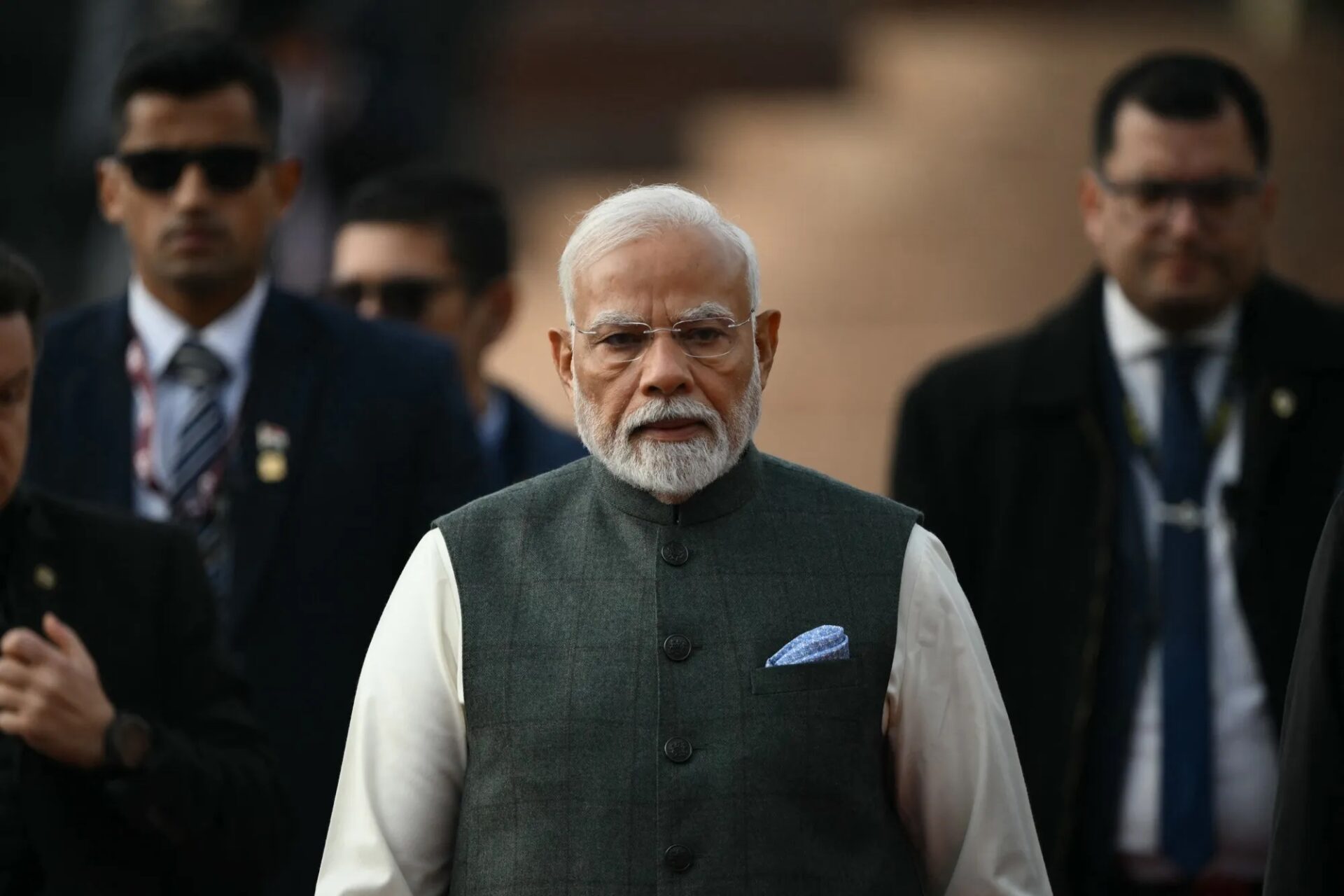
Opposition leaders united with student protesters following a police crackdown, intensifying pressure on Prime Minister Narendra Modi’s government regarding education reforms.
Indian Prime Minister Narendra Modi is encountering increasing political pressure as opposition leaders unite with thousands of protesters advocating for education reforms in the wake of a police crackdown in New Delhi.
The youth-led Cockroach Janta Party (CJP), which has led weeks of demonstrations, is calling for comprehensive education reforms and the resignation of Education Minister Dharmendra Pradhan. Despite the heavy rain overnight, thousands of supporters stayed at the protest site on Tuesday.
The protests gained renewed political momentum when leaders of the opposition Congress party organized a demonstration outside Modi’s residence, following the police’s use of batons and tear gas to disperse protesters the previous day. Numerous demonstrators and police officers sustained injuries during the clashes on Monday.
Congress has released videos depicting its MP Rahul Gandhi and other party leaders being detained and transported in police buses. They were subsequently released.
Tens of thousands of demonstrators gathered in central Delhi following the CJP’s call for a march to Parliament at the beginning of the monsoon session. The police subsequently took down the protest stage and temporary shelters at Jantar Mantar; however, the protesters have maintained their continuous sit-in around the clock.
Numerous opposition leaders, such as former Delhi Chief Minister Arvind Kejriwal and seasoned politician Sharad Pawar, gathered at the protest site to demonstrate their solidarity.
On Tuesday, Congress president Mallikarjun Kharge and Rahul Gandhi spearheaded a march toward the prime minister’s residence, calling for the resignations of Pradhan, Home Minister Amit Shah, and Modi.
Gandhi charged the government with obstructing Parliament from discussing the police’s reaction to the protests, stating that Congress protested outside Modi’s residence after being denied the opportunity to address the matter in the legislature.
Federal Minister Jitendra Singh dismissed the claim, asserting that the government had consented to a discussion but accused Gandhi of altering the terms by demanding Pradhan’s resignation.
In his initial public comments following the violence on Monday, Pradhan charged Congress with taking advantage of students for political purposes, asserting that the government is dedicated to implementing reforms and ensuring accountability.
The CJP has not yet made a public statement regarding Pradhan’s comments, and his resignation continues to be a key demand of the movement.
The satirical movement arose following the chief justice of India’s use of the term “cockroach” earlier this year to describe unemployed young individuals pursuing careers in journalism and activism. He later clarified that the comments were aimed solely at individuals holding “fake and bogus degrees.”
While the CJP is not an officially registered political party, it has developed into a widespread movement with the ability to rally tens of thousands of individuals.
The protests captured global attention when activist and educationist Sonam Wangchuk joined the demonstrators on June 28 and initiated an indefinite hunger strike. On Saturday, police took him away from the protest site and brought him to the hospital, where he has maintained his hunger strike.
Support for the movement has expanded beyond New Delhi, with demonstrations noted in Mumbai, Hyderabad, Bengaluru, and Ahmedabad, marking it as one of the most significant displays of public dissent against Modi’s government in recent years.