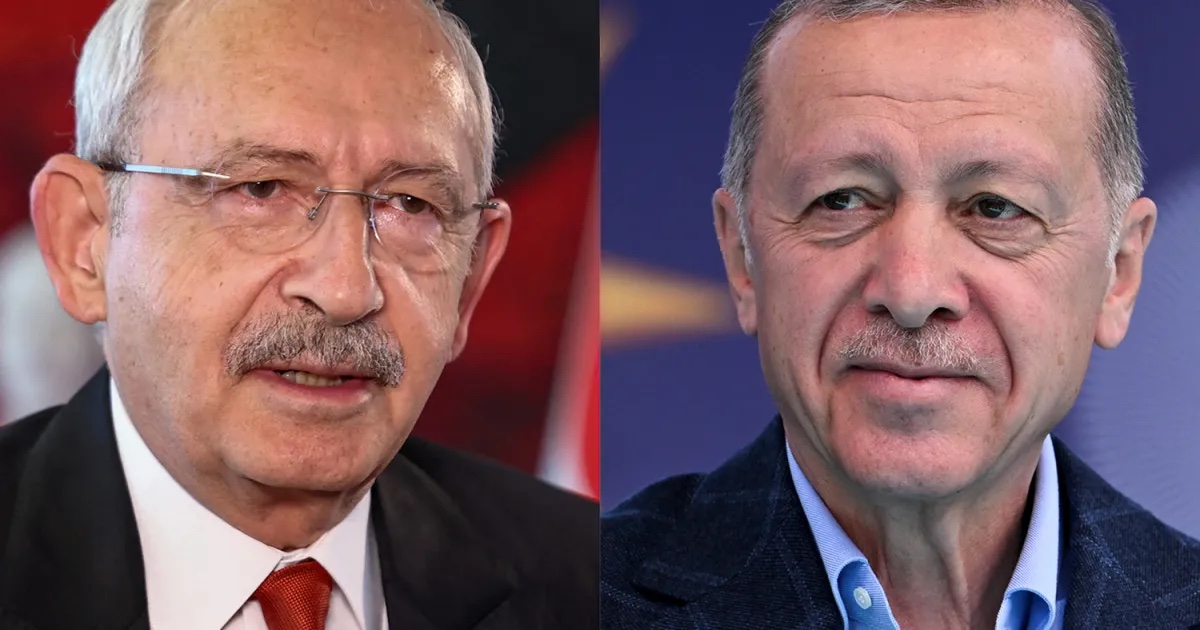
Ozgur Ozel, the leader of Turkey’s opposition, declared he would start a new party to oppose Tayyip Erdogan. This political division may increase the president’s chances of winning reelection after 23 years.
A court removed Ozel from his position as chairman of the main opposition Republican People’s Party (CHP) in May. The party has already been weakened by an unprecedented and contentious legal crackdown since 2024. However, elections would have to be held earlier than 2028 if Erdogan were to seek another term as president.
WHEN ARE THE NEXT ELECTIONS IN TURKEY?
Every five years, there are presidential and legislative elections. The next one is set for May 14, 2028. Both the parliament and the president have the authority to request an earlier vote.
WHAT IS THE SITUATION OF ERDOGAN?
In 2014, Erdogan was elected president under the country’s then-parliamentary system after serving as prime minister. He was re-elected as president in 2018 and 2023 following a 2017 vote that established a new executive presidency system. The constitution permits him to run again if parliament calls an early election during his final term, even though he has served his two-term limit under the presidential system.
HOW IS AN EARLY ELECTION CALLED BY THE PARLIAMENT?
An early election must be called by 360 of the 600 members of parliament, or a three-fifths majority. The conservative alliance needs 32 additional votes from other parties, which could be difficult given that Erdogan’s ruling Justice and Development Party (AKP) and its allies hold 328 seats.
The nationalist IYI Party has 29 seats, the leftist pro-Kurdish DEM Party and its allies have 63, smaller opposition parties have 26, and the secular and centrist CHP has 135 seats, the majority of which are predicted to go to Ozel’s new party. Eleven MPs are independent.
EARLY ELECTIONS: WHAT DO PARTIES THINK?
Elections will take place “on time,” according to Erdogan’s AKP and his nationalist ally MHP. Additionally, according to AKP officials, any vote cast prior to May 14, 2028, would be considered an early election, enabling Erdogan to run.
Ozel, the ousted leader of the CHP, has called for an early vote on several occasions, partly to allow voters to express their opinions about the legal crackdown on his party. However, he has also stated that it cannot take place too close to the 2028 deadline, after which Erdogan would have to depart.
Ozel resigned from the CHP on Tuesday, and at least 90 of its 135 lawmakers support him. However, it is unclear if Kemal Kilicdaroglu, the party chairman who was reinstated by the court, would support an early election call.
According to some observers, the ruling alliance may try to get the DEM Party to approve an early election. Since late 2024, DEM has assisted in facilitating moves toward peace between the Turkish state and the banned Kurdistan Workers’ Party (PKK), despite having long fiercely opposed Erdogan’s nationalist and Islamist-rooted AKP.
ARE THERE ANY OTHER CHOICES FOR ERDOGAN?
A constitutional modification is a more difficult and dangerous method for Erdogan to seek office again. If 400 members of the 600-seat parliament support it, it could take effect right away, but that is thought to be a stretch for Erdogan’s alliance.
Alternatively, if at least 360 MPs support a constitutional amendment, it may be put to a referendum. According to polls, Turks are divided on the matter, which puts the government at risk. Even though the CHP has historically opposed any constitutional amendment that would favor Erdogan, some MPs may be persuaded by its recent splintering.
Although the ruling alliance has not proposed a draft constitutional amendment, Erdogan’s nationalist ally and MHP leader Devlet Bahceli has stated that one should be taken into consideration.