US and Iran have tentatively agreed to end the fighting and start talking about disarmament
US-Iran talks and a possible peace deal are taking shape as the disruption of the Hormuz oil pipeline threatens to have serious economic effects around the world.
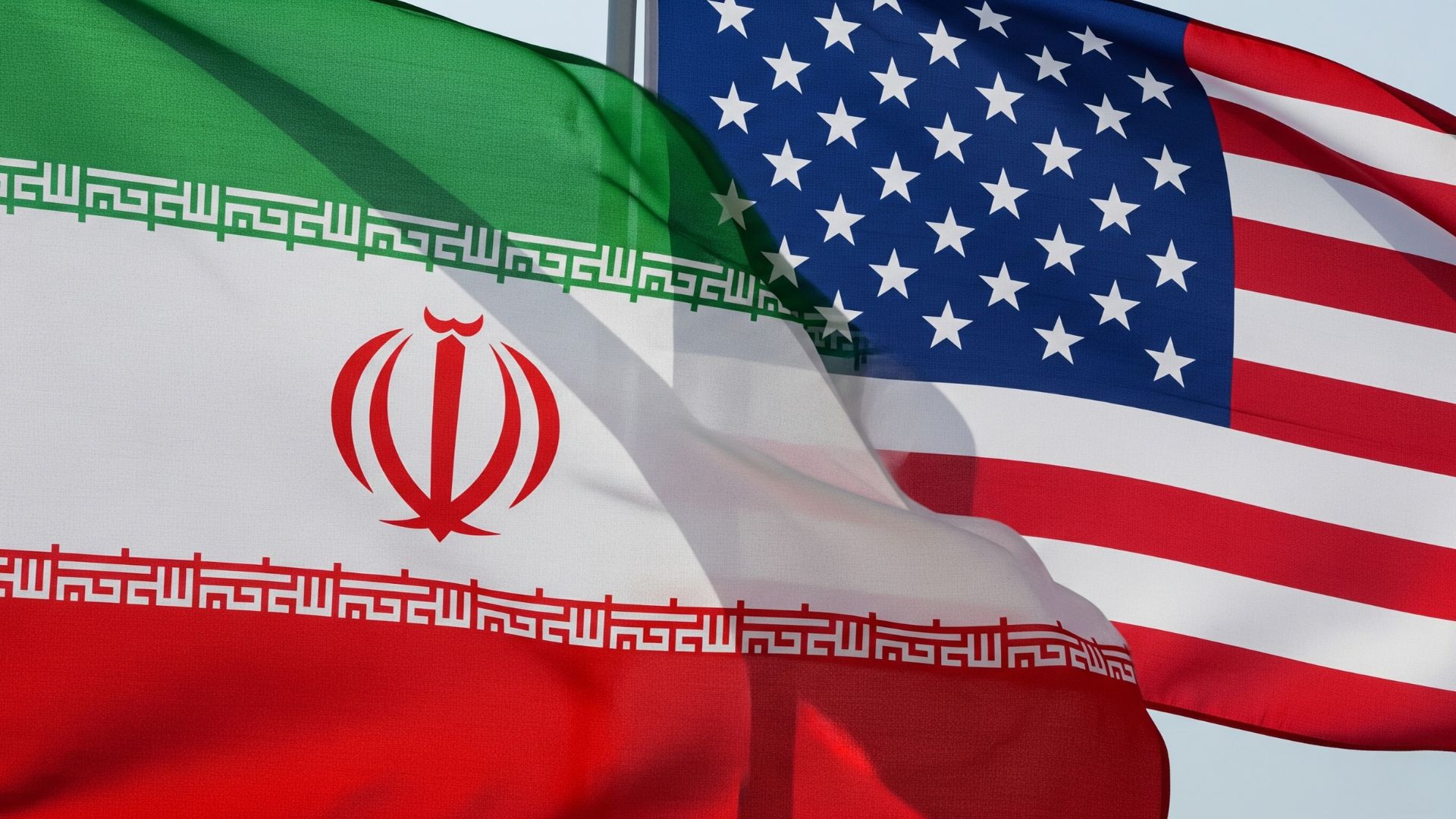
U.S. and Iranian negotiators may have reached a deal Thursday to extend the ceasefire in the three-month-old war between the U.S. and Israel against Iran by 60 days and start talking about Iran’s nuclear program, according to a U.S. official familiar with the subject.
AP reported that Iran did not confirm the deal right away, and the source said that President Trump had not yet signed off on it. Another report said plans were made to reopen the Strait of Hormuz and remove all the mines.
The shaky ceasefire in the war seemed to be breaking down as the memorandum of understanding came together. According to the U.S. Central Command, the most recent fight started less than a day ago when Kuwait blocked rockets fired from Iran.
According to an unnamed official, because they were unauthorized to speak publicly, the memorandum makes it clear that Iran must remove all mines from the Strait of Hormuz within 30 days and cannot charge tolls.
The U.S. would slowly lift its military blockade on the strait, which used to ship about a fifth of all oil and natural gas traded before the war. Since its closure, the price of oil has skyrocketed, causing gas prices to rise globally. The US would also agree to ease sanctions, which would let Iran sell more oil.
The source said that Iran’s highly enriched uranium will be one of the first topics during the 60-day ceasefire. The International Atomic Energy Agency (IAEA) says that Iran has 440.9 kilograms (972 pounds) of uranium that has been enriched to as much as 60% purity. This is only a small technical step away from the 90% purity needed for bombs.
The list is thought to be buried under three nuclear sites that were badly damaged by U.S. airstrikes last year, but Iran has not officially promised to give it up, the AP report said.
Nuclear experts say that Iran might see China or Russia, which are close allies of Tehran, as a possible third party that could be okay with taking the refined uranium as part of a possible deal. Trump, on the other hand, said on Wednesday that he “wouldn’t be comfortable” with that plan.
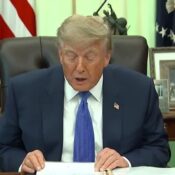
A second U.S. source, who also asked to remain anonymous, said that the main points of a deal had been worked out but that there was no deal until Trump signed it. The source said that it was still not clear if Trump would agree to the plan.
Kuwait had earlier said that it had attacked Iranian land, and Iran said it had fired on a U.S. base in a Gulf state it did not name in response to attacks earlier in the week. They said Iran was being “blatantly aggressive,” and the U.S. Central Command said the attack on one of America’s most important allies in the Persian Gulf was a “egregious ceasefire violation.”
The attack started after U.S. officials in Washington said that more strikes had been launched against Iran. They said that American forces had shot down four one-way attack drones that were a threat around the strait and hit an Iranian ground-control station in Bandar Abbas that was about to launch a fifth drone.
Both Washington and Tehran have accused the other of breaking the seven-week ceasefire many times, and they have been attacking each other all week. But they haven’t gone back to full-on fighting and have kept talking.
The World Economic Forum (WEF) Chief Economists’ Outlook said that if the closure of the Strait of Hormuz continued into the second half of 2026, it would be almost as bad as the COVID-19 problem.
Geopolitical hurdles and an AI (artificial intelligence) boost were weighed against each other in the Geneva outlook released Thursday. The outlook said that 94% of the chief economists it polled thought that global inflation would go up because the closing of the Strait of Hormuz made food and energy more expensive and messed up supply lines.
It also said that 92% of top economists thought AI would be used more in the next year, even though they were less optimistic about how quickly it would improve productivity across all fields.
The story said, “Chief economists already think that the current closure of the Strait of Hormuz will cause a lot more trouble than the tariff chaos last year.” They think that the closure could have effects as bad as the COVID-19 crisis if it lasts into the second half of the year. These effects would spread through global supply lines and raise the cost of energy and food.
“About 94% of the chief economists polled think that inflation will rise around the world in the next year.”
The report said that the global economic outlook has gotten much worse in the last few weeks. It also said that almost nine out of ten chief economists polled think that global growth will slow down over the next twelve months. This is a big change from the cautious optimism at the beginning of the year, when the Strait of Hormuz was closed because of fighting in the Middle East.
A few months ago, Saadia Zahidi, managing director of the WEF, said that top economists were cautiously optimistic. But the conflict in the Middle East changed that.
“Those who can least afford it will pay more in the long run if the disruption lasts longer,” Zahidi said.
The study also said, “Expectations of high inflation have risen sharply in sub-Saharan Africa, making it the highest of all the regions that were looked at. At the same time, Europe is facing rising stagflation risks as growth slows and inflation fears rise.”
“On the other hand, India and the US are expected to stay pretty strong thanks to domestic investment and demand.”
The study said that most of the chief economists did not think there would be a recession in the next twelve months. They also did not think the economy would get stronger soon.
It said, “A lot will depend on how long the disruption lasts: a shorter shock might give the economy time to recover, while a long closure would put even more stress on the world economy.” Financial markets are predicted to become more unstable over the next year, according to 79% of those who answered. This is because there are signs that private credit is getting tight.
“74% also think that the volatility of the public debt market will rise, and 68% think that the volatility of the stock market will rise as well.”
Also, the study said that optimism about AI was high but starting to fade because it was still helping the global economy, and 92% of chief economists thought it would be used more in the coming year.