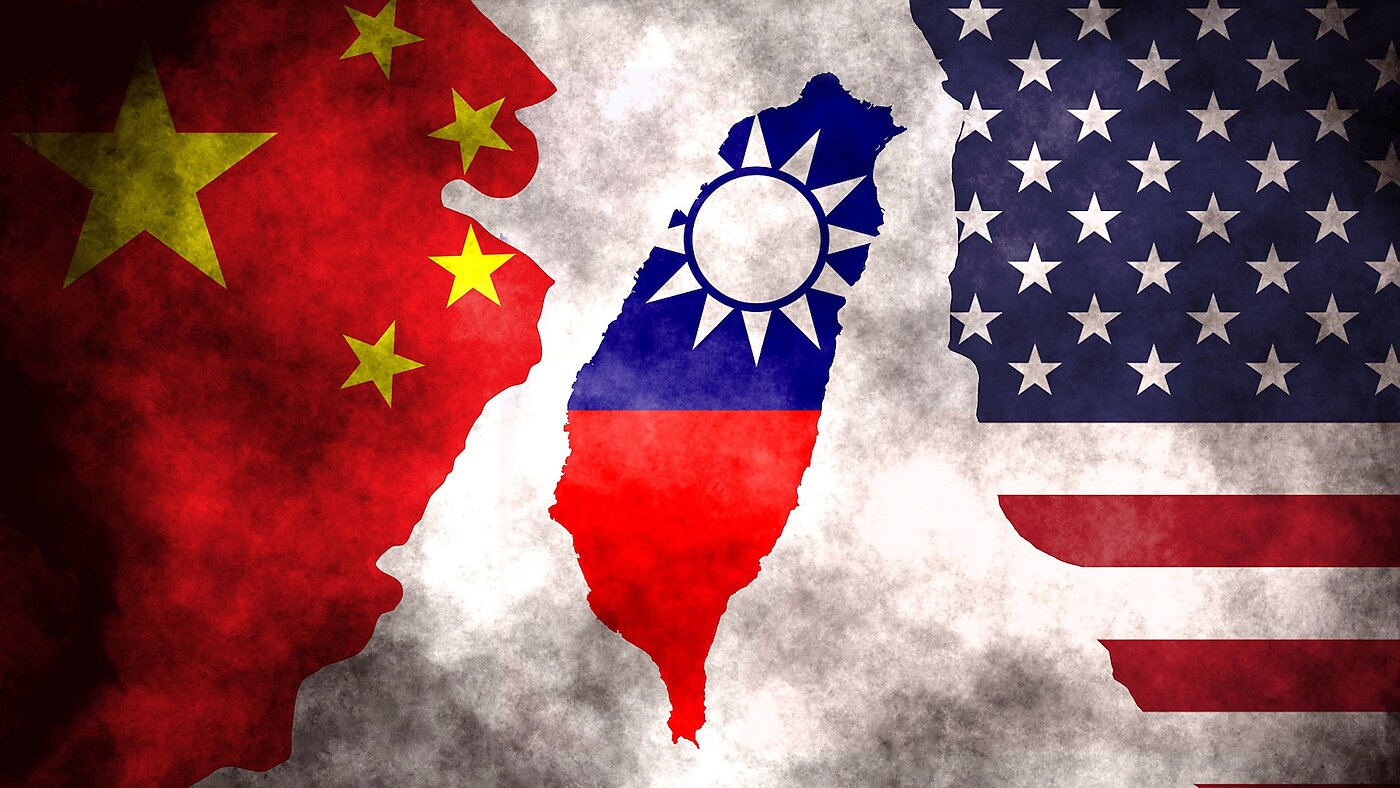
New defense assessment cautions that the risks of nuclear escalation in the Taiwan conflict are increasing as military tensions between the US and China intensify throughout the Asia-Pacific region.
A prominent international defense research institute has cautioned that a conflict between the United States and China regarding Taiwan could escalate into a nuclear confrontation.
The International Institute for Strategic Studies indicated that in any significant conflict involving Taiwan, both countries would probably focus on each other’s military command and communications systems.
“A conflict with China could lead to escalation, possibly reaching a nuclear level, due to the strategic significance of Taiwan for Beijing.”
The strategic assessment, published prior to the Shangri-La Dialogue, Asia’s largest annual defense summit occurring in Singapore this weekend, included the warning.
The report indicated that the world is nearing a new nuclear arms race focused on the Asia-Pacific region.
“Regional states and those with strategic interests are increasing their nuclear arsenals, while non-nuclear weapons states are developing long-range conventional-strike capabilities.”
The IISS assessment cautioned that neither Washington nor Beijing had established clear safeguards to avert military escalation in the event of conflict.
Right now, there is very little public information showing that the U.S. and Chinese militaries understand the important guidelines to prevent conflict or the rules that would limit targeting each other’s key command and control systems.
It stated: “The possibility of nuclear escalation will therefore remain a significant concern in a major U.S.-China conflict.”
Discussions at the Shangri-La Dialogue, which convenes defense ministers, military leaders, diplomats, and security analysts from around the world, are expected to focus on Taiwan and broader regional security issues.
The conference comes on the heels of a recent summit in Beijing involving Chinese President Xi Jinping and US President Donald Trump.
The meeting has raised concerns in Taiwan regarding Washington’s long-term commitment to supporting the self-governed island.
China asserts that Taiwan is a part of its territory and has consistently stated that it retains the right to employ force to assert control over the island, although it expresses a preference for “peaceful reunification.
Taiwan’s government firmly rejects the sovereignty claims made by Beijing.
The report highlighted increasing worries regarding the lack of ongoing nuclear risk-reduction dialogues between China and the United States.
IISS senior fellow Daniel Salisbury noted that the communication channels between both powers are still considerably weaker than the discussions that took place during the Cold War between Washington and the former Soviet Union.
“Currently, that culture of discussion is lacking, which leaves much less to develop in that relationship.”
The study emphasized worries regarding the swift growth of China’s nuclear capabilities.
A recent Pentagon report indicated that China may have 1,000 nuclear warheads by 2030.
As reported by the Federation of American Scientists, Russia currently maintains approximately 4,400 active nuclear warheads, the United States holds around 3,700, and China is estimated to have about 620.